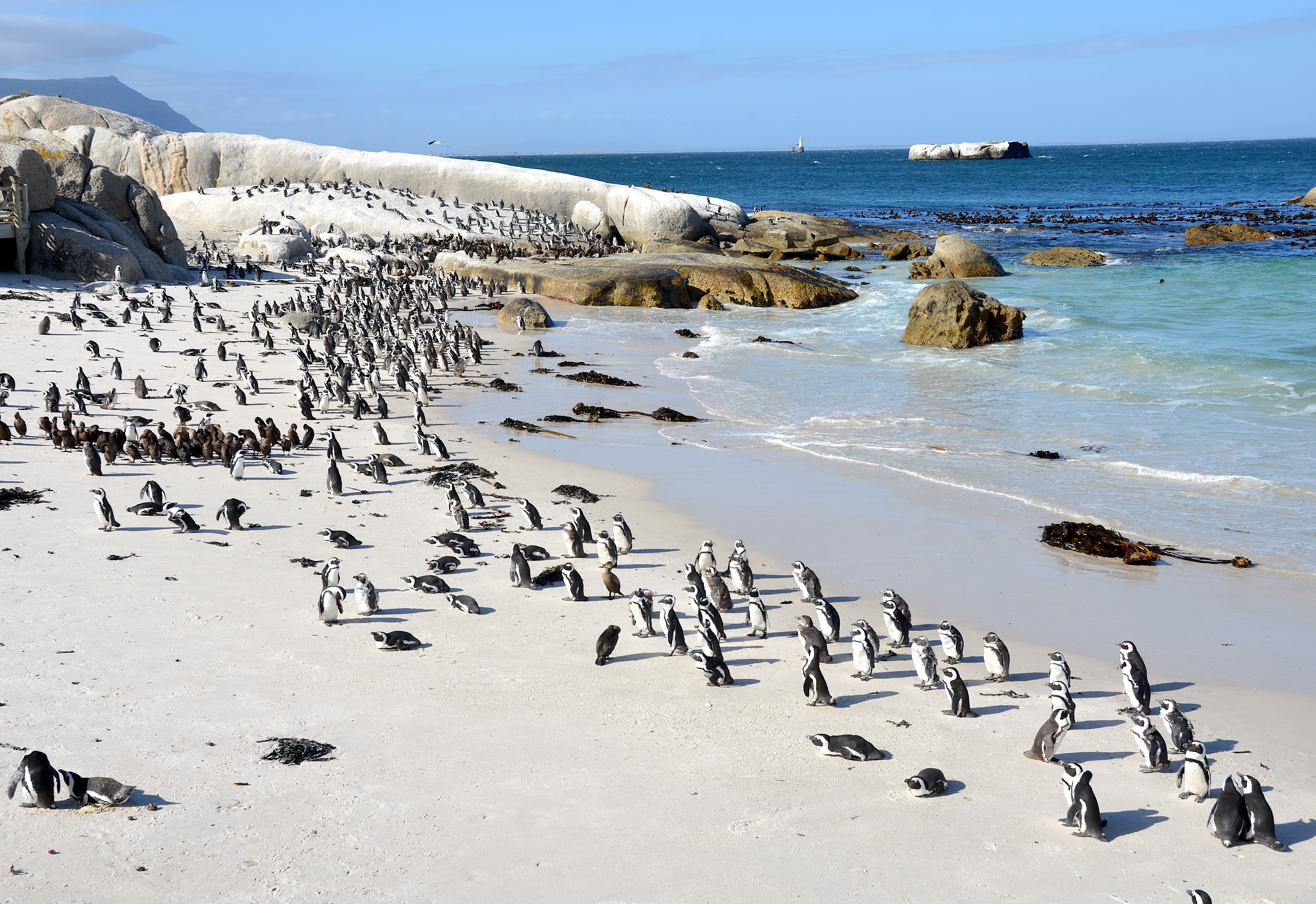
Boulders Beach
The penguins were not invited. Sometime in the 1990s, a few African penguins waddled ashore at Foxy Beach, a sheltered cove near Simon's Town on the Cape Peninsula, and decided to stay. The boulders -- massive, smooth, granite lumps that give the beach its name -- provided shelter from the wind and from predators. The population grew. Penguins from surrounding islands immigrated, and by the time anyone thought to count, there were several thousand of them, establishing one of the most accessible wild penguin colonies in the world in someone's backyard.
An Unlikely Colony
Boulders Beach is not, by Cape Peninsula standards, a particularly impressive beach. It is small, hemmed in by enormous granite boulders that give it a secluded, almost private feel. There are larger, more dramatic beaches nearby. What Boulders has is protection: the boulders block the fierce southeasterly winds that batter the peninsula in summer, and the water in the cove is warmer and calmer than on the exposed Atlantic side. These are precisely the conditions African penguins prefer for nesting. The colony has made Boulders Beach world-famous, drawing hundreds of thousands of visitors each year to a beach that would otherwise be a pleasant but unremarkable swimming spot on the road to Cape Point.
Suburban Penguins
Living alongside three thousand penguins is not the idyll visitors might imagine. The birds do not confine themselves to the beach. A fence has been erected, but penguins, it turns out, are resourceful at finding holes. Residents of the surrounding neighborhood have opened their doors to find penguins in their gardens, under their cars, and occasionally in their houses. The sound is distinctive: African penguins were formerly called jackass penguins for their loud, donkey-like braying, and a colony of thousands produces a noise level that carries well beyond the beach. The relationship between the penguins and their human neighbors is one of ongoing negotiation, managed by Table Mountain National Parks, which controls access to the penguin viewing areas.
Swimming with Birds
What sets Boulders apart from every zoo and aquarium penguin exhibit is the swimming. Visitors can enter the water alongside the penguins, sharing the calm, sheltered cove with birds that have grown accustomed to -- if not exactly enthusiastic about -- human company. In summer, when the water is warmest, the experience is remarkable: penguins porpoise past swimmers with a speed and agility that their awkward land waddle does nothing to suggest. They are wild animals, and park management emphasizes the point -- they bite, and hard enough to remove a finger. But in the water, they are indifferent to the humans splashing nearby, focused entirely on the business of fishing and preening.
The Rhythms of Penguin Life
Visiting Boulders Beach at the right time matters. The colony has a predictable annual cycle. From September through October, the birds are mostly out at sea, feeding in preparation for their annual moult. November and December are moulting season -- the penguins look bedraggled as they shed and regrow their waterproof feathers. January sees adults feeding at sea again, building reserves for breeding season, which runs from February through August. The largest numbers are onshore during breeding months, when pairs incubate eggs and raise chicks in the scrub behind the beach. Arriving early in the day is advisable: access to the beach is limited, and it can fill by mid-morning during peak season.
An Endangered Success Story
The colony at Boulders is a bright spot in an otherwise grim picture for the African penguin. The species has declined by more than 95 percent over the past century, threatened by overfishing, oil spills, and habitat loss. The Boulders colony, established naturally and protected within Table Mountain National Park, demonstrates that given the right conditions -- sheltered nesting sites, clean water, freedom from development -- penguins can still thrive on the South African coast. The beach sits along False Bay, with views eastward across the water toward the mountains of the Overberg. From Cape Point to the south to the naval base at Simon's Town just to the north, the eastern Cape Peninsula is a corridor of marine life, historical significance, and the kind of scenery that makes the penguin colony feel less like a tourist attraction and more like the most natural thing in the world.
From the Air
Boulders Beach is at approximately 34.20S, 18.45E, on the eastern shore of the Cape Peninsula near Simon's Town. From altitude, the beach is identifiable by the cluster of large granite boulders along the shoreline in a small cove on False Bay. Simon's Town naval base is just to the north. Cape Town International Airport (FACT) is approximately 35 km to the north. The M4 coastal road runs past the beach. Cape Point is visible to the south.