Boves Massacre
Joachim Peiper gave his word. The SS commander promised that if the Italian partisans near Boves released two captured German NCOs, the town would not be harmed. The partisans complied. Peiper then ordered the destruction of Boves anyway. On 19 September 1943, eleven days after Italy's surrender to the Allies, twenty-three Italian civilians were killed and several hundred houses were destroyed by artillery fire in what is sometimes called the first major German massacre of civilians on Italian soil.
Chaos After the Armistice
Italy's surrender on 8 September 1943 created a power vacuum in the border regions between France and Italy. Italian soldiers streamed through the area around Boves on their way home, and German authorities feared they would join the nascent partisan resistance. The 1st SS Panzer Division Leibstandarte Adolf Hitler was stationed in the region to control the border. Without authorization, units of the division began arresting and executing Jewish refugees who had lived in relative safety under Italian protection. Peiper's own unit was pursuing approximately 1,000 Jewish people who had fled from the former Italian occupation zone in France. Further north, another unit of the same division killed 54 Jewish civilians at Lago Maggiore and submerged their bodies in the lake. The Leibstandarte's violence was so indiscriminate that SS corps commander Paul Hausser had to intervene, reminding the division that only the security police and SD were authorized to carry out such measures.
The Broken Promise
The immediate cause of the Boves massacre was straightforward: partisans in the vicinity of the town had killed one German soldier and captured two NCOs. Negotiations followed. The parish priest, don Giuseppe Bernardi, served as an intermediary. Peiper agreed that if the prisoners were returned unharmed, there would be no reprisals. The partisans released their captives. Peiper ordered the destruction of the town regardless. Artillery shells struck homes throughout Boves, setting hundreds of houses ablaze. Don Bernardi and industrialist Alessandro Vassallo, who had negotiated the prisoners' release, were seized by the SS, forced to watch the destruction of their town, then killed and set ablaze.
Twenty-Three Lives
The killing was indiscriminate. Adriana Masino later testified that she and her brother Giacomo were dragging a cart through a street when they encountered two German soldiers. They raised their hands in surrender. Giacomo stepped forward and said he could speak two languages. One soldier gestured to the other, and Giacomo Masino was shot dead where he stood. Twenty-three civilians died in total, people whose only connection to the partisan action was living in the wrong town at the wrong time. The destruction of property was even more extensive -- artillery fire reduced much of Boves to rubble, leaving hundreds of families homeless in the chaos that followed Italy's sudden change of sides in the war.
A Pattern Begins
The Boves massacre set a pattern that would repeat across Italy over the following twenty months. German forces, often the same SS units, carried out reprisal killings against civilian populations for partisan actions, with ratios of civilian deaths to German casualties that defied any military logic. Peiper, who commanded the Boves operation, would go on to infamy at the Battle of the Bulge and the Malmedy massacre. He was tried for war crimes but never specifically convicted for what happened at Boves. The town itself has memorialized the event, and descendants of the victims have visited Peiper's grave in Germany as an act of reconciliation. Boves was the beginning -- the first demonstration that the German occupation of Italy would be marked by collective punishment and broken promises.
From the Air
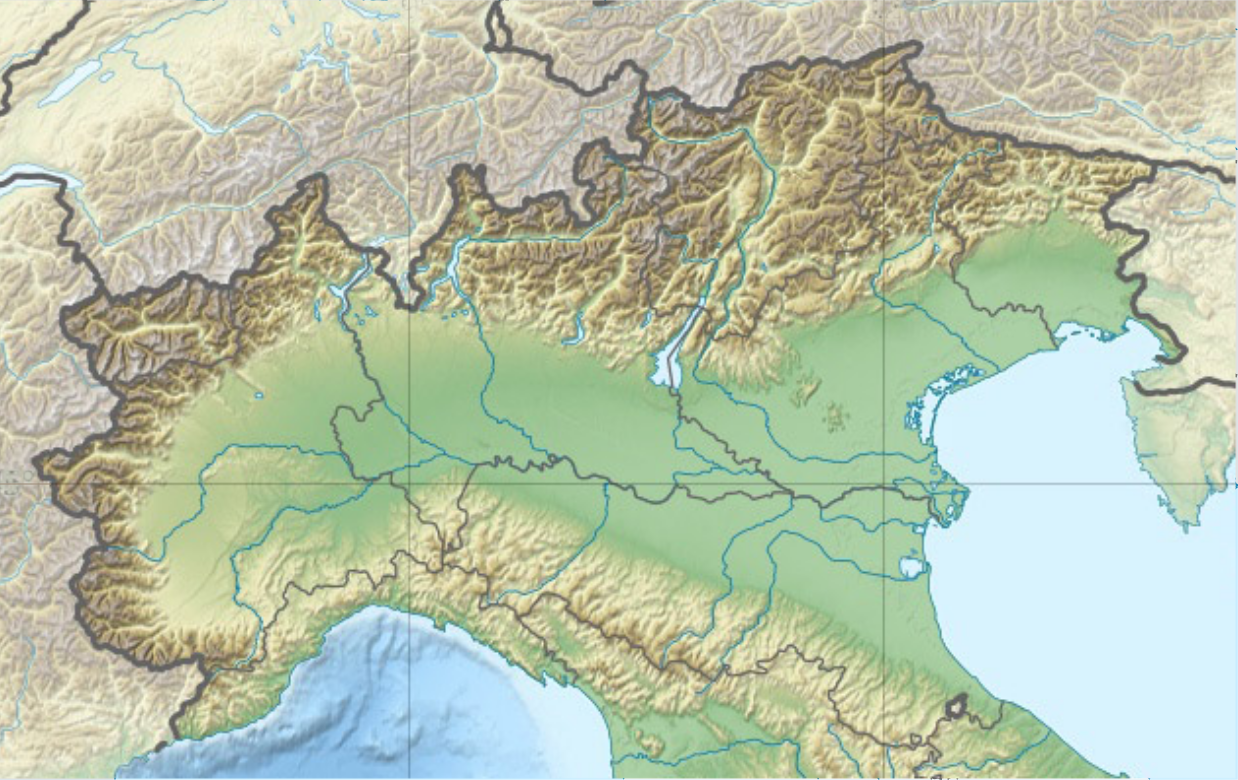
Located at 44.33N, 7.55E in the town of Boves, Piedmont, near the French border at the foot of the Maritime Alps. Cuneo Levaldigi Airport (LIMZ) is 15 km northwest. Turin Caselle Airport (LIMF) is 85 km northeast. Best viewed at 3,000-5,000 ft, where the town's position against the alpine foothills is visible.