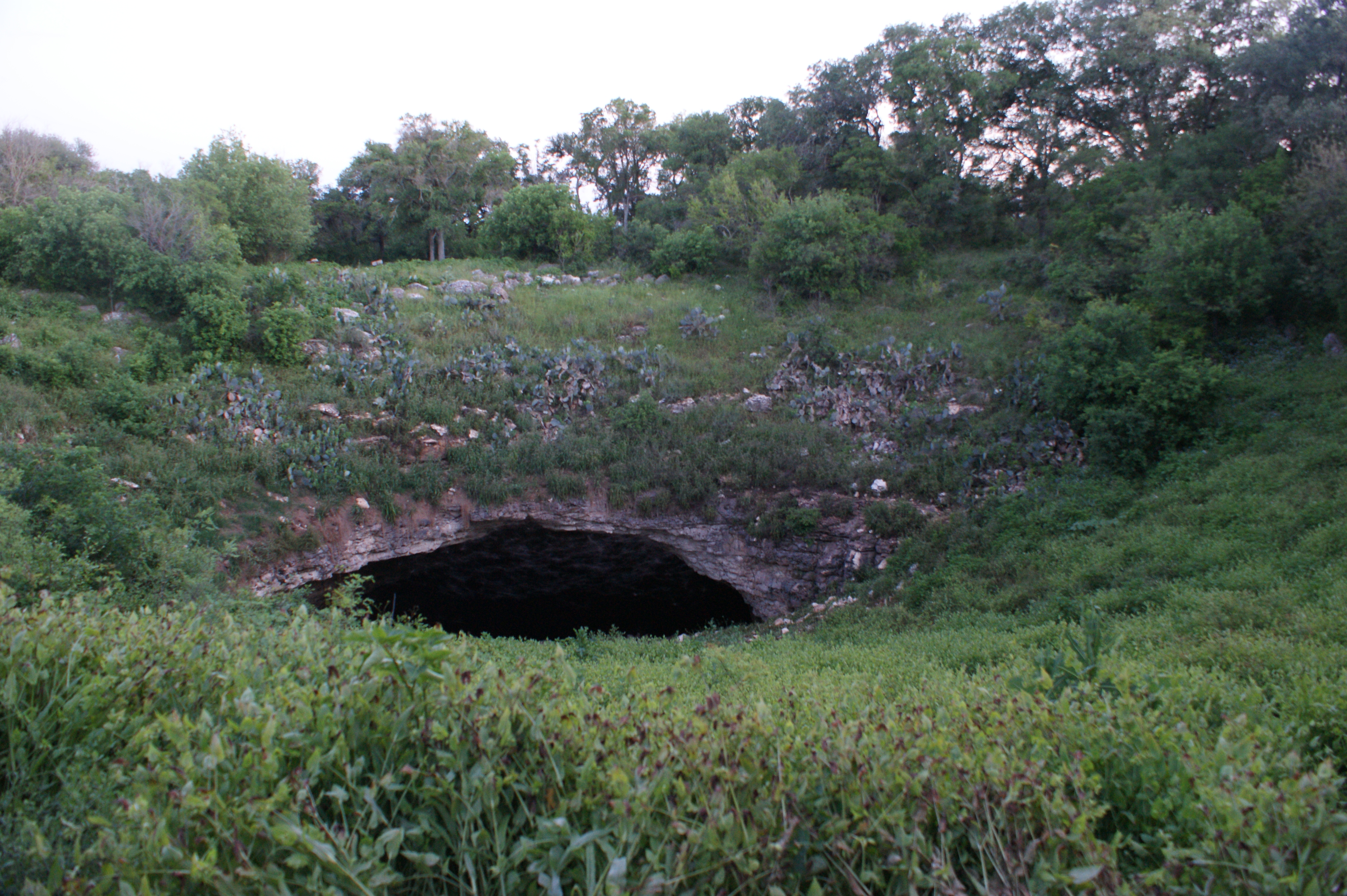
Bracken Cave
Each summer evening in the Texas Hill Country, the sky above Bracken Cave comes alive. Twenty million Mexican free-tailed bats emerge from the cave in a spiraling column that takes three hours to empty. From miles away, the emergence looks like smoke or a tornado; up close, it's a river of wings and sound, millions of bats pouring into the darkening sky to hunt. They'll consume over 100 tons of insects before dawn - moths, beetles, and agricultural pests that would otherwise devastate Texas crops. Bracken Cave holds the largest bat colony in the world, possibly the largest concentration of mammals anywhere on Earth. The bats arrive in March and leave in October, spending summers raising young in the cave's chambers. The cave is owned by Bat Conservation International, which opens it to small groups of visitors who want to witness one of nature's most spectacular events.
The Colony
Bracken Cave is home to approximately 20 million Mexican free-tailed bats during breeding season (March to October). The females arrive pregnant in spring, give birth in June, and raise their young through summer. By fall, the colony departs for Mexico. The density is staggering: bats cover the cave's ceiling in layers, up to 500 per square foot. The young are born in designated nursery areas and somehow recognized by their mothers among millions of identical pups. The colony has likely existed for thousands of years, maintained by the cave's constant temperature and protected location. It's the largest concentration of bats - and possibly the largest concentration of mammals - known anywhere on Earth.
The Emergence
Each evening at dusk, the bats begin to leave. The emergence starts slowly - a few scouts, then dozens, then hundreds, then millions. The bats spiral upward in a counterclockwise vortex, creating a column that can be seen on weather radar. From ground level, the sound is overwhelming - millions of wings and voices filling the air. The emergence takes up to three hours as the entire colony empties. Hawks and owls wait at the cave entrance, picking off stragglers. The bats disperse across hundreds of square miles, hunting insects at altitudes up to 10,000 feet. They return before dawn, the column flowing back into the cave as the sky lightens.
The Service
The Bracken Colony provides enormous ecological and economic services. The bats consume an estimated 200 tons of insects each night - including corn earworm moths, fall armyworms, and other agricultural pests. One study estimated the colony saves Texas farmers $1.5 million annually in reduced pesticide costs. The bats' guano (accumulated over millennia) was mined during the Civil War for gunpowder and remains a valuable fertilizer. Beyond economics, the colony controls insect populations in ways that chemicals cannot, with no negative side effects. The bats are partners in Texas agriculture, whether farmers recognize it or not.
The Conservation
Bat Conservation International purchased Bracken Cave and 1,500 surrounding acres in 1992 to protect the colony from development. The cave is closed to the public except for organized viewing events. BCI limits group sizes and restricts access to prevent disturbing the bats. The organization fights proposed developments that would bring lights, noise, and traffic too close to the colony. Wind turbines are a particular concern - bats are killed by turbine blades, and a single turbine near Bracken could kill thousands nightly. Conservation efforts have kept the colony stable, but threats continue as the San Antonio metropolitan area expands northward.
Visiting Bracken Cave
Bracken Cave is owned by Bat Conservation International and not open for casual visits. BCI offers member viewing nights from May through October; events sell out quickly. Members receive priority; non-members can attend if space permits. The experience includes educational talks and viewing platforms overlooking the cave entrance. San Antonio is 30 miles south; San Antonio International Airport is the nearest commercial service. No photography with flash is permitted. Dress for warm Texas evenings. The Congress Avenue Bridge in Austin hosts a smaller (but more accessible) colony of 1.5 million bats; it's a good alternative if Bracken Cave events are full.
From the Air
Located at 29.69°N, 98.36°W in the Texas Hill Country, about 30 miles north of San Antonio. From altitude, the cave is not directly visible, but the bat emergence can be detected by weather radar - millions of bats appearing as a spiral on Doppler displays each evening. The terrain is classic Hill Country - rolling limestone hills, scrub oak, scattered ranches. San Antonio's urban edge is visible to the south. The Balcones Escarpment, where the Hill Country meets the coastal plain, is visible as a change in terrain. San Antonio International Airport is 30 miles south.