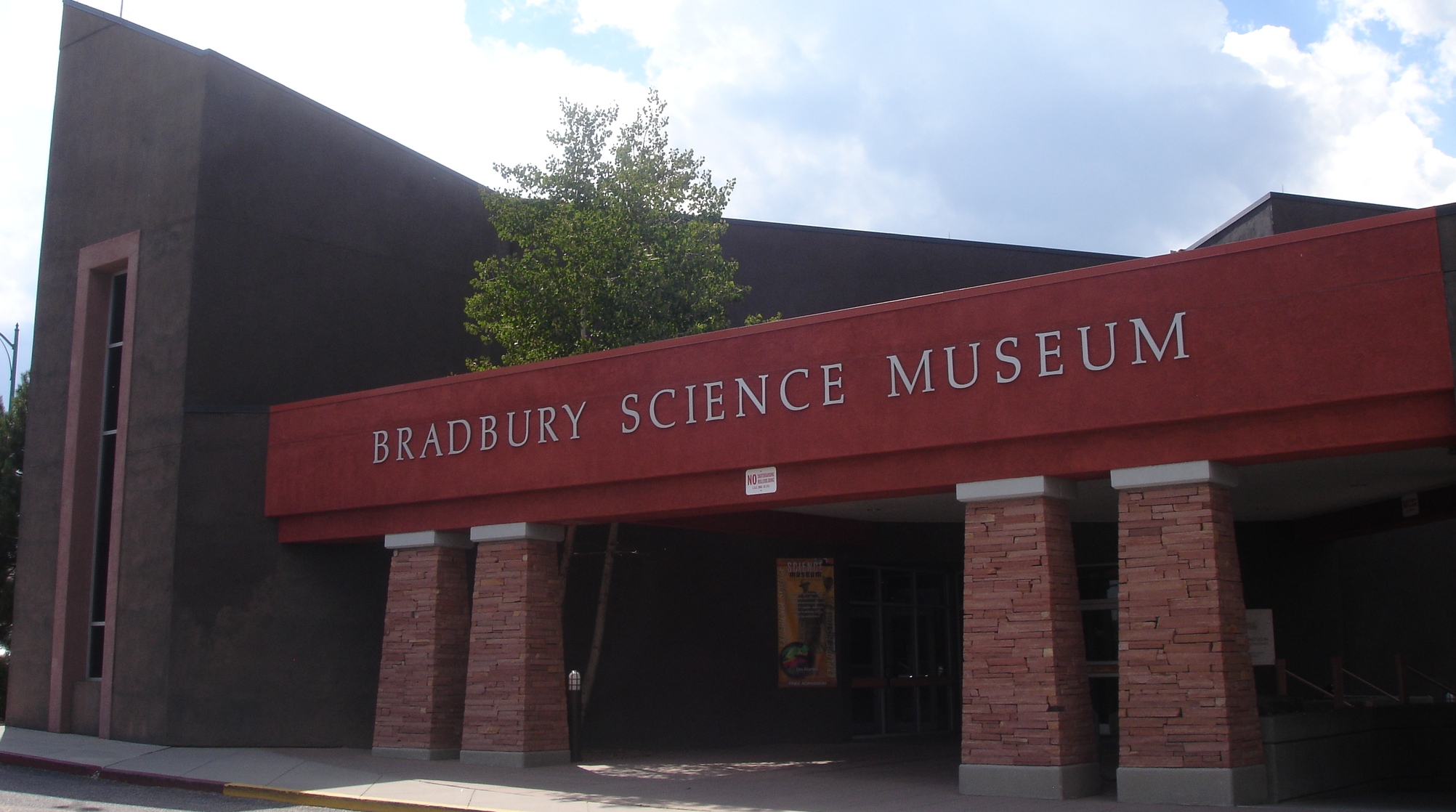
Bradbury Science Museum: Where the Atomic Age Goes on Display
The first museum at Los Alamos National Laboratory was an ice house. In 1953, Robert Krohn, who had overseen early nuclear testing at what was then the Los Alamos Scientific Laboratory, convinced director Norris Bradbury that the facility needed somewhere to preserve its history. The old ice house on the bank of Ashley Pond, already fitted with a vault door, met the security requirements for housing classified exhibits. It opened to official visitors in 1954. What began as a secured room of secret artifacts has since become the Bradbury Science Museum, a free public institution in downtown Los Alamos where visitors stand face-to-face with full-size replicas of Little Boy and Fat Man, the atomic bombs that ended World War II.
From Vault Door to Open Door
For its first decade, the museum existed behind security clearances. Then in 1963, Robert Porton, the Laboratory's community relations director, pushed to add unclassified exhibits. Bradbury approved the transfer, and soon World War II-era documents, photographs, and scientific memorabilia went on public display alongside working models of unclassified research projects. The response was immediate: 14,000 visitors from 50 states and 40 countries came in the first year alone. By 1965, the museum had moved to larger quarters. Hands-on models donated by scientific groups and divisions within the Laboratory filled the expanding space, transforming a classified archive into something approaching a real public museum.
The Bradbury Name
In 1970, the museum was renamed for Norris E. Bradbury, the Laboratory's second director who had led the institution from 1945 to 1970. Bradbury had shepherded Los Alamos through the transition from wartime crash program to permanent national laboratory, overseeing the development of thermonuclear weapons and the growth of the facility into a major research center. The museum bearing his name underwent a major renovation in 1981, replacing informal donated exhibits with professionally designed displays. Videotapes, videodisks, and interactive computer programs arrived. New artifacts included a Mark 12A warhead, models of Vela and Navistar verification and communication satellites, and an air-launched cruise missile.
Moving Downtown
By 1987, annual attendance had reached 80,000 and parking had become impossible. Laboratory officials began searching for a new home. In April 1993, the museum moved into its present location in the heart of downtown Los Alamos, a building designed by William Agnew and Associates and leased by the Laboratory from a private owner. The new space gave the museum room to grow into the institution it is today: approximately 40 interactive exhibits tracing the history of the Manhattan Project, highlighting current and historic defense research, and showcasing work in nuclear weapons stockpile stewardship and other fields.
What You Will Find Inside
The museum's exhibits span the full arc of Los Alamos history, from the secret wartime laboratory to cutting-edge modern research. The Manhattan Project galleries display declassified documents, photographs, and artifacts from the race to build the atomic bomb, including those full-size models of Little Boy and Fat Man. Leaflets dropped on Hiroshima warning of further attacks are displayed alongside the weapons that made those warnings real. More recent additions cover the history of supercomputers, the Los Alamos Neutron Science Center, contributions to the Mars Curiosity rover, nanotechnology, algae biofuels, and high explosives research. Admission remains free.
The Town That Science Built
The Bradbury Science Museum sits at the center of a town that exists because of science. Los Alamos was a boys' ranch school before the Manhattan Project commandeered it in 1943. The scientists who came to build the bomb included multiple Nobel laureates: Edwin McMillan, Emilio Segre, Frederick Reines. J. Robert Oppenheimer directed the laboratory. After the war, many stayed. The town grew around the laboratory, and the museum became its public face, the place where the most consequential and controversial scientific work of the twentieth century meets the people it was done for. Standing before those bomb replicas, the weight of what happened here is inescapable.
From the Air
Located at 35.88N, 106.30W in downtown Los Alamos, New Mexico, on the Pajarito Plateau at approximately 7,300 feet elevation. The town sits on finger-like mesas separated by deep canyons, a distinctive pattern visible from altitude. Los Alamos County Airport (KLAM) is on the town's eastern edge. Santa Fe Regional Airport (KSAF) is 43 miles south. Albuquerque International Sunport (KABQ) is 100 miles south.