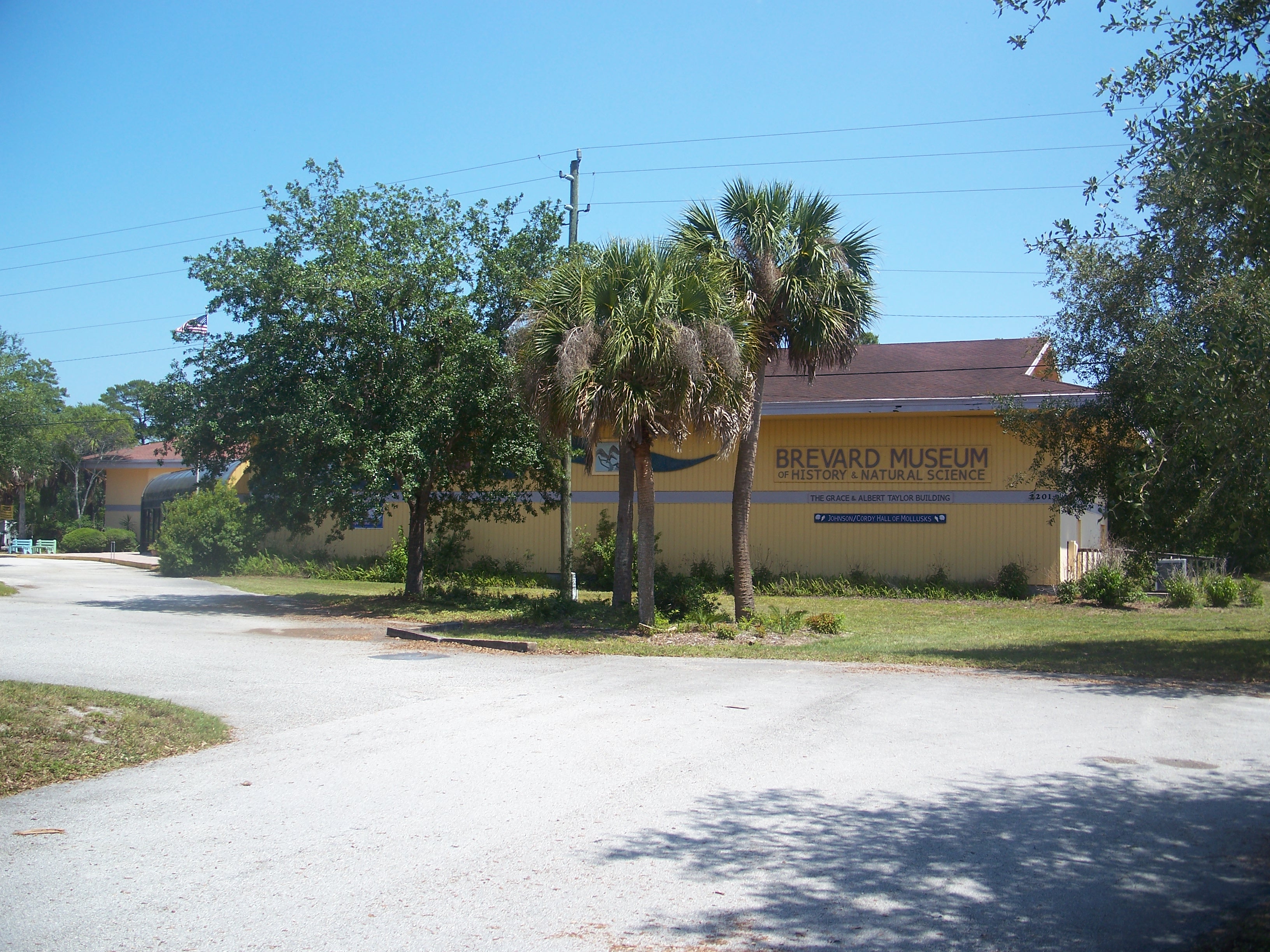
Brevard Museum of History & Natural Science
In 1982, a construction crew grading land for a housing development near Titusville, Florida, uncovered something that would rewrite the timeline of early human life in North America. Buried in the peat of a shallow pond lay the remarkably preserved remains of people who had died between 7,000 and 8,000 years ago, some with intact brain tissue still inside their skulls. The Windover archaeological site became one of the most significant prehistoric discoveries in the Western Hemisphere, and today the centerpiece of its public legacy sits in a modest museum on Michigan Avenue in Cocoa: the Brevard Museum of History & Natural Science, where a facial reconstruction of "Windover Woman" stares back at visitors from across seventy centuries.
Voices from the Peat
The Windover site yielded nearly 200 individual burials, and what made the discovery extraordinary was not just age but preservation. The anaerobic environment of the peat bog and a favorable pH balance in the pond water had kept organic material intact to a degree that stunned archaeologists. Ninety-one skulls still contained brain tissue. Researchers extracted the first viable ancient DNA ever recovered from a prehistoric site in North America, opening new avenues for understanding early human migration and genetics. The site was designated a National Historic Landmark in 1987. At the Brevard Museum, a re-creation of the Windover Dig allows visitors to see how archaeologists worked the waterlogged site, while the remains of Windover Woman anchor the permanent exhibition. The bones are older than the Great Pyramids by two thousand years.
Ice Age to Space Age
The Windover exhibit is the museum's crown jewel, but the collection spans a far wider sweep of time. Fossils of a giant ground sloth and a mastodon fill a gallery dedicated to Ice Age animals that once roamed the Florida peninsula when sea levels were lower and the landscape looked nothing like the subtropical coast of today. A Florida timeline traces the region's story through the Seminole, Miccosukee, and Ais peoples, the citrus and turpentine industries that built the local economy, and the space program that transformed the entire Space Coast. Visitors can view the personal effects of Albert and Grace Taylor, arrowheads, shells, and casts of both prehistoric and modern animal fossils. Replicas of a one-room school, a general store, and the Cape Canaveral lighthouse round out the permanent collection, which numbered over 3,000 artifacts as of 2013.
Twenty-Two Acres of Old Florida
Step outside the museum's 14,750-square-foot building and you enter something increasingly rare on Florida's Space Coast: undeveloped land. A 22-acre nature preserve surrounds the museum, threaded by the Johnnie Johnson Nature Trails. The paths connect to Eastern Florida State College's planetarium and Travis Park, offering hikers a loop through habitat where Florida gopher tortoises forage in the underbrush. A butterfly garden maintained by Master Gardeners draws monarchs, swallowtails, and native pollinators. The Imaginary Station, a children's play area, features a space capsule that nods to the Kennedy Space Center just thirty miles to the east. The preserve is open seven days a week, outlasting even the museum's own hours, a patch of wild Florida held in place while development presses in from every side.
A Community's Keepsake
The museum's institutional history mirrors the shifting fortunes of small cultural organizations across Florida. In September 2014, the Florida Historical Society became the museum's parent organization, lending statewide resources to a local collection. The City of Cocoa retained ownership of the building and property, and in 2021 the Florida Historical Society donated the entire collection back to the city. Today the Brevard Museum and Science Center operates as a 501(c)(3) nonprofit with free admission, a decision that reflects its identity as a community resource rather than a tourist destination. Docents lead visitors through galleries that connect Ice Age megafauna to Space Age rockets, all within walking distance of a nature trail where tortoises still lumber through the palmetto. It is a place where the deep past and the immediate present share the same patch of Florida ground.
From the Air
The Brevard Museum of History & Natural Science is located at 28.39°N, 80.76°W on Michigan Avenue in Cocoa, Florida, near Eastern Florida State College. From the air, the museum and nature preserve appear as a green patch adjacent to the college campus, west of the Indian River and Merritt Island. The Kennedy Space Center and Cape Canaveral are visible to the northeast. Nearest airports: Space Coast Regional Airport (KTIX) approximately 10nm north; Melbourne Orlando International Airport (KMLB) approximately 18nm south; Merritt Island Airport (KCOI) approximately 8nm east. Recommended viewing altitude: 2,000-3,000 ft AGL for context of the museum's position between the college campus and surrounding development.