Brick Palace
Two ex-convicts from Botany Bay built it. The most powerful king in Hawaiian history commissioned it. And the queen it was intended for refused to set foot inside. The Brick Palace, begun in 1798 and completed in 1802, was the first western-style structure in the Hawaiian Islands -- a two-story red brick building erected at Keawaʻiki point in Lahaina for Kamehameha the Great. His favorite wife, Kaʻahumanu, took one look and chose to live in a traditional Hawaiian home just feet away. The palace's brief, strange life says as much about the collision of cultures in early Hawaii as any treaty or battle.
A King's Fascination, a Queen's Refusal
Kamehameha I was captivated by western construction. After unifying most of the Hawaiian Islands through a series of wars culminating in the Battle of Nuʻuanu, he chose Lahaina as his seat of government -- in part because of his deep ties to Maui. Two of his wives, Kaʻahumanu and Keōpūolani, were from Maui districts. He enlisted two foreigners, former convicts from England who had ended up in Hawaii via the penal colony at Botany Bay, to build him a proper western house. The structure took four years to complete, requiring an estimated 92 tons of local clay to produce 38,500 bricks. But Kaʻahumanu, the most politically powerful of his wives, flatly refused to live in it. She preferred the traditional hale, built of local wood and thatch, the kind of dwelling her people had inhabited for centuries. The palace became more symbol than home -- a monument to the king's outward-looking ambitions and his wife's quiet insistence on Hawaiian ways.
Red Bricks and British Bond
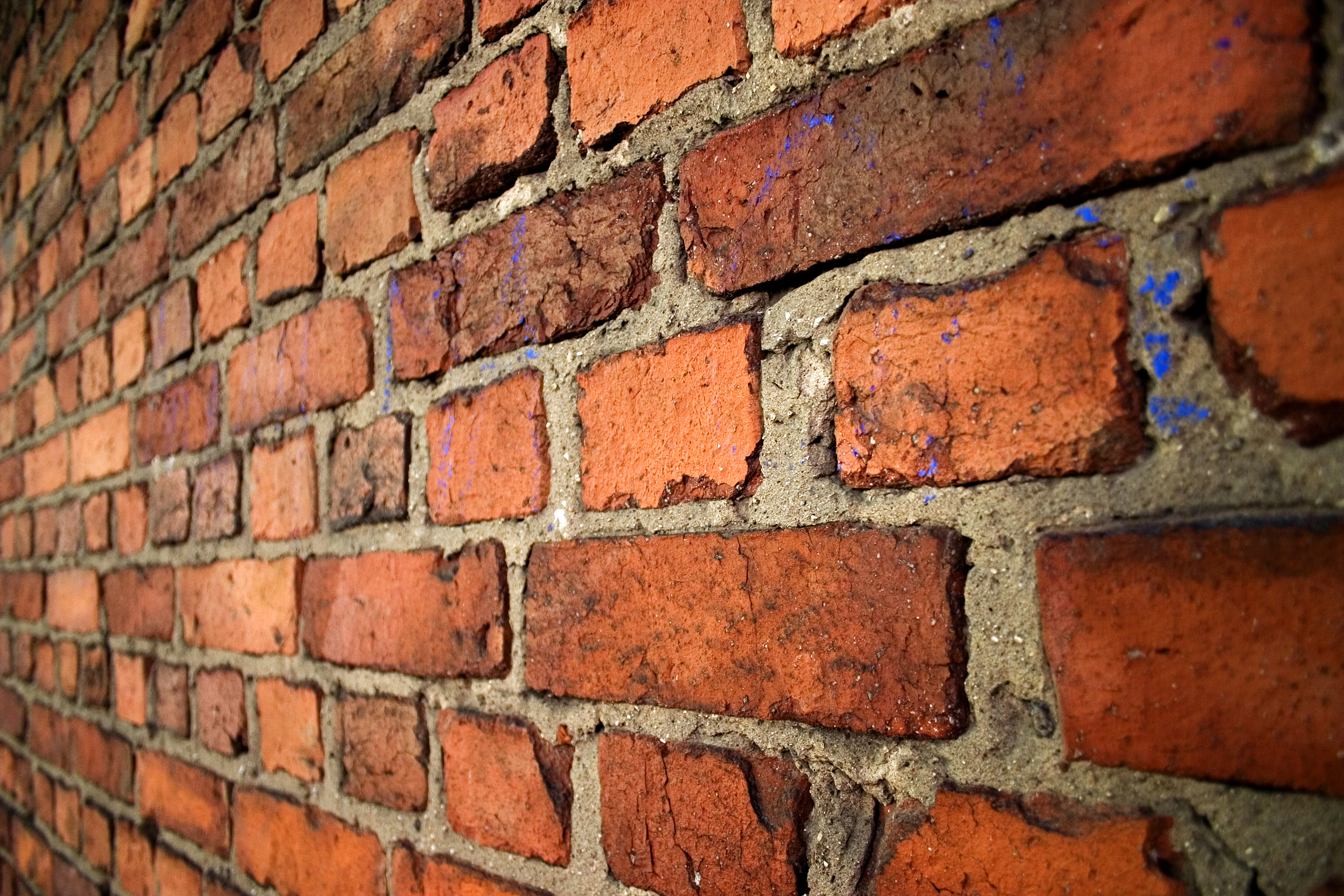
The construction itself was an exercise in improvisation. The two builders laid the bricks in a pattern called British bond -- alternating rows of headers and stretchers -- likely because they were English. The bricks were fired from local brownish clay, and their quality varied widely, suggesting experimentation or inconsistent material. The mortar was a mixture of sand and coral, with the coral burned to extract lime. A lavender-colored mortar ran through most of the structure, while a softer brown mixture appeared at one corner. The building measured 41 feet long by 15 feet wide, divided into four rooms with Koa wood interiors, and featured glazed windows and possibly a chimney. It stood on a traditional Hawaiian mound paved with black water-smoothed pebbles -- a foundation designed for a lightweight thatched hut, not a two-story brick building. Within 17 years, the walls began to sag under their own weight.
The Royal Taro Patch
The palace was more than a building; it anchored a neighborhood. Kamehameha's entourage of over 1,000 people encamped in the surrounding area, which became associated with the chiefly line of Kamehameha. Food was cultivated for the royal family in what became known as the Royal Taro Patch. The site was a center of Hawaiian political power during the years when Lahaina served as the kingdom's capital. But after Kamehameha's unsuccessful campaign to conquer Kauaʻi, he moved his court to Honolulu, and the Brick Palace lost its reason for being. The sagging walls were plastered with mortar in an attempt at repair, but the building's fate was sealed by the shift in political gravity from Maui to Oʻahu.
Excavation and Memory
The palace disappeared into the ground. Its remains lay buried until 1964, when archaeologists Walter M. and Demaris L. Fredericksen conducted excavations for the Maui Historical Commission. They uncovered three corners of the structure, establishing its true dimensions and confirming the British bond brickwork. Four courses of brick remained at the highest point of the surviving walls. Part of Wharf Street was rerouted during the dig, creating the curve into Papelekane Street that exists today. A reconstructed outline of the palace foundations is now permanently displayed at Lahaina Banyan Court Park, set into a concrete base with a course of red brick laid in the original pattern. It is a spare memorial -- just the footprint of a building that was too heavy for its foundation, too foreign for its intended occupant, and too ambitious for its moment -- but it marks the exact spot where Hawaiian and western worlds first tried, and failed, to share the same roof.
From the Air
The Brick Palace site is at 20.8726N, 156.679W in Lahaina, behind the public library at Lahaina Banyan Court Park off Front Street. From the air, the site is indistinguishable from the surrounding park; look for the banyan tree canopy and the harbor area for orientation. Kapalua Airport (PHJH) is 7 nm northwest; Kahului Airport (PHOG) is 23 nm east. Best viewed at 1,000-2,000 feet.