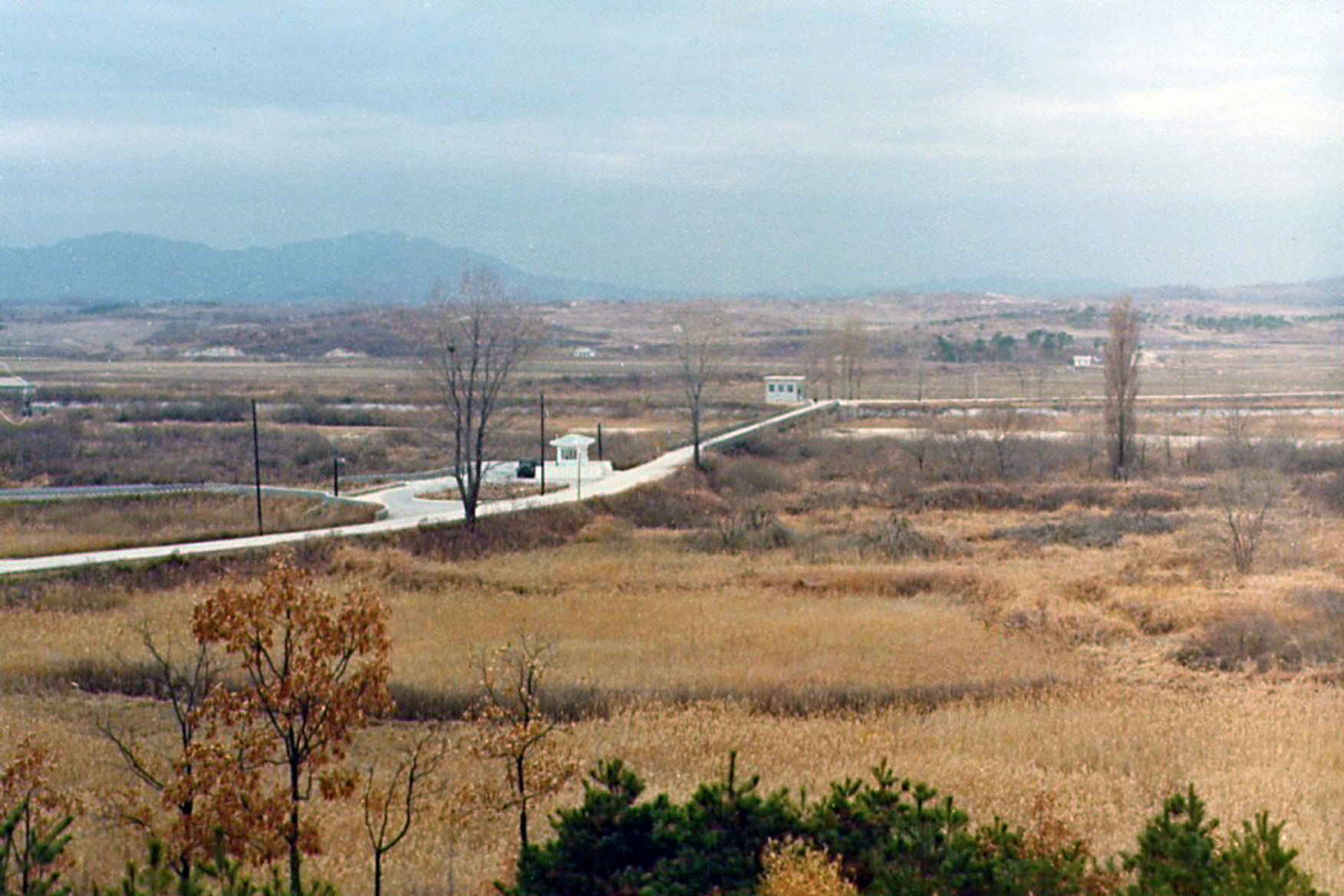
Bridge of No Return
The choice was absolute. Stand on this narrow concrete bridge spanning the Sachong River, look toward home, and decide. Cross, and you could never come back. Stay, and the country you were born in would become a memory. Between 1953 and 1968, tens of thousands of prisoners of war stood on the Bridge of No Return at Panmunjom and made that decision in front of guards, cameras, and loudspeakers blaring propaganda. The bridge's name was not a metaphor. It was the rule.
The Weight of a Single Step
After the Korean Armistice was signed in July 1953, the bridge became the mechanism for one of the largest prisoner exchanges in modern warfare. During Operation Little Switch in April 1953, 605 sick and wounded United Nations Command prisoners crossed in exchange for 6,030 North Korean prisoners. Then came Operation Big Switch: 13,444 UNC prisoners walked south while 89,493 Korean People's Army and Chinese People's Volunteer Army prisoners went north. Each person was brought to the banks of the Sachong River and asked a single question -- did they wish to cross and return to their countrymen, or remain with their captors? The answer was final. Many prisoners on both sides chose not to go home, a decision that haunted families for decades. The bridge distilled the entire Korean conflict into one irreversible footstep.
The Loneliest Outpost in the World
The Military Demarcation Line runs through the bridge's center, following the stream below. Guardhouses stood at each end -- the North Korean building designated KPA#4, the United Nations Command checkpoint called CP#3. The UNC position earned a grimmer nickname: "The Loneliest Outpost in the World." Surrounded on all access routes by North Korean checkpoints, visible from only one other UNC site and only during winter when the trees were bare, CP#3 sat in near-total isolation. North Korean soldiers made repeated attempts to grab UNC personnel from the checkpoint and drag them across the bridge into the North. The men stationed there lived in a state of constant vigilance, knowing that help was far away and provocation was always close.
The Pueblo Crew and the Last Crossing
On January 23, 1968, North Korean naval forces seized the USS Pueblo in international waters, capturing its 82 crew members. For eleven months, the crew endured captivity. On December 23, 1968, they were finally released -- and ordered to walk across the Bridge of No Return into South Korea. As the crew crossed, loudspeakers broadcast a forced confession by Captain Lloyd Bucher. It was the last time the bridge served its original purpose as a crossing point. The incident marked the beginning of an escalation in tensions that would culminate eight years later in the axe murder incident of August 1976, when two American officers were killed by North Korean soldiers near the bridge over a dispute about trimming a poplar tree.
A Bridge to Nowhere
After the 1976 axe murder incident, the United Nations Command demanded that the Military Demarcation Line within the Joint Security Area be enforced and clearly marked. North Korea responded by building a new bridge on its side of the line in just 72 hours -- a structure promptly dubbed "The 72-Hour Bridge." The original Bridge of No Return fell into disuse. CP#3 was abandoned in the mid-1980s, and concrete-filled bollards were placed in the road to make vehicle passage impossible. By 2003, the bridge needed significant repairs. The United States offered to fix or replace it, but North Korea refused. Today, U.S. Army soldiers stationed at Camp Bonifas in the Joint Security Area can still hold promotion and reenlistment ceremonies at the bridge's center, standing on the demarcation line with guards facing west toward North Korea. The bridge that once carried the weight of a hundred thousand irrevocable decisions now carries only memory.
From the Air
Located at 37.956N, 126.671E within the Joint Security Area of the Korean DMZ. Best viewed below 3,000 feet, though flight restrictions apply in this sensitive military zone. The bridge spans the Sachong River and is a small structure -- look for the cluster of JSA buildings near the Military Demarcation Line. Nearest airports: Gimpo International (RKSS, ~50 km south) and Seoul Air Base (RKSM). Osan Air Base (RKSO) lies approximately 70 km to the south.