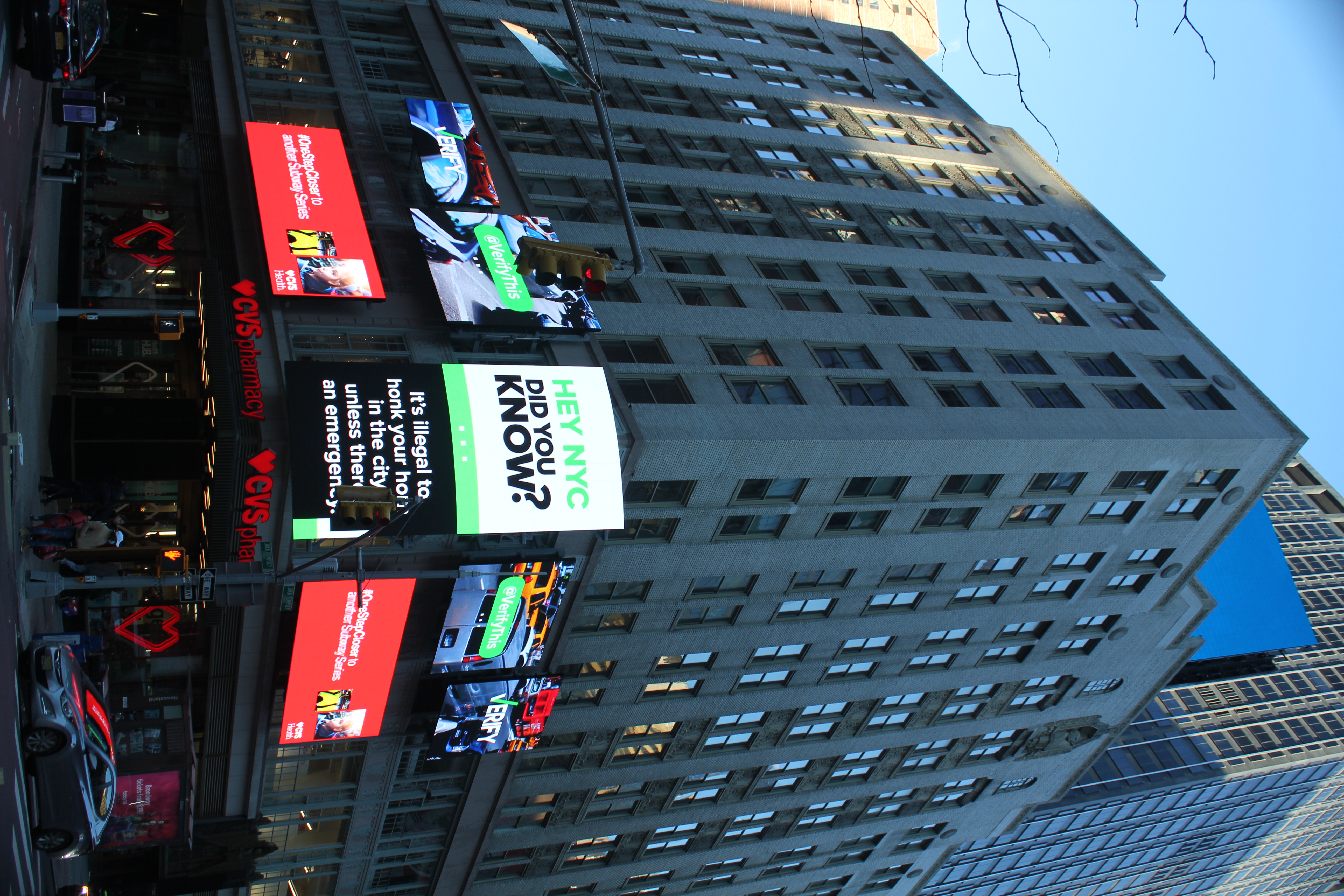
Brill Building
By 1962, a songwriter could walk into 1619 Broadway, ride the elevator to any of 165 music businesses, cut a demo, find a publisher, get the record printed, and strike a deal with radio promoters -- all without stepping back onto the sidewalk. The Brill Building, an 11-story Art Deco office tower just north of Times Square, had become something unprecedented: a vertical factory for American pop music, where the sounds pouring out of tiny rooms on every floor would define what a generation heard on the radio.
A Haberdasher's Accidental Legacy
The building rose in 1931 as the Alan E. Lefcourt Building, named after the son of its builder Abraham E. Lefcourt, and designed by Victor Bark Jr. The Brill name came later and almost by accident -- Maurice Brill was a haberdasher who ran a shop at street level and eventually bought the entire building. He could not have known that his surname would become shorthand for a revolution in American songwriting. Located at Broadway and 49th Street, the building stood in the orbit of Tin Pan Alley's fading tradition, where professional songwriters had long crafted popular music to order. But what happened inside the Brill Building in the late 1950s and early 1960s would transform that tradition into something louder, younger, and far more profitable.
The Hit Factory on Every Floor
The Brill Building approach was, in some ways, a return to the music business before rock and roll's first wave. Power shifted back to publishers and record labels, away from unpredictable performers. Songs were written to order by professionals who could tailor lyrics and melodies to a targeted teen audience. But the results were anything but formulaic. Working in cramped rooms with upright pianos pushed against thin walls, songwriter-producer teams -- mostly duos, many of them married couples or close friends -- turned out an astonishing run of hits. Gerry Goffin and Carole King wrote "The Loco-Motion." Doc Pomus and Mort Shuman produced "Save the Last Dance for Me." Burt Bacharach and Hal David crafted "The Look of Love." Neil Sedaka and Howard Greenfield gave the world "Breaking Up Is Hard to Do." The competitive energy was fierce. You could hear what the team next door was writing through the walls, and it pushed everyone to work harder.
The Sound That Spilled Across Broadway
The Brill Building's influence extended beyond its own address. A block away at 1650 Broadway, Aldon Music -- founded in 1958 by Al Nevins and Don Kirshner -- gathered another constellation of writers under one roof. The two buildings fed off each other, creating a creative ecosystem that dominated the pop charts. Bobby Darin, The Drifters with Ben E. King, Connie Francis, The Ronettes, The Shangri-Las, Frankie Valli and The Four Seasons, Dionne Warwick -- all passed through these corridors. Phil Spector developed his Wall of Sound partly within this orbit. A young Paul Simon wrote under the pseudonym Jerry Landis in these same rooms. The studio musicians who backed these sessions -- drummers like Gary Chester, guitarists like Al Gorgoni, the legendary engineer Phil Ramone -- formed an unofficial house band whose rhythms and arrangements became the sonic signature of an era.
Echoes in the Stairwells
The Brill Building's influence rippled outward through decades of popular culture. The 1996 film Grace of My Heart fictionalized life inside its walls, with Illeana Douglas playing a songwriter modeled on Carole King. The Broadway musical Beautiful traced King's early career at 1650 Broadway. Jersey Boys recreated scenes in the Allegro Studios. HBO's Vinyl set its fictional record label inside the building. Even Jack Dempsey's Broadway Restaurant occupied the ground floor for a time, adding a layer of celebrity to an address already thick with it. The New York City Landmarks Preservation Commission designated the Brill Building a landmark in March 2010, recognizing what the music industry had known for half a century: this was hallowed ground.
A Landmark Between Tenants
The building's recent history has been turbulent in ways its songwriters might have set to a minor key. Brookfield Properties bought it for $220 million at a foreclosure auction in 2017. A CVS Pharmacy opened on the first two floors in 2019, and TD Bank took ground-floor space. In 2023, Brookfield transferred the deed to lender Mack Real Estate Group in a deal valued at $216.1 million, with some storefronts sitting vacant. The upper floors, where Carole King once raced Cynthia Weil to finish a song, where Phil Spector first imagined walls of sound, are quieter now. But the building still stands at the corner of Broadway and 49th, its Art Deco facade holding its ground against the LED spectacle of modern Times Square -- a reminder that the most consequential American music of the early 1960s was made not in stadiums or concert halls, but in small rooms behind closed doors, one floor stacked on top of another.
From the Air
Located at 40.7611N, 73.9845W in Midtown Manhattan, at the intersection of Broadway and 49th Street, just north of Times Square. The 11-story Art Deco building is difficult to distinguish from altitude among Midtown's dense high-rises. Best spotted by orienting to the bright lights of Times Square and looking slightly north along Broadway. Nearest airports: KLGA (LaGuardia, 7nm NE), KJFK (JFK, 13nm SE), KEWR (Newark, 10nm W). Recommended viewing altitude: 2,000-3,000 ft AGL for the Times Square corridor.