The Bristlecone Pines: The Oldest Living Things on Earth
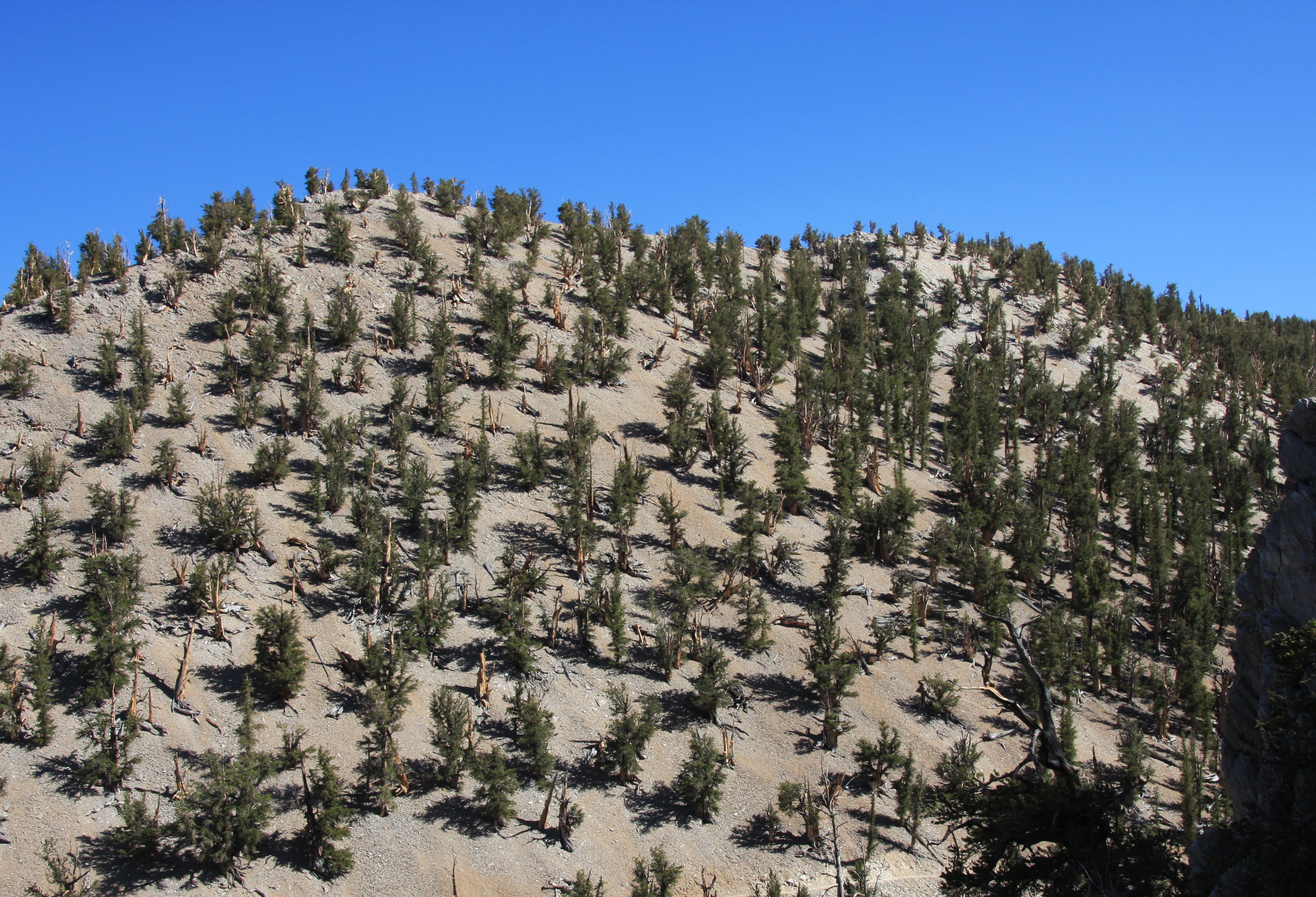
The oldest living things on Earth are hiding in plain sight in the White Mountains of California. Great Basin bristlecone pines have survived for over 5,000 years - individual trees that germinated when humans were inventing writing, that were already ancient when Rome was founded, that have watched empires rise and fall and rise again while they grew another millimeter. They look dead - twisted, bleached, mostly bark and exposed heartwood - but they're alive, adding a few cells each year, surviving on ridges so high and cold and dry that nothing else can compete with them. The secret to immortality, it turns out, is living where nothing wants to kill you.
The Age
The oldest known bristlecone pine is over 5,000 years old - germinated around 3050 BCE, when the Great Pyramid of Giza was under construction. Other trees exceed 4,000 years. The ages are determined by counting growth rings, which bristlecones produce reliably each year. Living trees provide continuous ring records; dead trees extend the chronology further back - the continuous bristlecone tree-ring record now reaches over 10,000 years, enabling precise radiocarbon calibration and climate reconstruction. These trees aren't just old; they're scientific instruments measuring millennia.
The Survival
Bristlecone pines survive by living where nothing else can. Their preferred habitat is high-elevation limestone ridges - cold, dry, windswept, and nutrient-poor. The harsh conditions slow growth to a crawl (sometimes a century per inch of radius), but they also eliminate competition and disease. Bristlecones can survive with 90% of their bark dead, keeping just a 'lifeline strip' of living tissue connecting roots to crown. Parts of the tree die; the tree lives on. The survival strategy is extreme minimalism - grow slow, waste nothing, outlast everything.
The Discovery
Edmund Schulman of the University of Arizona discovered the bristlecones' extreme age in the 1950s, finding trees over 4,000 years old in the White Mountains. The oldest known tree, dubbed 'Methuselah,' was discovered in 1957. Its exact location is kept secret to protect it from vandalism. In 1964, a graduate student named Donald Currey was studying climate history on Nevada's Wheeler Peak when his coring tool stuck in a bristlecone. He cut the tree down to retrieve his equipment and discovered, by counting rings, that he'd killed the oldest known living organism on Earth - later named 'Prometheus,' over 4,900 years old. The incident remains dendrochronology's greatest cautionary tale.
The Threat
Climate change threatens even these ancient survivors. Bristlecone pine ecosystems are moving uphill as temperatures rise, but mountaintops are finite - eventually, there's nowhere higher to go. Mountain pine beetles, historically limited by cold temperatures, are now reaching bristlecone elevations. White pine blister rust, a fungal disease, has begun appearing in bristlecone stands. The trees that survived 5,000 years of climate variation may not survive the next century's changes. Their longevity, based on environmental stability, becomes vulnerability when the environment destabilizes.
Visiting the Bristlecone Pines
The Ancient Bristlecone Pine Forest is located in the Inyo National Forest, California, accessed via Highway 168 east of Big Pine. The Schulman Grove, at 10,000 feet elevation, is the most accessible area with visitor center and walking trails. The Methuselah Grove contains the famous tree (unmarked for protection). The patriarch Grove, at 11,000 feet, has even older trees but requires 4WD and typically opens late summer. Bring layers - temperatures can be 30°F cooler than valley floors. The road is typically open May through November; check conditions before visiting. Allow 2-3 hours minimum; the thin air makes hiking slower than expected.
From the Air
Located at 37.38°N, 118.18°W in the White Mountains of eastern California. From altitude, the Ancient Bristlecone Pine Forest occupies high ridges above the tree line of typical conifers. The terrain is pale - dolomite limestone that gives the mountains their name. The trees themselves are invisible from high altitude, but their habitat is distinctive: sparse, high, exposed ridges near 10,000-11,000 feet. The Sierra Nevada rises to the west across Owens Valley; the Nevada desert stretches east. The access road is visible as a thin line climbing from Big Pine. This seemingly barren landscape contains the oldest living organisms on Earth.