British Cemetery of Bahia
Before Salvador had a public cemetery, it had this one. On a slope of Ladeira da Barra, above the Atlantic crash at the mouth of the Bay of All Saints, British merchants were burying their dead in 1813 - a year earlier than the cemetery was officially built, and decades before any Bahian Catholic could be interred outside a church floor. They had to. Colonial Brazil's constitution forbade non-Catholics from being buried alongside Catholics, and the British who had followed the Portuguese royal family across the Atlantic in 1808 needed somewhere to put their mothers, their children, and their consuls. What they built, wedged onto land owned by the Roman Catholic Archdiocese of São Salvador da Bahia, is the oldest non-Catholic burial ground on this coast.
The Treaty That Opened the Door
The cemetery exists because a Portuguese court ran from Napoleon and brought its empire with it. In November 1807, as French armies marched toward Lisbon, the Royal Navy escorted the entire Braganza court across the Atlantic to Rio de Janeiro, with British warships shepherding the royal ships the whole way. The price of that escort was the Navigation and Trade Treaty of 1810 - often called the Strangford Treaty after Lord Strangford, the British minister who negotiated it. Its economic terms gave British goods preferential tariffs in Brazilian ports, a commercial advantage that let British merchants dominate trade in Salvador, Recife, and Rio almost overnight. Its spiritual terms mattered almost as much: the treaty permitted the establishment of Church of England congregations on Brazilian soil, the first legal Protestant worship ever allowed in the Portuguese colony. Legend says King John VI signed the document on the exact hillside in Barra where the cemetery would later rise. On 8 February 1811, the Governor of Bahia, Marcos de Noronha e Brito, formally authorized the cemetery's construction for the burial rites of the British community.
A Place for the Unwelcome
Until the British Cemetery opened in 1814, this coast had no answer to a simple question. If you were Protestant, or Jewish, or anything the Catholic state classified as a heretic, where did your body go? Colonial law forbade you from the consecrated ground inside the churches where Catholic Bahians lay. Some bodies were buried informally in unclaimed ground. Some were returned to Europe if the family could afford it. Most simply disappeared from the record. The British chapel on the cemetery grounds - Saint George's - became the only non-Catholic house of worship in all of Salvador for nearly forty years, until the Anglican Chapel of Salvador finally opened in October 1853. For that entire period, British merchants gathered here not just to bury their dead but to baptize their children and to hear services in English that could be held nowhere else. After 1853, Saint George's went quiet for weekly worship but continued to receive the dead. The cemetery grew outward from its first stones to hold generations.
Who Rests Here
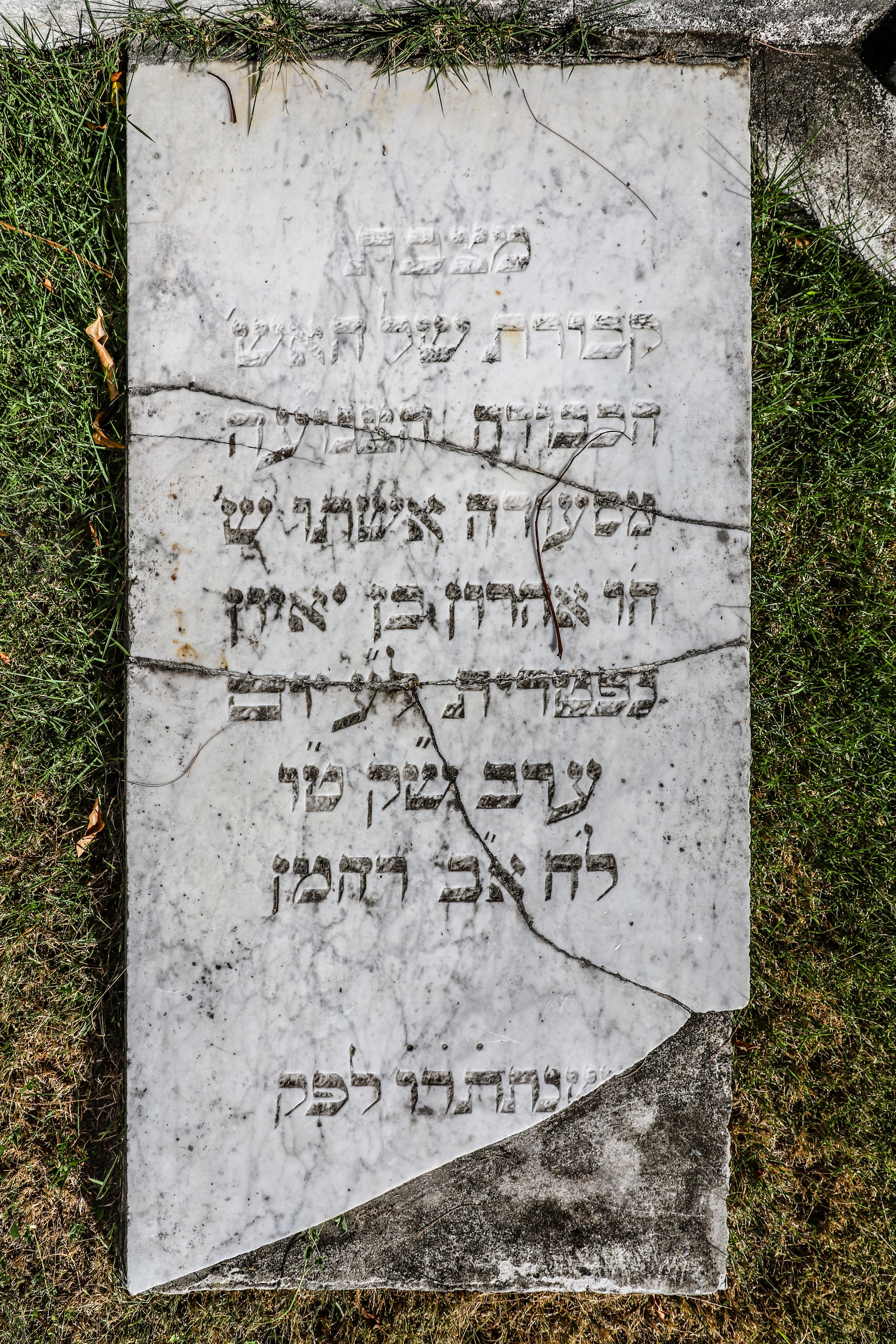
The graves tell the shape of a community. British merchants who came to trade cotton and sugar and ended up staying. Their wives, who often did not survive Bahia's yellow fever outbreaks. Their children, buried small. British and American consuls representing ports of call on the South Atlantic trade routes. Members of Salvador's small Jewish community, who had nowhere else to be laid to rest under their own rites. The researcher Francisco de Paula Santana de Jesus, studying the cemetery's burial registers, has noted that German Protestants in Bahia faced an even rougher reception from local Catholics than the British did - a reminder that the treaty sheltered a particular kind of outsider while leaving others exposed. Each stone is a person who crossed an ocean and did not cross back, someone whose family buried them under palm trees within earshot of the sea, half a world from home.
Heritage Behind the Walls
The British Cemetery of Bahia was designated a state heritage site by the Institute of Artistic and Cultural Heritage of Bahia (IPAC) in 1993, recognition that it is not just a British artifact but a Bahian one - the place where the colony's rigid religious monopoly first cracked open. It sits along Avenida Sete de Setembro in the Barra neighborhood, a short walk from the Santo Antônio da Barra lighthouse and the low white wall of the Forte de Santo Antônio da Barra. Brazil's Supreme Court has ruled that nonprofit religious cemeteries are exempt from municipal property tax, a legal protection that keeps places like this one viable. Walk through the quiet grounds today and you read two centuries of names in weathered English on stone, the letters softened by Bahian rain and the salt that blows up from the bay. A cemetery this small has no business changing a country. This one did.
From the Air
The British Cemetery sits on Ladeira da Barra at 13.00°S, 38.53°W, on the Salvador peninsula where the mouth of the Baía de Todos-os-Santos opens to the Atlantic. Approach Salvador (SBSV - Deputado Luís Eduardo Magalhães International) from the south at 3,000 feet to track the old city's curve - Forte de Santo Antônio da Barra and its lighthouse are the most obvious landmarks, with the cemetery a few hundred meters inland. Alternate field is Ilhéus (SBIL) about 200 nm south. Weather on the Bahian coast is tropical and humid year-round; morning brings the clearest visibility before sea-breeze cumulus stacks up along the shore in the afternoon.