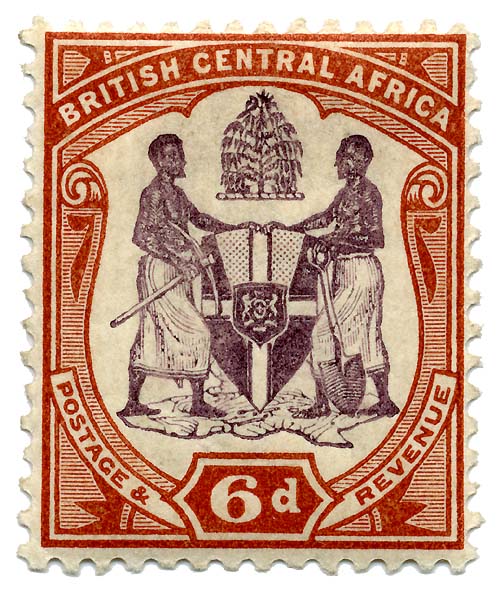
British Central Africa Protectorate
David Livingstone never intended to start a colony. When he explored the Shire Highlands south of Lake Nyasa between 1858 and 1864, he wrote of benign climate and fertile soil, imagining a place where Christianity and commerce might flourish together and the slave trade might wither. Missionaries came first. Then merchants. Then the Portuguese, pressing their claims from Mozambique. Then the British government, reluctantly drawn in to protect its subjects and outmaneuver its rivals. By 1891, the territory Livingstone had praised was formally a British protectorate -- one that would endure, under various names, until Malawi won its independence in 1964.
The Scramble at the Lake
The sequence of events that created British Central Africa reads like a slow-motion chess match played across an enormous board. Anglican and Presbyterian missions established themselves in the 1860s and 1870s. In 1876, a trading settlement was founded at Blantyre. The African Lakes Company, established in Glasgow in 1878 by businessmen linked to the Presbyterian missions, aimed to combat the slave trade by introducing legitimate commerce -- and to make a profit doing so. A British consul took up residence at Blantyre in 1883. But the Portuguese, who had been active in the lower Shire Valley since the 1830s, were pressing their own territorial claims from the east. In 1885, Alexandre de Serpa Pinto led a Portuguese expedition into the Shire Highlands. Harry Johnston, the British consul, moved quickly: he made treaties of protection with local chiefs and in 1889 declared a protectorate, first over the Shire Highlands, then over the lands as far north as Lake Tanganyika. The Portuguese protested. So did the Germans, who had claims of their own. Negotiations drew borders on maps that meant little to the people who lived within them.
Johnston's Protectorate
Harry Johnston became the first Commissioner of the British Central Africa Protectorate in 1891, governing from Zomba with a skeleton staff and a budget that London considered barely adequate. The early years were consumed by military campaigns. Johnston fought wars against Yao chiefs and Arab-Swahili slave traders along the lake, breaking their power and ending the slave trade in the protectorate -- though at the cost of imposing a new form of subjugation. The protectorate's administration rested not on alliances with local power structures, as in many other parts of British Africa, but on military superiority. Johnston introduced the Hut Tax in 1892, compelling African men to earn cash wages, which in practice meant working on the white-owned plantations that were being established in the Shire Highlands. The protectorate was always poor by colonial standards. It had no gold, no diamonds, no mineral wealth to speak of. Its economy depended on plantation agriculture -- coffee at first, then tobacco and tea -- and on the labour of people who had little choice but to provide it.
Plantations and Thangata
White settlers acquired vast tracts of land from local chiefs, often for payments in beads or guns that bore no relation to the land's value. These Certificates of Claim, later formalized by the colonial government, created an estate system in the Shire Highlands that would define the protectorate's economy and its injustices. African families who had lived on the land for generations found themselves classified as tenants, required to perform thangata -- compulsory labour on the estates in exchange for the right to remain. The system was exploitative by design. Workers were beaten, underpaid, and trapped. The A. L. Bruce Estates at Magomero became notorious for the brutality of its managers, who closed local schools and paid workers less than promised. These were not abuses of an otherwise fair system; they were the system working as intended. The grievances created by thangata and the plantation economy would eventually fuel the Chilembwe uprising of 1915 and the nationalist movements that followed.
From BCA to Nyasaland to Malawi
In 1907, the British Central Africa Protectorate was renamed Nyasaland. The change was largely administrative, but it marked a shift in how London thought about the territory -- less as a frontier outpost and more as an established, if underfunded, colony. The early twentieth century brought modest infrastructure: roads, a railway from Blantyre to the Shire River, and the expansion of mission education that would produce the territory's first generation of African professionals. It also brought intensifying resentment. The Chilembwe uprising of 1915 was the most dramatic expression of opposition to colonial rule, but it was not the last. The Nyasaland African Congress, founded in 1944, organized politically for decades before Hastings Kamuzu Banda led the country to independence as Malawi in 1964. The protectorate's legacy is complex: it ended the slave trade but imposed forced labour; it built schools but denied Africans political power; it drew borders that created a nation, however much its people might have preferred to draw their own.
From the Air
Located at 15.38°S, 35.33°E in southern Malawi. The former protectorate's capital Zomba sits at the base of the Zomba Plateau, a prominent elevated terrain feature. Nearest major airport is Chileka International Airport (FWCL) near Blantyre, approximately 65 km to the south. Lake Malawi (formerly Lake Nyasa) is visible to the northeast. The Shire Highlands provide distinctive topography with rolling hills and tea plantations. Clear conditions typical May-October.