British Occupation of Manila
On January 6, 1762, the British Cabinet approved one of the most ambitious long-distance military operations of the 18th century: Colonel William Draper, already stationed at Madras with the 79th Regiment of Foot, would cross the Indian Ocean and seize Manila from Spain. The plan was part of a global conflict that would later be called the Seven Years' War, and Manila was the prize that could secure British commercial dominance in Asia. Eight ships of the line, three frigates, four store ships, and nearly 7,000 men sailed into Manila Bay on September 24, 1762. The city fell in under two weeks. Holding it would prove to be another matter entirely.
The War Reaches the Pacific
Spain had tried to stay neutral as Britain and France tore into each other across Europe, North America, India, and the Caribbean. But France was losing badly, and as British victories mounted, Madrid grew alarmed at the prospect of a single power dominating global trade. The Family Compact, signed on August 15, 1761, formally allied Spain with France, and a secret convention committed Spain to prepare for war against Britain. The British response was swift and global. While one force attacked Havana in the West Indies, Draper received King George III's authorization to take Manila. The East India Company had long coveted the archipelago as a gateway to trade with China, and the existing war provided the opening. Manila was one of the most important trading cities in Asia, the western terminus of the Manila galleon route that carried silver and spices across the Pacific.
Twenty Thousand Cannonballs
The British bombardment was overwhelming. The fleet expended more than 20,000 cannonballs and 5,000 bombs against Manila's fortifications. The Spanish garrison, caught off guard by an attack from an ocean away, could not withstand the assault. Manila and the nearby port of Cavite fell to British control by October 6, 1762. The Spanish governor agreed to pay a ransom to spare the city from further destruction. The British planned to use Manila as an entrepot, a commercial hub for regional trade, particularly with Qing China. For the East India Company, this was the chance to establish a foothold that could rival the Dutch in Southeast Asia.
The Siege That Saved the Philippines
What the British could not have anticipated was the resistance organized by Lieutenant Governor Simon de Anda y Salazar. When Manila fell, Anda y Salazar established a provisional Spanish colonial government backed by members of the Royal Audience of Manila and rallied mostly Filipino troops to his cause. These forces did not try to retake Manila. Instead, they surrounded the British positions and prevented any expansion beyond Manila and Cavite. For eighteen months, the British held two cities and nothing more. Every attempt to push into the countryside or advance toward northern Luzon was blocked by Filipino forces loyal to the provisional government. The ransom the Spanish governor had promised was never fully paid. The grand commercial project that had justified the expedition began to look like an expensive dead end.
Humiliated and Gone
The Seven Years' War ended with the Treaty of Paris in 1763, which required Britain to return Manila and Cavite to Spain. The British withdrew in the first week of April 1764, having held the city for exactly eighteen months. They left, in the words of one account, humiliated. The occupation had failed to achieve any of its strategic objectives. Manila did not become a British trading post. The ransom was never collected in full. The Philippines remained Spanish for another 134 years. What the episode did reveal was the critical role of Filipino forces in the defense of the archipelago. It was not the Spanish army that contained the British, but locally raised troops under Anda y Salazar's leadership. The British could take the capital, but they could not take the country, a lesson that colonizers of the Philippines would learn again and again in the centuries to come.
From the Air
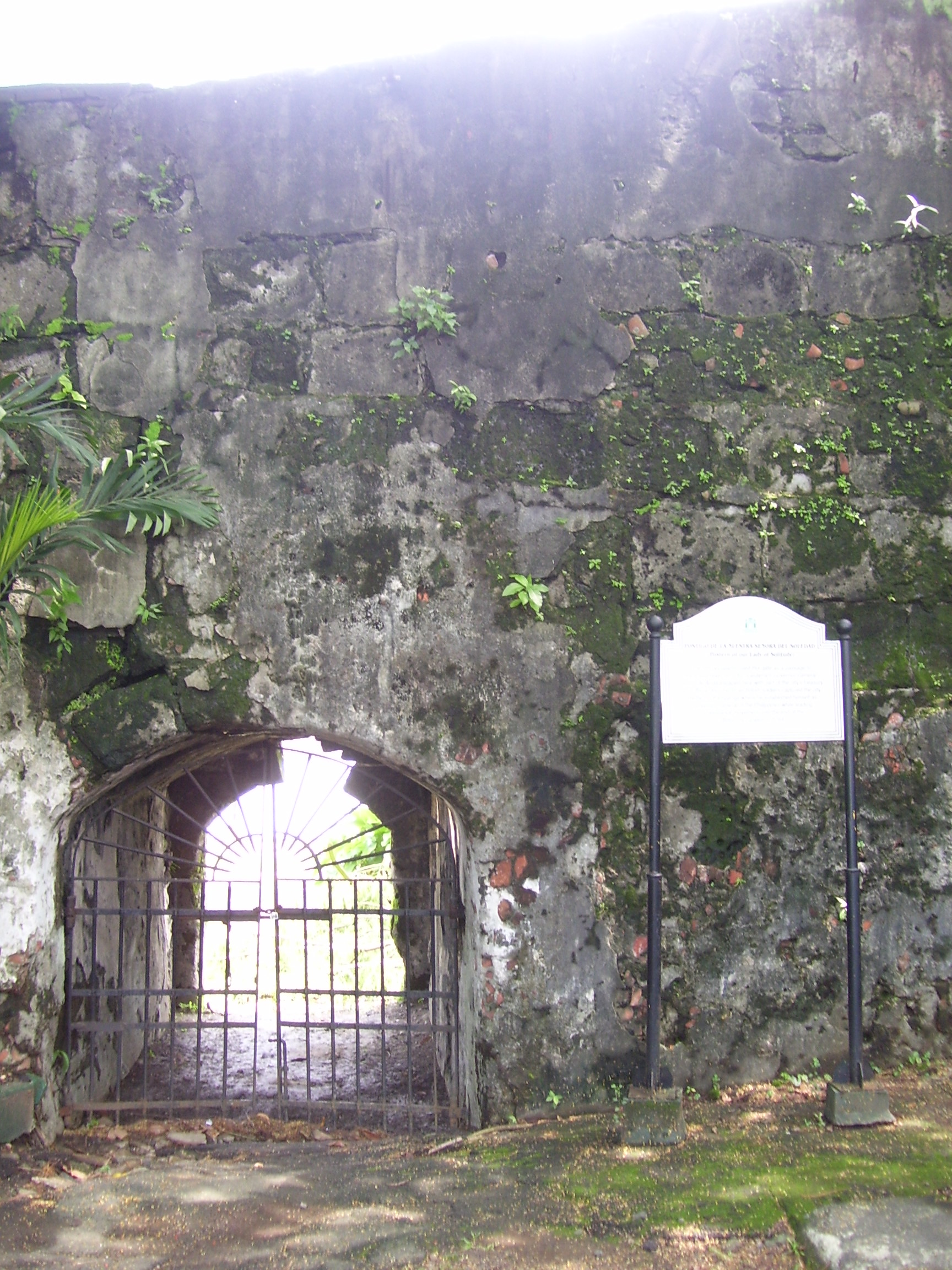
The British occupation centered on Manila's Intramuros district and the port of Cavite, at approximately 14.57N, 120.98E. Intramuros sits along the south bank of the Pasig River where it meets Manila Bay. Cavite lies across the bay to the southwest. Ninoy Aquino International Airport (RPLL) is roughly 10 km south of Intramuros. Manila Bay provided the anchorage for the British fleet of 15 warships. The walled perimeter of Intramuros is still visible from moderate altitude, marking the limits of British control during the 1762-1764 occupation.