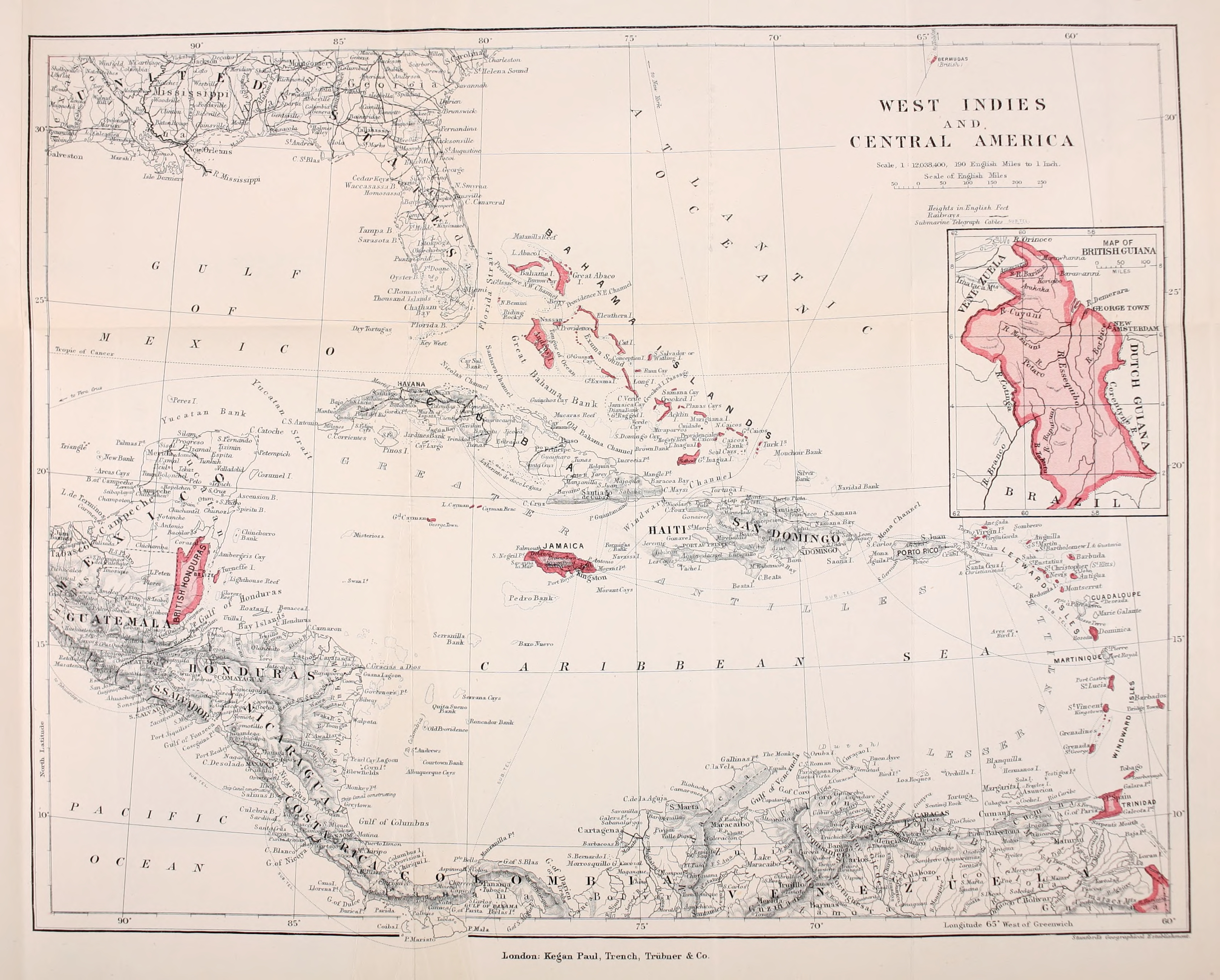
British West Indies
Every island wanted its own assembly. That single fact explains more about the British West Indies than any treaty, any governor's dispatch, any act of Parliament. From Barbados to Jamaica, from the Leewards to the Windwards, the story of Britain's Caribbean empire is a story of islands that accepted a shared flag but refused, stubbornly and repeatedly, to share anything else. The Kingdom of England began planting colonies across the Caribbean in the early 1600s, drawn by sugar and the staggering profits it could generate. By the time the empire receded three centuries later, it had brought approximately 2.3 million enslaved people to these islands, built and dismantled half a dozen federations, and left behind a patchwork of nations that still field a single cricket team.
Sugar, Slavery, and the First Footholds
The English merchant Charles Leigh established a short-lived settlement on the Wiapoco River in 1604, a venture so obscure that the river itself has changed its name since - it is now the Oyapock, forming the border between French Guiana and Brazil. Failed attempts at Saint Lucia in 1605 and Grenada in 1609 followed before Thomas Warner established the first permanent English settlement on St. Kitts. The capture of Jamaica from Spain in 1655 expanded British control from the small Leeward Islands into the Greater Antilles, and the Caribbean colonial project found its economic engine: sugar. The plantations that spread across Jamaica, Barbados, Antigua, and Trinidad were enormously profitable, but that profit was built on forced labor. Around 2.3 million enslaved Africans were brought to the British West Indies through the Atlantic slave trade, their labor transforming these islands into some of the most valuable real estate in the British Empire. The Royal Navy projected power from Caribbean bases, protecting trade routes that ran thick with sugar, rum, and molasses.
The Impossible Art of Federation
Sir William Stapleton tried first. In 1674, he set up a General Assembly of the Leeward Islands on St. Kitts, creating the earliest federation in the British Caribbean. It functioned during his governorship but faded after he left, the General Assembly meeting irregularly until 1711 before lapsing entirely. The pattern would repeat for nearly three centuries: London would impose a federation, the islands would resist, the federation would crumble.
Governor Benjamin Pine attempted another Leeward union in 1869. St. Kitts and Nevis refused to share government funds with bankrupt Antigua and Montserrat. Pine reported to the Colonial Office that his scheme had failed due to "local prejudice and self-interest" - a diplomatically worded admission that island identity ran deeper than imperial convenience. The British Parliament forced the issue in 1871 with the Leeward Islands Act, bundling the islands under one governor and one set of laws. Each island became a "Presidency" under its own administrator. The arrangement was unpopular. It lasted until 1956 anyway.
Windward Stubbornness
The Windward Islands followed their own fractious path. Formally united in 1833, the colony absorbed Trinidad and St. Lucia by 1838, then watched Trinidad leave in 1840. Barbados fought hardest for independence - not from Britain, but from its Caribbean neighbors. The Barbadians wished to retain their separate identity and ancient institutions, and the other colonies did not want to associate with Barbados either. When Barbados left the union in 1884, power shifted to Grenada. Tobago departed in 1889, joining Trinidad in a union that endures today. Dominica bounced between groups, transferred from the Leewards to the Windwards in 1940. Every attempt to create a proper federal colony, as had been imposed on the Leewards, was resisted. The Windward Islands Colony survived from 1885 to 1958 through a compromise: one Governor-General in Grenada, but each island kept its own lieutenant-governor and its own assembly. When the Federation of the West Indies formed in 1958, each Windward island joined as a separate unit rather than as a bloc.
The Federation That Lasted Four Years
The West Indies Federation opened for business on January 3, 1958, the most ambitious attempt yet to unify Britain's Caribbean territories into a single independent nation. The model was the Federation of Australia or the Canadian Confederation - a political union strong enough to stand on its own. It collapsed by May 31, 1962, torn apart by the same internal conflicts that had undermined every previous attempt. Jamaica, by far the largest territory, feared being outvoted by smaller islands. Trinidad worried about subsidizing poorer neighbors. The smaller islands feared domination by the larger ones. The result was a federation that could not agree on how to govern itself, let alone how to govern as an independent state. When it dissolved, the individual territories pursued independence on their own terms - or chose not to pursue it at all.
The Six That Stayed
Most of the British West Indies became independent nations between the late 1950s and the 1980s. But six territories opted to remain under British sovereignty: Anguilla, Bermuda, the British Virgin Islands, the Cayman Islands, Montserrat, and the Turks and Caicos Islands. Their reasons varied, from economic pragmatism to cultural attachment to simple smallness - some islands lacked the population or resources to sustain full independence. Today these British Overseas Territories govern their own internal affairs while London handles defense and foreign relations. The old collective identity survives in unexpected places. The West Indies cricket team still fields players from across the former empire, competing as one of twelve elite international teams at Test match level. They hosted the 2007 Cricket World Cup and the 2010 ICC World Twenty20 - a combined squad from nations that could never quite combine for anything else.
From the Air
The British West Indies span a vast arc from the Bahamas (approximately 24.0°N, 71.0°W) southeast through the Lesser Antilles. From altitude, the island chain traces a crescent from the Greater Antilles (Jamaica, around 18°N, 77°W) through the Leeward Islands (Antigua, St. Kitts) and the Windward Islands (Dominica, St. Lucia, Grenada) down to Trinidad near the South American coast. Major airports include Norman Manley International (MKJP) in Kingston, Jamaica; Grantley Adams International (TBPB) in Barbados; and Piarco International (TTPP) in Trinidad. The Turks and Caicos (MBPV) and Cayman Islands (MWCR) remain visible British Overseas Territories. Expect tropical weather with hurricane season from June through November.