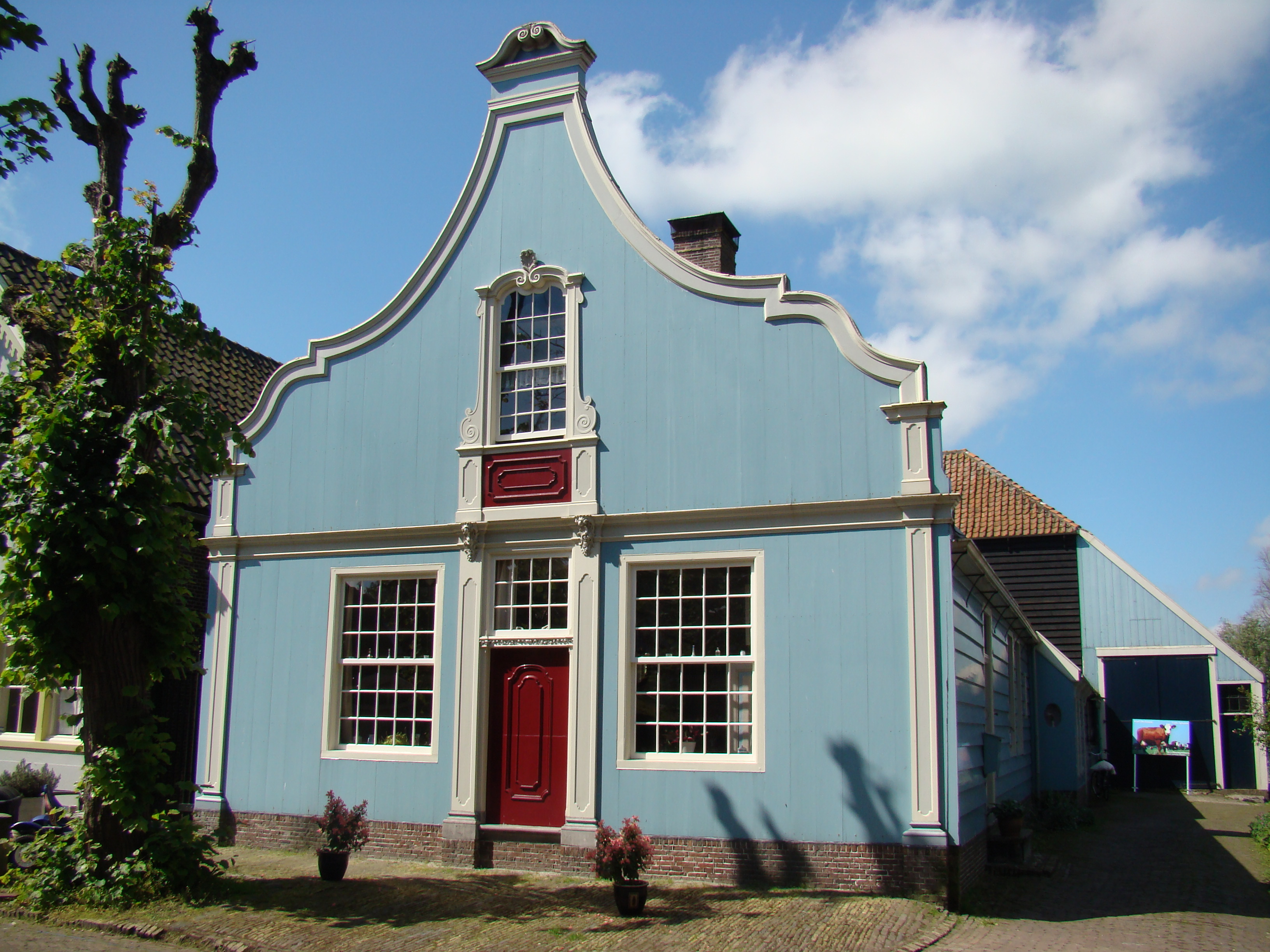
Broek in Waterland
Napoleon Bonaparte stopped at the threshold and removed his boots. It was 1811, he had just annexed the Kingdom of Holland to his French Empire, and he had heard the same thing every important visitor to North Holland heard - that a small village half an hour north of Amsterdam was so obsessively scrubbed that walking into it in dirty footwear was an offense the householders would not forgive. So the emperor took off his boots. Later, in the mayor's kitchen, he reportedly lifted the lid off a simmering pot and burned his fingers. He never made it to a farmhouse he wanted to enter - that hostess, like the one who had refused Holy Roman Emperor Joseph II decades earlier, told the imperial party she was too busy.
Soft Colours and Stricter Standards
Broek in Waterland sits at 52.44°N, 4.99°E, about 10 kilometers north of central Amsterdam, with a small harbor at its heart and the long flat pastures of the Waterland region stretching away in every direction. The village looks today the way it looked when Napoleon came: timber houses in chalky, restrained colors - dove gray, the palest mint, a particular muted lilac the locals call Broeker grijs - arranged along brick lanes that wind past a duck pond and a 17th-century church. More than eighty of the houses are listed national monuments. Most are still ordinary homes. There is no theme-park effect because nothing here was ever rebuilt for tourists; the village simply never stopped being kept this way.
Fishermen, Then Dairymen, Then Money
The village started as a fishing community on what was then the edge of an inland tidal landscape - the church, dedicated to Saint Nicholas, patron of sailors, gives that origin away. By the mid-sixteenth century, fish had given way to cattle, and the houses began to grow. Many were extended at the back with a stable so that cow and family lived under one continuous roof, and the dairy that came out the front was loaded onto small boats and rowed down the canal network to feed Amsterdam. The seventeenth and eighteenth centuries turned Broek into one of the wealthier villages in the Republic. Sea captains retired here. Wealthy Amsterdam merchants bought summer houses. The careful paint schemes, the polished brass, the spotless thresholds - they were the public face of comfortable money, and visitors came from across Europe specifically to gawk at them.
The Cleanliness Cult
By the seventeen hundreds Broek's reputation for spotlessness had become a kind of national joke. Travel writers reported, with varying degrees of skepticism, that the women of Broek made their husbands change shoes at the door, that the streets were swept twice a day, that some houses kept a special front parlor that nobody actually entered - the pronkkamer or showpiece room - except to clean it. Russia's Peter the Great visited in 1697 while learning shipbuilding in Amsterdam. Joseph II came in 1781 and was famously turned away from the farmhouse he wanted to inspect. Napoleon's 1811 visit, with the burned fingers and the removed boots, only added a French punchline to a story the Dutch had been enjoying for generations. There was real craft underneath the cliché. The painted timberwork still needs the careful, repeated coats of soft pigment that made the village distinct. The thresholds still get scrubbed.
The Bedstede and Other Small Inheritances
Inside the houses, certain old features have survived in a way they have not survived elsewhere. The bedstede - a sleeping cupboard built into the wall, doors closed against the cold, often barely longer than an adult curled up - is still used as a guest bed in a few of the bed-and-breakfasts in the village. Dutch farmers slept in them for centuries because they trapped body heat through the long damp North Sea winters, and because in a one-room cottage they gave a married couple something resembling privacy. The harbor still works too, in its quieter modern way: small electric tour boats and rented canoes thread out through the canals into the Waterland polders, drifting past dairy cows on land that sits below sea level. The cows do not notice. The polders do their job. The village paints its doors.
From the Air
Coordinates 52.44°N, 4.99°E, about 10 km north of Amsterdam Schiphol (EHAM) and only 4 km off the A10 ring road. From the air, Broek in Waterland reads as a small cluster of red and gray roofs at the edge of a wider lattice of canals and pasture - the village is tiny, the polder landscape around it is enormous. Best identified by following the N247 north from Amsterdam past the IJ tunnel; the village sits just east of the highway, with its harbor pond visible in good visibility from below 5,000 feet.