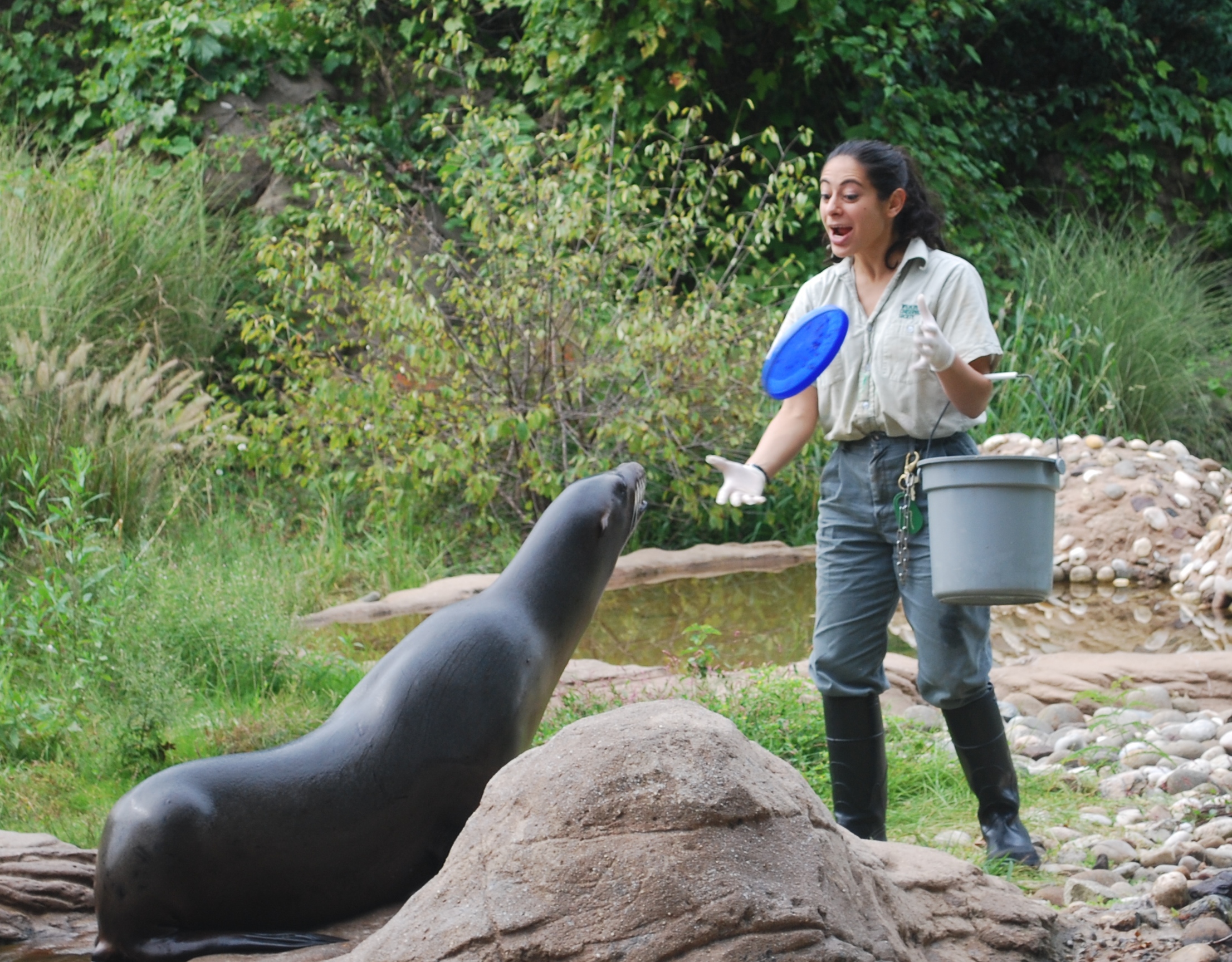
Bronx Zoo
In 1906, the Bronx Zoo exhibited Ota Benga, a young Mbuti man from the Congo, in the Monkey House alongside primates. Visitors were given a bow and arrow to complete the spectacle. Benga was never returned home and died by suicide at age 33. It is one of the darkest episodes in American zoo history, and it happened at the same institution that helped rescue the American bison from extinction, pioneered the modern concept of naturalistic animal exhibits, and today operates one of the most ambitious wildlife conservation programs on Earth. The Bronx Zoo has always been both things at once: a mirror of its era's best aspirations and worst blind spots.
Hunters Who Became Conservationists
The zoo's origins lie with the Boone and Crockett Club, a group of sport hunters who paradoxically recognized that the wildlife they pursued was disappearing. In 1895, members led by Madison Grant and C. Grant LaFarge founded the New York Zoological Society -- later renamed the Wildlife Conservation Society -- to establish a zoo, promote zoology, and preserve wildlife. The zoo opened on November 8, 1899, on 265 acres within Bronx Park, featuring 843 animals in 22 exhibits. Its first director, William Temple Hornaday, served for 30 years. The original Beaux-Arts pavilions, designed by Heins and LaFarge and grouped around the sea lion pool of Astor Court, were designated a New York City landmark in 2000. The gates earned a spot on the National Register of Historic Places in 1972. Even the Rockefeller Fountain, installed in 1903, has its own story: William Rockefeller bought it from the main square of Como, Italy, in 1902 for 3,500 lire -- roughly $637 at the time.
Firsts and Lasts
The zoo's history reads like a ledger of species encountered at the boundary between survival and extinction. On December 17, 1902, it became one of only seven zoos outside Australia -- and one of just two in the United States -- to hold a thylacine, the marsupial predator now extinct. The zoo kept four thylacines between 1902 and 1919; the last died in September 1919, seventeen years before the species vanished entirely. In 1916, the zoo built the world's first animal hospital at a zoo. That same year, it received two live adult Komodo dragons -- the first in America -- collected by W. Douglas Burden. In 1937, it became the first North American zoo to exhibit an okapi. In 1960, it was the first in the world to keep a James's flamingo, a species thought extinct until 1957. The bison range in the northeast corner has operated since opening day; in 1913, at the urging of the American Bison Society, fourteen bison were shipped from the zoo to Montana's National Bison Range and to Wind Cave National Park in South Dakota, helping rebuild wild herds from near-oblivion.
Worlds Within Worlds
The modern zoo is organized into immersive habitat exhibits that attempt to erase the cage-and-concrete model of earlier eras. Congo Gorilla Forest, opened in 1999, recreates a central African rainforest for roughly 20 western lowland gorillas along with okapis, mandrills, and red river hogs; it has drawn seven million visitors. JungleWorld, completed in 1985 at a cost of $9.5 million, reproduces a Southeast Asian tropical jungle with gibbons, otters, tapirs, and gharials in a building designed to emphasize that an acre of rainforest disappears every minute. Tiger Mountain, a three-acre exhibit opened in 2003, houses Amur and Malayan tigers with underwater viewing and a 10,000-gallon pool. The Wild Asia Monorail, running since 1977, carries visitors through a 40-acre recreation of Asian habitats where elephants, rhinoceroses, Przewalski's horses, and tigers roam. Even the Madagascar exhibit occupies the converted Lion House, a 1903 original that housed big cats until the 1980s and now teems with lemurs, fossas, and 100,000 hissing cockroaches.
Budget Cuts and Panda Politics
The zoo has not been immune to financial pressure. In 2009, New York City slashed funding for the state's zoos, aquariums, and botanical gardens, forcing the Wildlife Conservation Society to absorb a $15 million deficit. The Bronx Zoo cut 186 staff positions and closed four sections, including the World of Darkness nocturnal exhibit and the Skyfari aerial tramway. In 2012, Mayor Michael Bloomberg imposed another $4.7 million cut. Meanwhile, a quixotic campaign by Representative Carolyn B. Maloney to bring giant pandas from China consumed headlines from 2014 onward. She visited the Chengdu Panda Base, enlisted supporters from Newt Gingrich to Maurice Greenberg, and eventually secured Chinese willingness to negotiate. But neither the city nor the Wildlife Conservation Society would fund the project -- estimates put the cost at around $50 million, with each animal costing roughly $1 million a year to maintain. A senior WCS official called the campaign a "new level of absurdity." The pandas never came.
The Weight of 265 Acres
Home to more than 6,000 animals of over 700 species, the Bronx Zoo remains a place where conservation ambition meets the messy reality of running the largest metropolitan zoo in the country. It has bred snow leopards more than 70 times since first exhibiting the species in 1903. It saved the Kihansi spray toad from extinction through captive breeding. It offers a joint master's degree program with Fordham University in science education. Its composting restrooms near the Bronx River Gate serve 500,000 visitors a year while conserving water. From the air, the zoo is a startling green expanse in the densely built Bronx, the Bronx River threading through its eastern edge. On the ground, it is still doing what Madison Grant's hunters set out to do in 1895 -- though the definition of what deserves saving, and who gets to decide, has mercifully expanded since Ota Benga's time.
From the Air
Located at 40.850N, 73.878W in the Fordham section of the Bronx, within Bronx Park. The zoo covers 265 acres, making it highly visible from altitude as a large green area bisected by the Bronx River. The Bronx River Parkway runs along the eastern border. Nearest airports: LaGuardia (KLGA) 5nm south, Westchester County (KHPN) 12nm north. Fordham University is immediately to the west. Best viewed at 3,000-5,000 ft AGL to appreciate the full extent of the grounds.