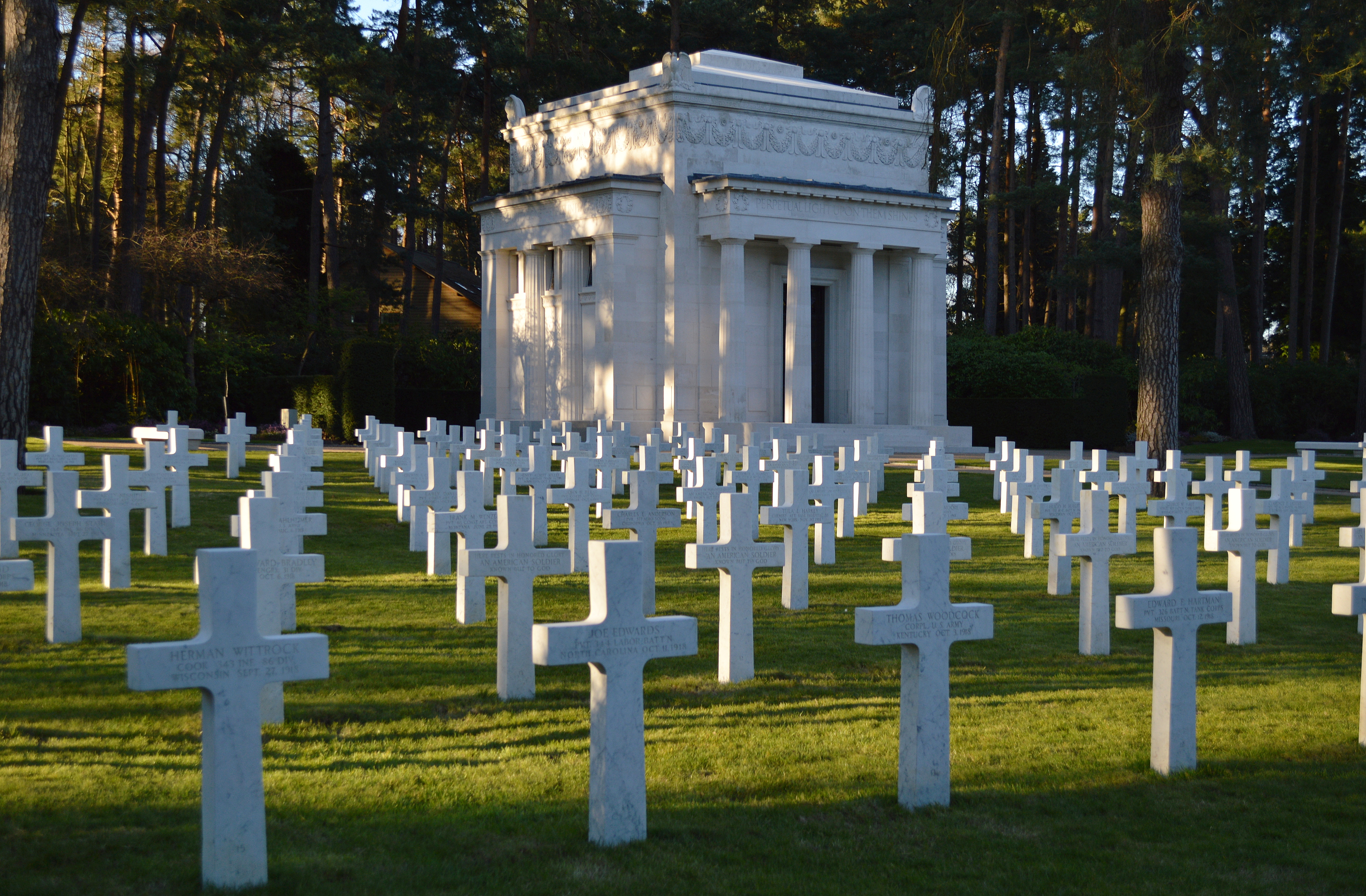
Brookwood Cemetery
For nearly a century, the dead of London departed from their own private railway station. The London Necropolis Railway ran from a dedicated terminus near Waterloo to Brookwood Cemetery in Surrey, carrying coffins and mourners in separate classes -- first, second, and third for both the living and the deceased. The service began in 1854 and continued until the Luftwaffe destroyed the London terminus in 1941. The cemetery it served remains the largest in the United Kingdom, a 500-acre landscape of monuments, woodland, and carefully tended gardens that is itself a Grade I listed historic park.
When London Ran Out of Room
By the middle of the nineteenth century, London's churchyards were full. Burial grounds in the city centre had become public health hazards, with bodies stacked in shallow graves and noxious gases seeping into neighbouring houses. Parliament had already established seven large suburban cemeteries -- the so-called Magnificent Seven -- but the scale of the problem demanded something more radical. In 1852, the London Necropolis and National Mausoleum Company was established by Act of Parliament, purchasing 2,000 acres of common land near the village of Brookwood, 25 miles southwest of London. The site was chosen for its sandy, well-drained soil, its distance from the capital, and its proximity to the London and South Western Railway, which could deliver both the dead and their mourners directly to the gates.
The Funeral Train
The London Necropolis Railway was one of the most unusual services in British transport history. Coffins were loaded at a private station adjacent to Waterloo, and the train ran to two stations within the cemetery grounds -- one for Anglicans, one for Nonconformists. Class distinctions extended beyond the grave: first-class tickets bought a better position in the cemetery and a more comfortable ride for mourners. At its peak, the railway carried thousands of burials a year, processing the city's dead with industrial efficiency and Victorian propriety. The London terminus was rebuilt in 1902 on Westminster Bridge Road, where it operated until a German bombing raid in April 1941 destroyed the building and ended the service. The southern terminus buildings in the cemetery survive, and the Necropolis Railway route can still be traced through the Surrey countryside.
A Commonwealth of the Dead
Brookwood's enormous grounds became a microcosm of the British Empire and its alliances. Military sections hold the graves of soldiers from two world wars, including the Brookwood Military Cemetery maintained by the Commonwealth War Graves Commission, which contains over 5,000 burials. National plots serve the dead of more than a dozen countries, including dedicated sections for American, Canadian, Czech, Polish, French, Italian, and Turkish service personnel. There are separate areas for Catholic, Muslim, Parsi, and Sikh burials. The Church of St Edward the Martyr, with its community of Greek Orthodox monks, stands within the cemetery grounds. In death, if not always in life, Brookwood gathered the world's communities together under the Surrey pines.
Five Hundred Acres of Memory
Walking the cemetery today is an exercise in reading England's social history through stone. Elaborate Victorian monuments give way to simpler Commonwealth headstones; military precision yields to overgrown corners where nature is reclaiming the paths. The cemetery is home to significant biodiversity, its undisturbed woodland harbouring species that have vanished from the surrounding suburbia of Woking. Notable burials range from suffragette Margaret Murray to Edward the Martyr -- or at least what the Russian Orthodox community believes to be his relics. The cemetery's sheer scale means that most visitors encounter only a fraction of it, walking for hours among the monuments without meeting another soul. It is a landscape designed for the dead that has become, paradoxically, one of the most peaceful places for the living in the whole of the Home Counties.
From the Air
Located at 51.31N, 0.65W in Brookwood, Surrey. The cemetery's 500 acres are visible as a large wooded area south of the village, bordered by railway lines. The scale is striking from the air -- larger than many towns. Nearest airports: EGLF (Farnborough, 8nm east), EGLK (Blackbushe, 7nm southwest). Woking town centre is 3nm northeast. Best viewed at medium altitude to appreciate the vast extent of the grounds.