Thirteen Thousand Voices from the Deep
Oil prospectors were not looking for history. In May 1997, a geophysical survey crew from Elf Petroleum Asia swept the seabed thirty-two nautical miles off Brunei's coast, hunting for hydrocarbon deposits. What their instruments flagged instead was an anomaly twenty meters long by fifteen meters wide, sitting sixty-two meters below the surface -- the remains of a trading vessel that had not moved in five hundred years. The Brunei Darussalam Maritime Museum exists because of that accident, and because the 13,261 artifacts eventually pulled from the wreck demanded a home worthy of the story they tell: that this small sultanate on Borneo's northwest coast once sat at the crossroads of Asia's richest trade networks.
A Ship Built to Hold a Ship
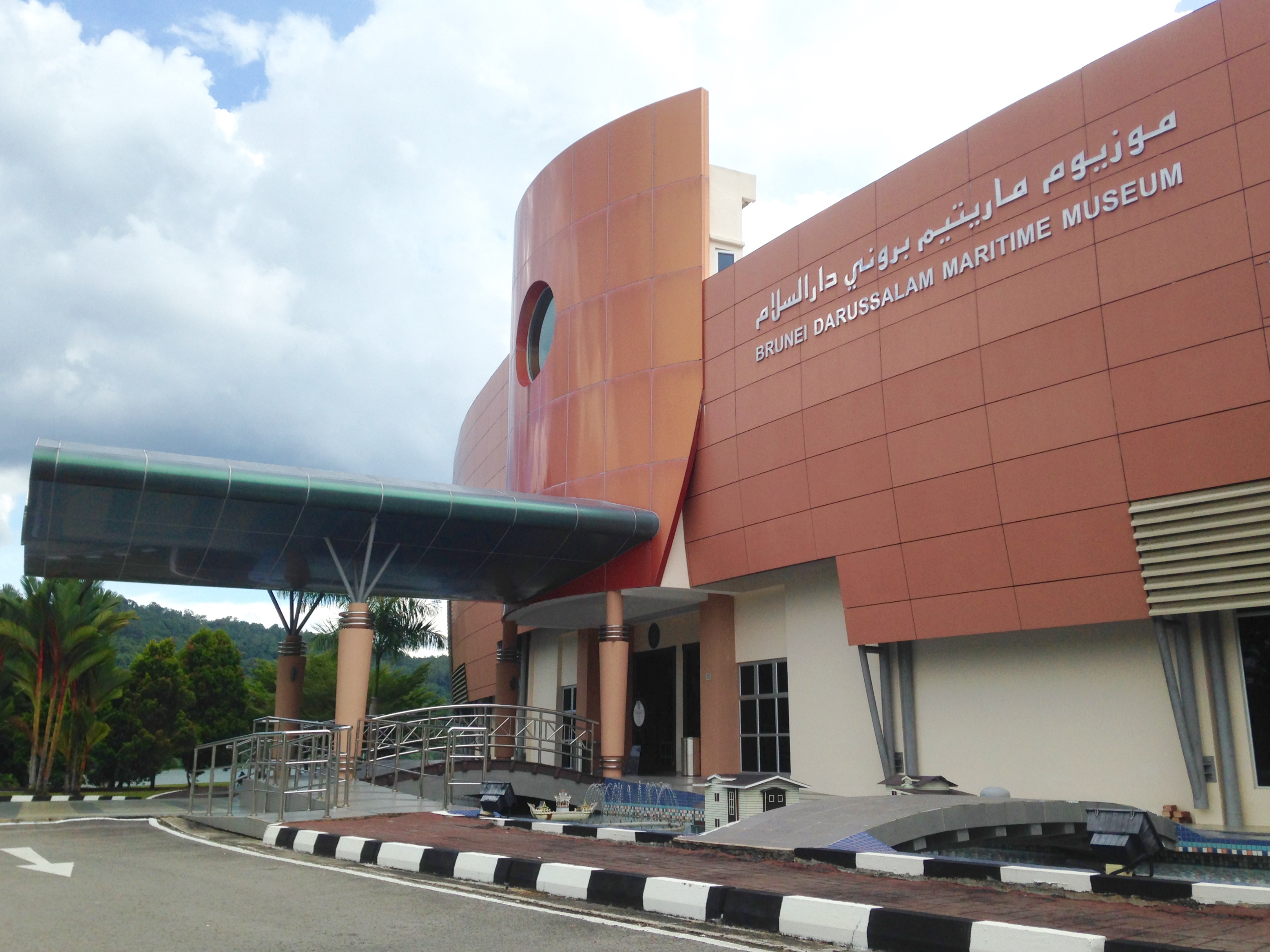
The museum stands in Kota Batu, Brunei's historic quarter, on a 3.53-hectare site a short walk from the Malay Technology Museum. Its structural design, viewed head-on, evokes the prow of a vessel -- an architectural nod to the maritime heritage it contains. Developed under Brunei's 10th National Development Plan with a budget of BND 5 million, construction began in December 2006 and finished in 2008. But the museum did not open its doors for another seven years. When Crown Prince Al-Muhtadee Billah officially launched it on 23 March 2015, the delay had only sharpened public anticipation. Three galleries now fill the interior, each one pulling visitors deeper into the centuries when Brunei's harbors bristled with foreign sails.
What the Seafloor Kept
The centerpiece is the Brunei Shipwreck Gallery, and it earns its prominence. After the initial discovery in May 1997, researchers returned in October to begin identification and dating. By August 1998, full salvage operations had recovered a staggering haul: 4,870 pieces of blue-and-white porcelain from Jiangxi province, 190 white pottery items from Fujian, celadon ware from Guangdong, and fourteenth-century Sawankhalok stoneware from central Thailand's Si Satchanalai kilns. Vietnamese ceramics rounded out the cargo -- blue-and-white bowls, urns, flower vases spanning the fifteenth and sixteenth centuries. Mixed among the ceramics were glass bracelets, granite grindstones, stone and glass beads, bronze gongs, and elephant tusks. Each object is a receipt, proof of a transaction between distant cultures conducted through Brunei's ports.
Reading the Cargo Manifest
What makes the shipwreck collection extraordinary is not just its size but its geography. The cargo originated from at least three countries -- China, Thailand, Vietnam -- suggesting a vessel that worked its way down the coast, loading goods at multiple ports before heading for Brunei. Chinese and Western historical sources had long described Brunei as the principal commercial hub of northwest Borneo during the fifteenth and sixteenth centuries, but written claims need physical evidence. The wreck provides it. The sheer variety of ceramics, from rough stoneware to fine imperial porcelain, indicates a market sophisticated enough to demand goods at every price point. Brunei was not a minor waystation. It was a destination.
Layers Beneath the Surface
Beyond the shipwreck, the museum's second gallery -- the Archaeological Heritage Site Gallery -- displays findings from dig sites scattered across Brunei's territory. A scale model of Pulau Terindak and a fleet of miniature ships anchor the room, surrounded by artifacts that trace the lives, technologies, and cultural practices of societies that preceded the sultanate. The third gallery, the Brunei Maritime Golden Age Gallery, widens the lens further, chronicling the evolution of shipbuilding technology and the country's strategic position in regional and global trade networks. Together, the three galleries argue that Brunei's relationship with the sea was not incidental. It was foundational -- the source of wealth, identity, and connection to the wider world.
Where Empires Traded
Standing in the museum, surrounded by porcelain that Chinese artisans shaped in Jingdezhen and Thai potters fired in Si Satchanalai, it becomes difficult to think of Borneo as remote. Five centuries ago, these waters were highways. Merchants from the Ming court, Siamese traders, Vietnamese craftspeople -- all converged on Brunei's harbors, exchanging goods that would eventually sink to the bottom and wait, undisturbed, through the rise and fall of empires, through colonial occupation, through independence, until an oil company's sonar pinged something unexpected on the ocean floor. The museum is shaped like a ship for good reason. The story it tells is one of movement, of currents both literal and commercial, flowing through a sultanate that understood the sea was not a barrier but an invitation.
From the Air
Coordinates: 4.88N, 114.97E. The museum sits in Kota Batu along the Brunei River, visible from low altitude as a distinctive ship-shaped building near the waterfront. Brunei International Airport (WBSB) is approximately 10 km to the northeast. Approaching from the South China Sea, the coastal plain and river delta are clearly visible. Best viewed at 2,000-3,000 feet for the Kota Batu museum complex context. The nearby Malay Technology Museum and Kota Batu Archaeological Park form a visible cluster of cultural sites along the river.