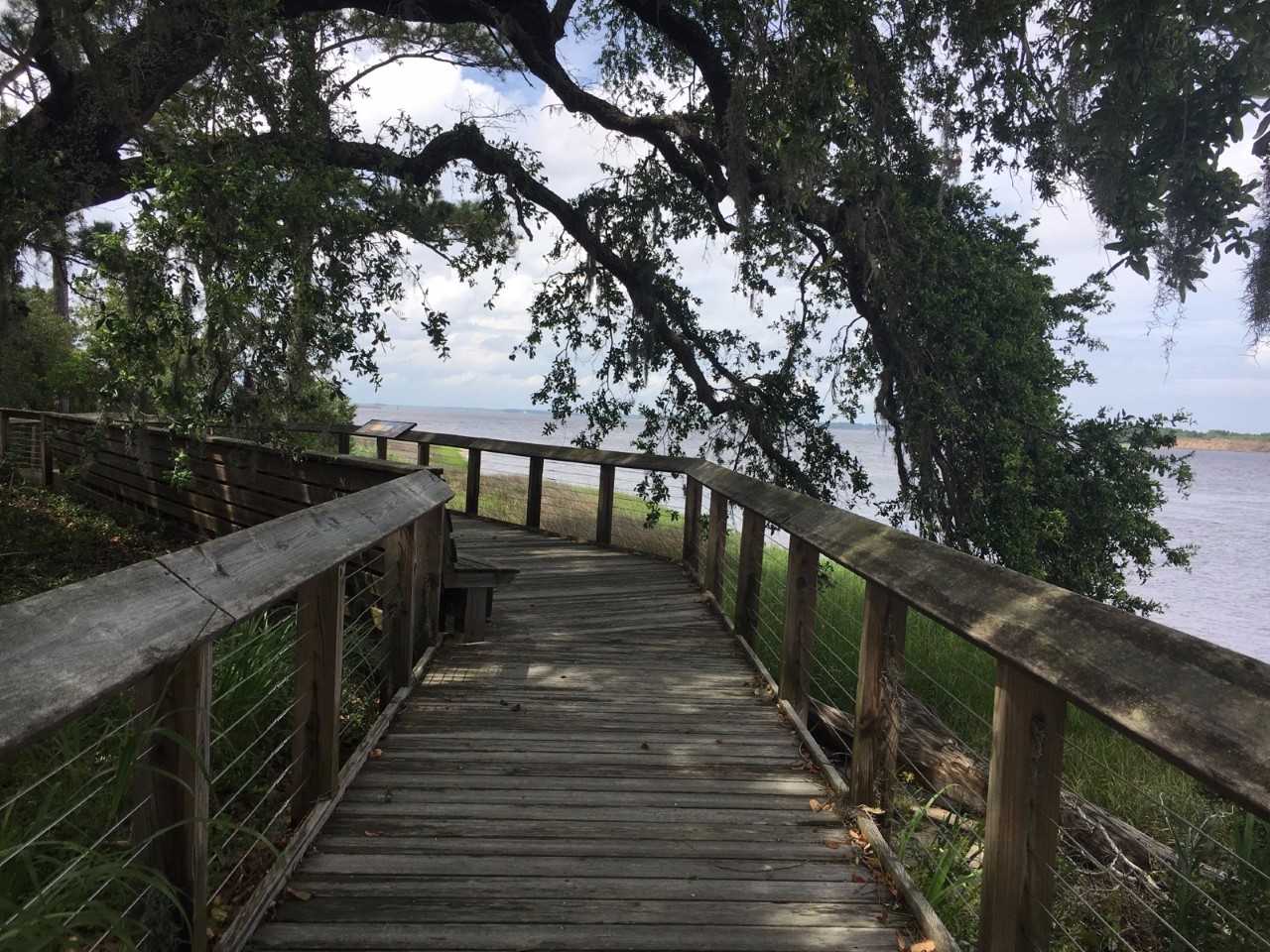
Brunswick Town, North Carolina
In 1830, the entire site of what had been North Carolina's third capital city sold for $4.25. Brunswick Town -- once the busiest port on the Cape Fear River, home to two royal governors, and the stage for one of the earliest acts of violent colonial resistance to British rule -- had been reduced to a few crumbling foundations in the pine woods. Frederick Jones Hill of neighboring Orton Plantation bought the land and let the forest reclaim it. Three decades later, Confederate engineers would build a fort on top of the ruins, adding yet another layer of history to a place that seems unable to stop accumulating it.
The Family on the Cape Fear
Colonel Maurice Moore founded Brunswick Town in June 1726 on 1,500 acres granted by the Lord Proprietors. Moore was Carolina royalty: the son of Governor James Moore, father of General James Moore, and grandfather of Supreme Court Associate Justice Alfred Moore. His brother Roger built the nearby Orton Plantation on adjoining land. So many Moores settled in Brunswick that the clan became known simply as "The Family." The town was named for Brunswick-Luneburg, the German territory ruled by King George I, and it grew rapidly into a bustling port exporting longleaf pine products -- tar, pitch, and turpentine -- to supply the Royal Navy and merchant fleets. By the 1730s, Brunswick Town was the political center of the Cape Fear region and the seat of New Hanover County. Its position at the river mouth made it essential: the Cape Fear grew too shallow upstream near Town Creek for large vessels to pass.
Privateers at the Dock
In early September 1748, two Spanish privateer ships -- La Fortuna and La Loretta -- anchored off Brunswick Town. The terrified residents fled into the surrounding woods, leaving homes, ships, and possessions unguarded. For two days the Spanish raided freely, taking enslaved people and valuables from the abandoned town. On September 5, Captain William Dry III rallied 67 armed men to mount a counterattack. On September 6 they struck. Ten privateers were killed and thirty captured. During the Spanish retreat, La Fortuna exploded in the river, killing most of its crew. La Loretta surrendered on the condition its remaining sailors could leave. Only one defender died -- an enslaved man pressed into service by George Ronalds, killed when a small cannon burst. From the wreckage of La Fortuna, salvagers recovered guns, anchors, stolen goods, and a painting of the Ecce Homo. The North Carolina General Assembly gave the painting to St. James Church in Wilmington, where it hangs today. Proceeds from selling captured goods and enslaved Spaniards funded the construction of St. Philip's Church in Brunswick Town.
The Stamps Stay on the Ship
Brunswick Town's most consequential act of defiance came in late 1765. When the British Parliament passed the Stamp Act that November, the HM Sloop Diligence arrived at port carrying the hated stamps. Angry citizens met the captain at the dock and refused to let a single stamp leave the ship. Governor William Tryon, who was living at the grand plantation house Russellborough just outside town -- a home he grandly called "Castle Tryon" -- tried to enforce the law but found himself outmatched. On February 20, 1766, patriot leaders John Ashe, Cornelius Harnett, Captain Robert Howe, and Colonel Hugh Waddell led several hundred citizens to arrest royal officials and surround the governor's home. They placed Tryon under house arrest. The protest was among the first incidents of violent colonial resistance to British authority in America and effectively ended stamp tax collection throughout the Cape Fear region.
Burned Twice, Buried Once
Tryon eventually moved to his grand new palace in New Bern, and Brunswick Town's decline accelerated. By 1775, the last families fled in anticipation of British attack. The following spring, a raiding party from the HMS Cruizer burned most of the town's structures, including Russellborough and likely St. Philip's Church. British forces under Generals Clinton and Cornwallis burned what remained. After the Revolution, only two or three families returned; the port limped along until total abandonment by 1830. Then came a second chapter of conflict. In March 1862, Confederate Army engineers surveyed the ruins and constructed Fort Anderson directly atop the old town site, burying several colonial foundations under earthworks and trenches. The fort protected Wilmington, a vital blockade-running port ten miles upstream. In February 1865, Union naval bombardment struck the walls of St. Philip's Church -- cannonball scars still visible in the brick today.
Unearthing Three Centuries
Brunswick Town lay forgotten under forest and fortification until 1899, when the Cape Fear Chapter of the Colonial Dames of America visited to honor Revolutionary War casualties. In 1902, they placed a marble plaque inside the roofless shell of St. Philip's Church to commemorate founder Maurice Moore. The real excavation began in 1958, when archaeologist Stanley South started systematic digs at the site, pulling bullets, buttons, and a cannonball from the church ruins. Today the Brunswick Town/Fort Anderson State Historic Site preserves both eras in an extraordinary palimpsest: visitors walk among the excavated foundations of 18th-century colonial homes and then climb the earthen ramparts of a Civil War fortification built on top of them. The ruins of Russellborough, where two royal governors lived, are visible alongside artifacts displayed in the visitor center. Few places in America compress so much history into so small a space.
From the Air
Brunswick Town is located at approximately 34.04N, 77.95W, on the west bank of the Cape Fear River in Brunswick County, North Carolina. From the air at 2,000-4,000 feet, the site appears as a clearing in forested land along the river, with the earthwork outlines of Fort Anderson potentially visible. The Cape Fear River is the dominant navigation landmark, running south toward the ocean. Wilmington International Airport (KILM) is approximately 10 nautical miles to the north-northeast. Bald Head Island and the river mouth are visible to the southeast. The Orton Plantation grounds are adjacent to the south.