Brussels Airport Diamond Heist
Three minutes. That is all it took for eight masked gunmen to execute what Belgian prosecutors called one of the most professional diamond heists in history. On the evening of February 18, 2013, just before 8 PM, two vehicles bearing police markings breached the perimeter fence of Brussels Airport and drove directly onto the tarmac. The target: a Fokker 100 aircraft operated by Helvetic Airways, loaded with rough and polished diamonds bound for Zurich. By the time real security forces could respond, the thieves had vanished into the Belgian night with approximately $50 million worth of stones, leaving behind nothing but the cut fence and the stunned crew of a Swiss airliner.
Precision on the Tarmac
The operation unfolded with military precision. The window of opportunity was impossibly narrow: just fifteen minutes between when cargo was loaded and when the aircraft would taxi for takeoff. The robbers knew exactly when to strike. Their vehicles, convincingly disguised as Belgian police cars, allowed them to pass through airport security zones without raising immediate alarm. Armed with automatic weapons, the men surrounded the aircraft and its cargo handlers, yet demonstrated remarkable restraint. Not a single shot was fired. No one was harmed. The diamonds, packaged in secured containers, were transferred to the fake police vehicles. The entire operation lasted approximately three minutes. French airport security consultant Doron Levy would later say he was certain it was an inside job, adding that heists this well-organized meant the robbers probably knew the employees by name.
Unraveling at the Fences
For all its flawless execution, the heist's aftermath proved disastrously amateurish. Belgian authorities launched a massive investigation, eventually arresting 31 suspects across Belgium, France, and Switzerland. The trail to the diamonds led through unexpected channels. Pascal Pont, a Swiss real estate agent, was caught trying to fence stolen stones in Geneva, a city notably lacking a diamond trade. His connection to Marc Bertoldi, a luxury car dealer from the French Riviera whose vehicle was found near the airport, unraveled the conspiracy. Bertoldi himself was already serving a French prison sentence for kidnapping, complicating extradition efforts for years. The thieves had pulled off a perfect robbery, but their attempts to convert stones into cash exposed them one by one.
Justice Delayed
The legal aftermath stretched over half a decade. Charges were brought against 19 individuals: 16 men and 3 women. The trial, originally scheduled for September 2017, faced repeated delays. In May 2018, 18 defendants were acquitted due to insufficient evidence directly linking them to the heist. But Bertoldi could not escape justice. In June 2019, a Brussels correctional tribunal sentenced him to five years imprisonment and fined him for his role as a co-conspirator, for participation in a criminal organization, and for money laundering. Prosecutors had argued he was the mastermind, but the court disagreed, leaving the true architect of the heist unknown. The bulk of the diamonds remains unrecovered, scattered across the underground networks of European organized crime.
Belgium's Diamond Legacy
Brussels Airport lies at the heart of a region synonymous with the diamond trade. Just fifty kilometers away, Antwerp processes roughly 84% of the world's rough diamonds and handles more than 50% of polished stones. This concentration of wealth flowing through Belgian transport hubs makes them perpetual targets. The 2013 heist was not the first spectacular diamond robbery in the country. A decade earlier, the Antwerp Diamond Heist of 2003 saw thieves breach a vault beneath the Antwerp Diamond Centre, making off with gems worth over $100 million. The Brussels Airport operation demonstrated that even moving diamonds by air, with all the security that entails, offers no guarantee against determined criminals willing to think creatively about access points.
From the Air
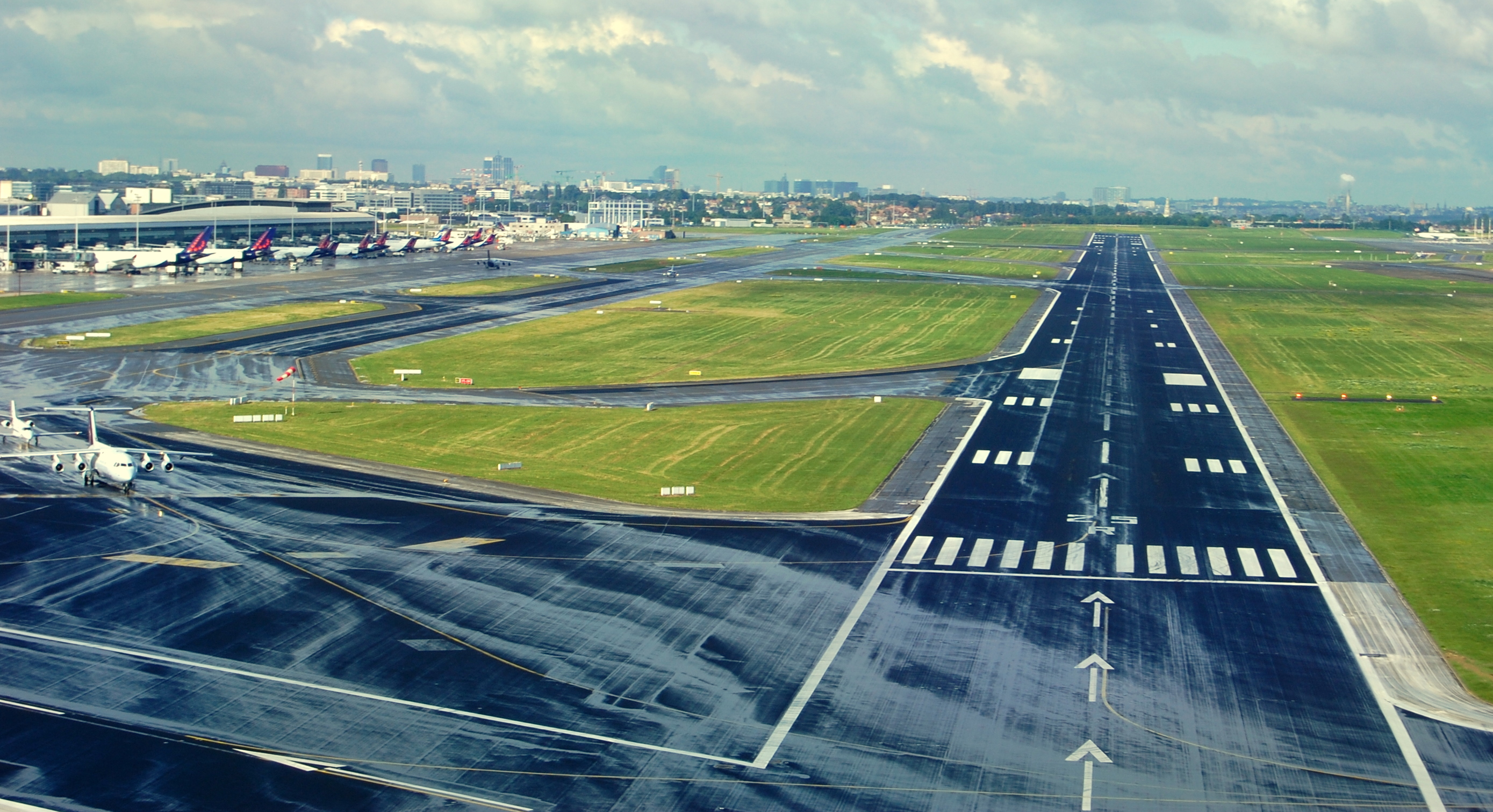
Brussels Airport (EBBR) sits 11 kilometers northeast of central Brussels at coordinates 50.901N, 4.484E. The main runways 25L/07R and 25R/07L handle most commercial traffic. The apron where the heist occurred lies between the cargo terminals on the airport's south side. From altitude, the airport's distinctive crossed runway layout is clearly visible against the flat Belgian landscape. Nearby airports include Brussels South Charleroi (EBCI) 46 kilometers south and Antwerp (EBAW) 35 kilometers north.