Brussels Park
Walk into Brussels Park from the south, past the wrought-iron gates of the Royal Palace, and you enter a space that is doing several jobs at once. It is the largest urban park in the center of Brussels. It is the formal axis between the residence of the King of the Belgians and the Palace of the Nation, where the federal parliament sits. It is one of the oldest public parks in northern Europe, opened in 1776 on the leveled ruins of a destroyed medieval palace. And it is, if you know to look for them, the ground where the Belgian Revolution was fought in late September 1830 - the four days of street combat that detached the southern provinces from the Kingdom of the Netherlands and made Belgium a country.
The park's straight gravel alleys are lined with lime trees that were planted in the early 19th century. Sixty-odd statues from Greco-Roman mythology stand at the intersections. Fountains play in two basins, one octagonal and dating to 1780, the other larger and from 1855. None of this is accidental: every line in the park is meant to draw the eye toward a building of state, and the people who designed it knew exactly what they were doing.
From Hunting Ground to Public Garden
Before there was a park there was the Warande - a game reserve owned by the Dukes of Brabant since the Middle Ages. The Coudenberg Palace stood on the high ground at the south end, the same site as the Royal Palace today. Behind it the Warande stretched all the way north to what is now the Rue de Louvain. Charles V, the Holy Roman Emperor who was born in Ghent in 1500, hunted here. Maria Elisabeth of Austria, the Governor-General sent from Vienna in the 1720s, knew it as one of the most beautiful gardens in Europe - all water basins, fountains, imitation rock caves and statues.
On the night of 3 February 1731, the Coudenberg Palace burned. The fire took most of the original royal complex with it. The Habsburgs lacked the money to rebuild. For nearly forty years the site sat as a field of ruins and a neglected park. The push to rebuild came in 1769, when the States of Brabant proposed erecting a statue for the twenty-fifth anniversary of Charles Alexander of Lorraine's reign as Governor-General. Georg Adam von Starhemberg, Empress Maria Theresa's minister-plenipotentiary, used the occasion to propose levelling the ruins, enlarging the square in front, and redesigning the old hunting ground as a formal public park. The work was completed in 1776. The Warande - the medieval beast hunt - became the Park.
The Four Days of September 1830
The Belgian Revolution began with an opera. On 25 August 1830, a performance of Auber's La Muette de Portici at the Theatre Royal de la Monnaie ended with the crowd spilling into the streets shouting nationalist slogans. By late September the resistance had crystallized into open combat against the army of King William I of the Netherlands. From 23 to 26 September, Dutch troops occupied Brussels Park as their fortified position in the city center - using its trees, fountains and statues as cover and firing into the surrounding streets where Belgian volunteer fighters were building barricades.
The statues took the worst of it. The park became a four-day battleground in the heart of the capital. By the morning of 27 September the Dutch army had withdrawn. The Belgian provisional government declared independence days later, and the country that exists today was the result. If you walk the central alley now, you are walking ground that armed men crossed in the most consequential week in Belgian history. The Palace of the Nation, where parliament met to ratify that independence, faces directly down that alley. The architects of the 1770s had drawn the axis. The volunteers of 1830 made it mean something.
The Theatre and the Vauxhall
At the park's northern end, behind a screen of trees, stands the Royal Park Theatre, built in 1782 on what was then the city's edge of cultivated entertainment. It started life as both a banquet hall and a literary cabinet - a place where, for a penny, you could read the day's newspapers and the season's novels. Children and student actors performed pantomimes, ballets, burlesque comedies and small operas there, to the chagrin of the bishopric of Mechelen. Around 1890 it switched from variety and operettas to classical theatre, and it has remained one of Brussels' principal stages ever since. In December 1998 a fire in the stage cage was contained before it could spread; the building underwent a major renovation in 2000.
Behind the theatre is the Vauxhall of Brussels, a meeting and concert venue built in the 1780s by the Bultos family - named after the original Vauxhall pleasure gardens in London. From 1820 to 1870 it housed the aristocratic Concert Noble society, which threw balls and concerts and built a new banquet hall against the existing structure. Today the French-speaking gentlemen's club Cercle Gaulois still occupies part of it. The Vauxhall's wooden bandstand, built in 1913 in a neo-Moorish style with an imperial dome, hosted summer concerts of the Royal Theatre of La Monnaie from 1852. After it fell out of use, a private enthusiast named Eric d'Huart took on its restoration starting in 1987 and turned it into a home.
Hermes, Diana, and Sixty Other Statues
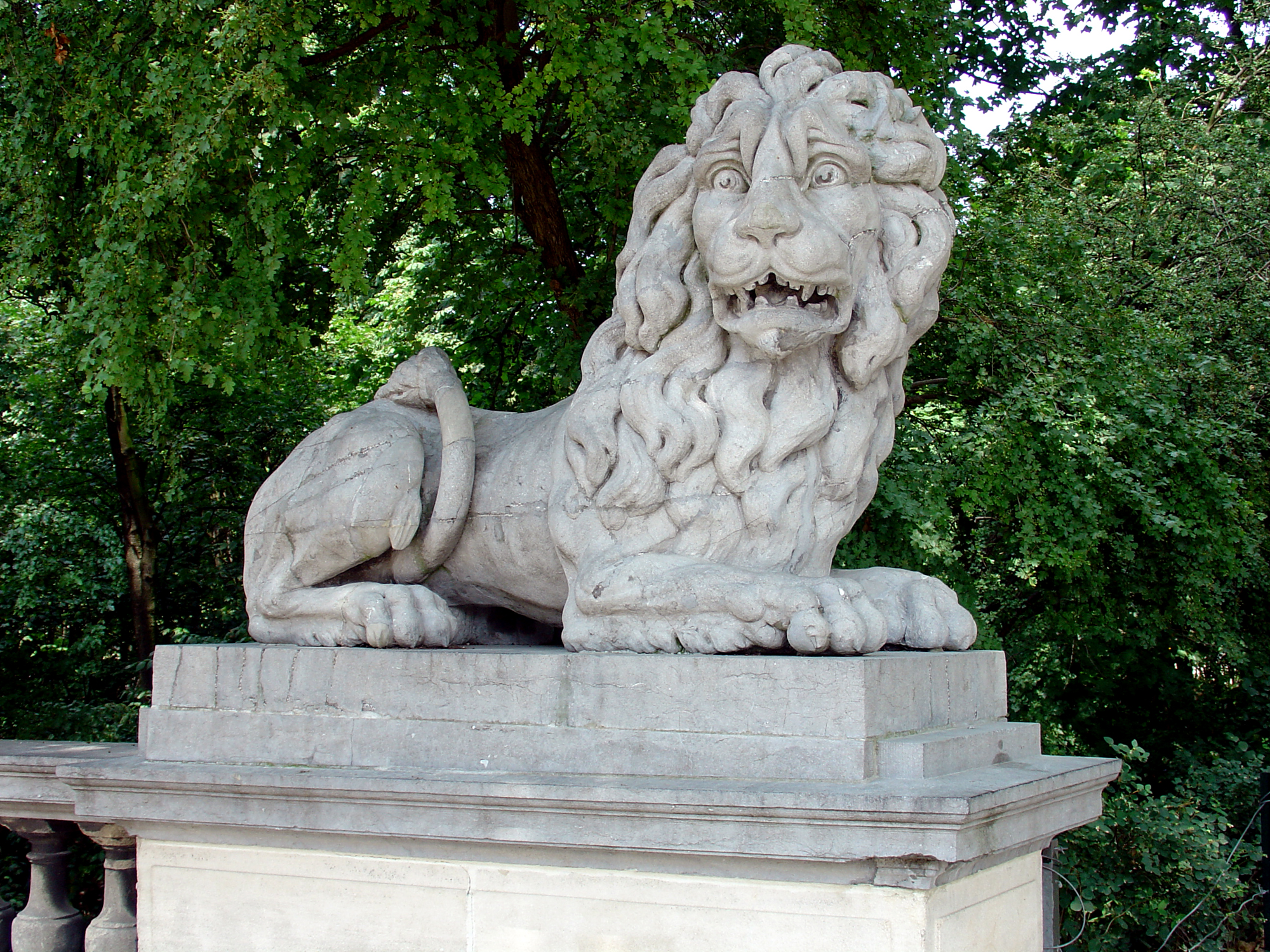
The park's sculptural collection numbers around sixty pieces, mostly inspired by Greco-Roman mythology - Narcissus, Apollo, Diana, Leda - by sculptors including Gabriel Grupello, Laurent Delvaux, Gilles-Lambert Godecharle, Thomas Vincotte and Jean-Michel Folon. The oldest were salvaged in 1780 from the gardens of Prince Charles Alexander of Lorraine, the Governor-General whose tenure the park was originally remodelled to celebrate. War, vandalism and pollution have taken a heavy toll over two and a half centuries: most of the statues you see now are copies, with the originals preserved in museum collections.
The octagonal water basin from 1780 is ringed by eight busts of Hermes - they were once powered by the hydraulic machine of Saint-Josse-ten-Noode that pumped water through the upper city. The main 1855 basin sits in the central rond-point, where four avenues converge. The main bandstand is a twelve-sided cast-iron kiosk built in 1841 by architect Jean-Pierre Cluysenaar - the same man who designed the Galeries Royales Saint-Hubert across town. Originally a system of statues was painted in gray and French stone tones; a stripping programme launched in 1921 returned them to bare stone, which is the look you see today.
A Park Designed To Be Looked Through
Walk to the main pond at the park's heart and three avenues open in front of you, each framing one of the buildings that defines official Brussels. To the south, the Royal Palace. To the southwest, beyond the trees, the Palace of Justice on the Galgenberg - the largest stone building of the nineteenth century. To the southeast, the Place du Trone. The fourth direction looks back toward the Palace of the Nation. The park, in other words, is not just a green space. It is a viewing device for the institutions of the Belgian state, designed in the late 18th century with the imperial style of Vienna in mind and reinforced through the 19th century with neoclassical railings (Tilman-Francois Suys, 1849) and the Joseph Poelaert southern entrance (1857).
The lime trees lining the central path are now mature. The plane trees, chestnuts, maples, beeches and elms along the side paths form what Belgian botanists call a remarkable urban canopy - several individual specimens are listed by the Monuments and Sites Commission as protected trees. In summer the park is full of office workers from the surrounding ministries eating lunch on the benches. In December the Christmas market spills out from the Grand-Place and a Ferris wheel goes up just beyond the railings. The hunting Warande is now somebody's quiet path to work. The four-day battlefield is now where you sit to read.
From the Air
Brussels Park (Parc de Bruxelles / Warandepark) is located at 50.84 N, 4.36 E, in the central upper town of Brussels, between the Royal Palace and the Palace of the Nation (Belgian Federal Parliament). It is bounded by Place des Palais to the south, Rue Royale to the west, Rue de la Loi to the north, and Rue Ducale to the east. The park's main pond and central crossroad form a distinctive radial pattern visible from altitude. The nearest international airport is Brussels Airport - Zaventem (EBBR), 12 km northeast; Charleroi (EBCI) is about 50 km south. From overhead, the park is the largest formal green rectangle in central Brussels, immediately south of the European Quarter and east of the Mont des Arts cultural complex - a useful navigational fix for any overflight of the city.