Buckingham Palace: The House That Became a Throne
The balcony is the thing. Every coronation, every royal wedding, every VE Day anniversary -- the moment that matters is when the royal family steps out onto that narrow stone platform above the Mall and waves to the crowd below. Yet Buckingham Palace was never meant to be a royal residence at all. The building at its core was a large townhouse built in 1703 for the Duke of Buckingham and Normanby, on a site that had been in private hands for at least a hundred and fifty years. The Crown only acquired it in 1761, and even then George III bought it as a private retreat for Queen Charlotte, not as an official palace. The building's transformation from 'The Queen's House' into the administrative headquarters of the British monarchy happened gradually, almost reluctantly, over the course of a century.
From Townhouse to Palace
George III purchased Buckingham House in 1761, and it became known simply as The Queen's House. It was comfortable but modest by royal standards. The real work of enlargement began in the early nineteenth century under the architects John Nash and Edward Blore, who constructed three wings around a central courtyard, transforming the house into something approximating a palace. But it was Queen Victoria who made it official. On her accession in 1837, she moved in and declared it the London residence of the British monarch. The last major structural additions came in the late nineteenth and early twentieth centuries, including the East Front -- the facade most people picture when they think of Buckingham Palace -- which contains that famous balcony. The East Front was refaced in Portland stone in 1913, giving the building the pale, classical appearance it has today.
Interior Splendour
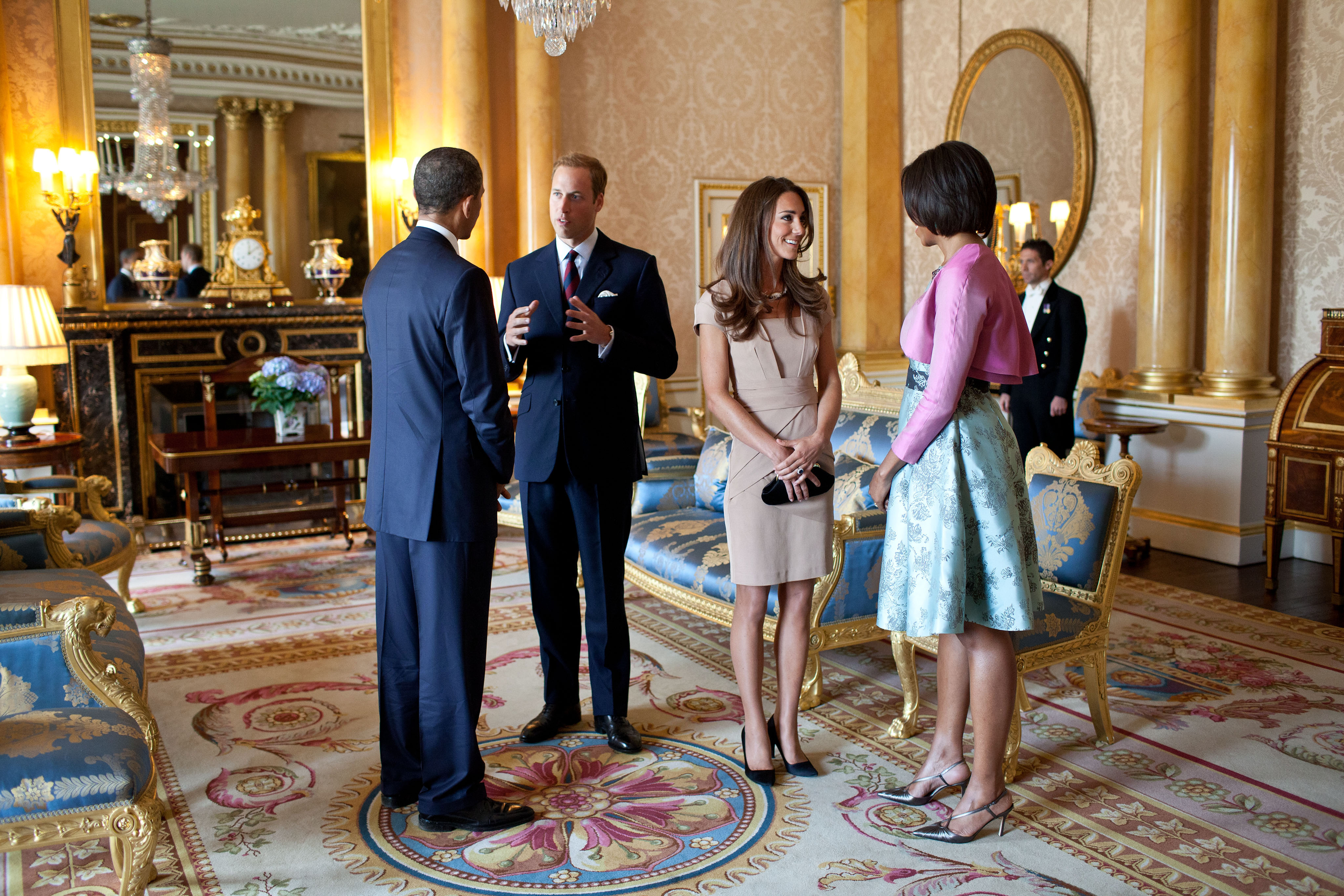
The original early-nineteenth-century interior designs survive in many of the State Rooms, featuring brightly coloured scagliola and blue and pink lapis lazuli. Nash's work for George IV was intended to create grand, theatrical spaces. The State Rooms run along the garden front of the palace and are used for official entertaining: state banquets, investitures, and receptions for visiting heads of state. The Throne Room, the White Drawing Room, and the Picture Gallery -- which houses works by Rembrandt, Rubens, and Vermeer -- are opened to the public during the summer months when the monarch is in residence elsewhere. The palace contains 775 rooms, including 19 State Rooms, 52 royal and guest bedrooms, 188 staff bedrooms, 92 offices, and 78 bathrooms.
Bombed but Unbowed
During the Second World War, Buckingham Palace was bombed nine times. The most serious attack came on 13 September 1940 when a German bomb destroyed the palace chapel. King George VI and Queen Elizabeth were in residence at the time. The Queen famously remarked that the bombing allowed her to 'look the East End in the face' -- a reference to the heavy bombing of working-class London neighborhoods. The chapel was never rebuilt as a place of worship. Instead, the Queen's Gallery was constructed on the site and opened to the public in 1962, displaying works from the Royal Collection. The palace survived the Blitz as a symbol of continuity, its flag flying above the damaged roof while London burned around it.
The Balcony and the Mall
The East Front balcony, added during the 1913 refacing, became the stage for some of the twentieth century's most iconic moments. The royal family appeared there on VE Day in 1945, with Winston Churchill joining them to acknowledge the cheering crowds. Every coronation since has culminated in the balcony appearance. Royal weddings, jubilees, and Trooping the Colour all build to the moment when the doors behind the balcony open and the family steps out. Below, the Mall stretches eastward to Admiralty Arch, lined with Union flags on ceremonial occasions. The Victoria Memorial, a massive marble monument to the queen who made the palace official, stands in the traffic circle before the gates. The Changing of the Guard -- one of London's most watched free spectacles -- takes place in the palace forecourt, the sentries in their red tunics and bearskins marching to the sound of a military band.
From the Air
Buckingham Palace (51.50N, 0.14W) is at the western end of the Mall in central London, bordered by Green Park to the north and St. James's Park to the east. The palace, its gardens, and the Victoria Memorial roundabout are clearly identifiable from altitude. The Mall runs northeast to Trafalgar Square. Nearby airports: Battersea Heliport 2nm south, London City (EGLC) 8nm east, London Heathrow (EGLL) 13nm west. Best viewed from 2,000-3,000ft.