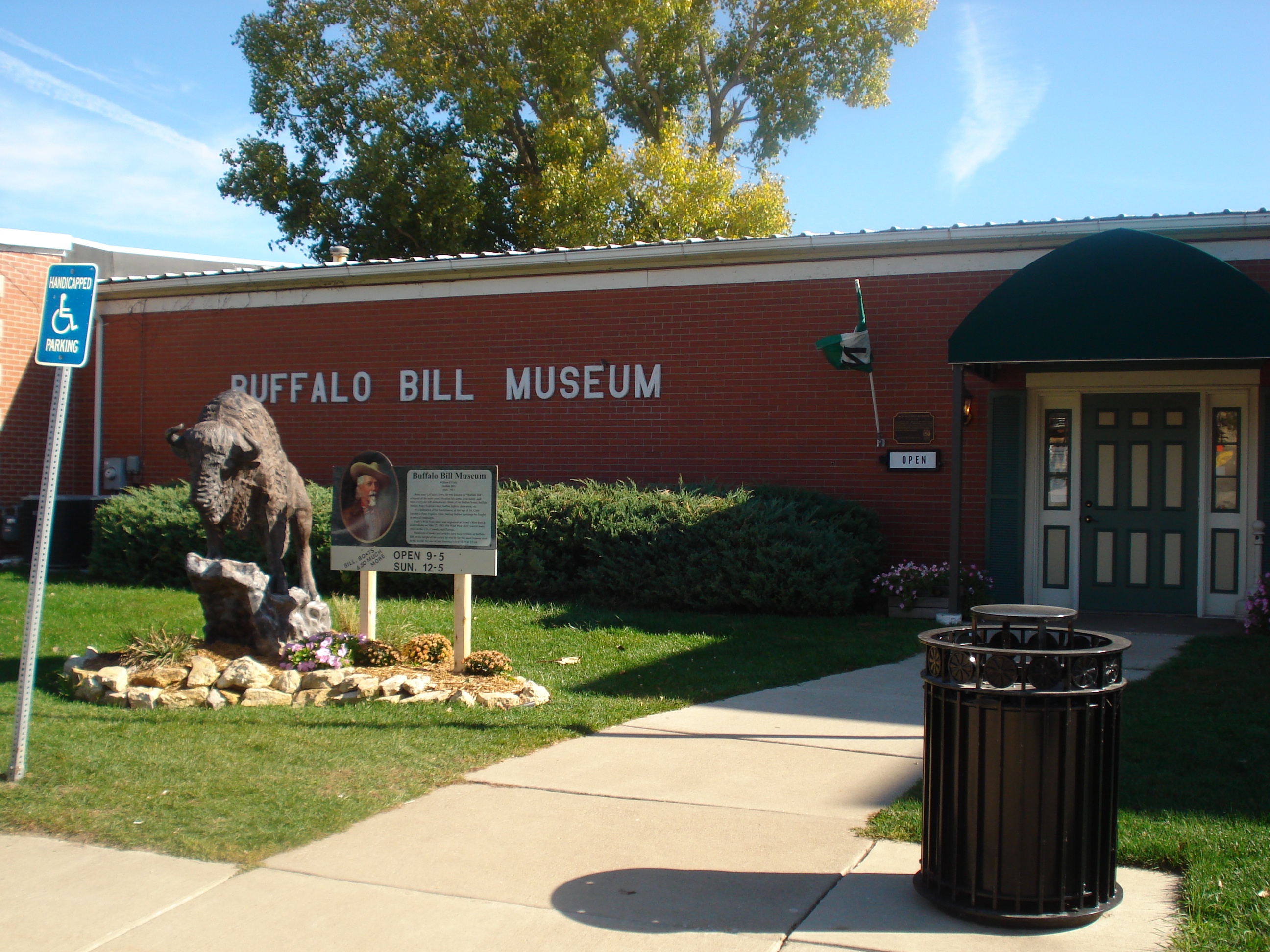
Buffalo Bill
The nickname came from a shooting contest. In 1867, William F. Cody faced off against Bill Comstock for the exclusive right to call himself Buffalo Bill. Over eight hours, Cody killed 68 buffalo to Comstock's 48, winning with a large-caliber Springfield he called Lucretia Borgia, named after the notorious Italian noblewoman. His strategy was masterful: rather than chasing the herd and scattering kills over three miles like his opponent, Cody rode to the front and forced the animals to circle, dropping them close together. He claimed to have killed 4,282 buffalo in eighteen months supplying meat to Kansas Pacific Railroad workers. This was the man who would become, according to historian Larry McMurtry, the most recognizable celebrity on Earth at the turn of the twentieth century.
Scout, Soldier, Medal Winner
Before the showmanship came the warfare. Cody enlisted at seventeen with the 7th Kansas Cavalry during the Civil War, serving until 1865. He returned to Army service in 1868 as a scout, eventually becoming Chief of Scouts for the Third Cavalry during the Plains Wars. In 1872, he was awarded the Medal of Honor for gallantry as an Army scout, rushing onto an active battlefield to pull wounded soldiers to safety under fire. That same year, he guided the hunting expedition of Grand Duke Alexei of Russia, a highly publicized affair that burnished his frontier credentials. The Medal would be revoked in 1917 when Congress tightened requirements, but after a 72-year campaign by his descendants, the Army Board for Correction of Military Records restored it in 1989, recognizing that civilian scouts served as the equivalent of officers.
The Show That Conquered the World
In 1883, near North Platte, Nebraska, Cody founded Buffalo Bill's Wild West, a touring spectacle that would reshape how the world imagined America. The show opened with a parade featuring cowboys, American Indians, soldiers, and performers from around the globe, all on horseback in their finest attire. It toured Europe eight times between 1887 and 1906. Queen Victoria requested a command performance for her Golden Jubilee in 1887, and future monarchs including Kaiser Wilhelm II and King George V attended. In 1890, Cody met Pope Leo XIII in Rome. That same trip, he accepted a challenge from Italian butteri, cowboys from the Roman countryside, and watched his men lose decisively at calf roping. The Wild West show made Cody an international icon and influenced countless Western films and novels that followed.
Building Cody, Wyoming
Cody first passed through northwestern Wyoming in the 1870s and was so impressed by the development potential, the irrigation possibilities, rich soil, grand scenery, and proximity to Yellowstone Park, that he returned in the mid-1890s to found a town. Streets were named after his business associates: Beck, Alger, Rumsey, Bleistein, and Salsbury. The town incorporated in 1901. In November 1902, he opened the Irma Hotel, named after his daughter, anticipating tourists arriving on the newly opened Burlington rail line en route to Yellowstone. He completed the Wapiti Inn and Pahaska Tepee along Cody Road in 1905. His TE Ranch on the south fork of the Shoshone River eventually grew to eight thousand acres, running a thousand head of cattle while hosting big-game hunters and notable guests from Europe and America.
Champion of the Overlooked
For all his frontier mystique, Cody held progressive views that surprised his contemporaries. He employed Native Americans in his show, believing it offered them good pay and a chance to improve their lives. He described them as "the former foe, present friend, the American" and stated that "every Indian outbreak that I have ever known has resulted from broken promises and broken treaties by the government." He encouraged the wives and children of Native American performers to set up camp as they would in their homelands, wanting audiences to see the human side of the people his show depicted. On women's rights, he declared in an 1898 interview: "Set that down in great big black type that Buffalo Bill favors woman suffrage... If a woman can do the same work that a man can do and do it just as well, she should have the same pay."
The Final Performance
Cody died in Denver on January 10, 1917, his once-great fortune dwindled to less than $100,000. His burial site on Lookout Mountain, west of Denver, was selected by his sister Mary Decker, offering views of the Rocky Mountains on one side and the Great Plains on the other, a fitting resting place for a man who bridged both worlds. The town of Cody, Wyoming, disputed this choice, and in 1948, the local American Legion chapter offered a $10,000 reward for anyone who could steal the body and deliver it to the town he founded. The Denver chapter mounted a guard over the grave. Today, the Buffalo Bill Dam, Buffalo Bill Reservoir, and Buffalo Bill State Park all bear his name, as does the NFL's Buffalo Bills, a team in a city Cody had no special connection to, though he did live briefly in nearby Rochester, New York, where three of his children are buried.
From the Air
Buffalo Bill's grave is located at 39.73N, 105.24W on Lookout Mountain, west of Denver at approximately 7,400 feet MSL. The site offers commanding views of the Great Plains to the east and Rocky Mountains to the west. The town of Cody, Wyoming, which he founded, lies approximately 300 miles northwest at the eastern entrance to Yellowstone. Nearby airports to Lookout Mountain: Rocky Mountain Metropolitan (KBJC) 8 miles north, Centennial (KAPA) 20 miles southeast, Denver International (KDEN) 30 miles east. Mountain terrain and afternoon turbulence common along the Front Range.