Buffalo: The City Built by the Canal and Broken by the Highway
Buffalo was once among America's greatest cities - the terminus of the Erie Canal, the gateway to the West, the eighth-largest city in 1900. The grain elevators invented here processed the Midwest's harvest; the electric power from Niagara lit the city; the architecture proclaimed prosperity. Then the canal became obsolete, the factories closed, the population halved, and Buffalo spent six decades in decline. The 'comeback' narrative has been running since the 1990s; each decade brings new evidence of revival and new reminders of what was lost. Buffalo now is a city of 280,000 with grand architecture for a city twice its size, brutal winters that thin the population, and a loyalty to the Bills that survives decades of heartbreak.
The Canal
The Erie Canal opened in 1825, connecting Buffalo to the Hudson River and transforming a frontier village into a major city. The grain from the Midwest flowed through Buffalo to Eastern markets; the grain elevator was invented here to handle the volume. By 1900, Buffalo processed more grain than any city in the world. The fortunes built on grain and commerce produced architecture that rivaled any American city - the Guaranty Building by Louis Sullivan, the Darwin Martin House by Frank Lloyd Wright, city hall by John Wade. When the St. Lawrence Seaway opened in 1959, bypassing Buffalo entirely, the city's purpose evaporated. The architecture remains; the economic rationale doesn't.
The Architecture
Buffalo's architecture reflects the wealth of its prime years. Frank Lloyd Wright's Darwin Martin House is considered among his finest works; the Guaranty Building is a Louis Sullivan landmark. The Richardson Olmsted Complex (a former asylum) demonstrates H.H. Richardson's Romanesque style. City Hall, completed in 1931, is Art Deco at heroic scale. The preservation of these buildings - through decades when Buffalo couldn't afford to demolish and replace them - accidentally created an architectural museum. The buildings tell the story of the city that Buffalo was; the gap between architectural grandeur and current population tells the story of decline.
The Winter
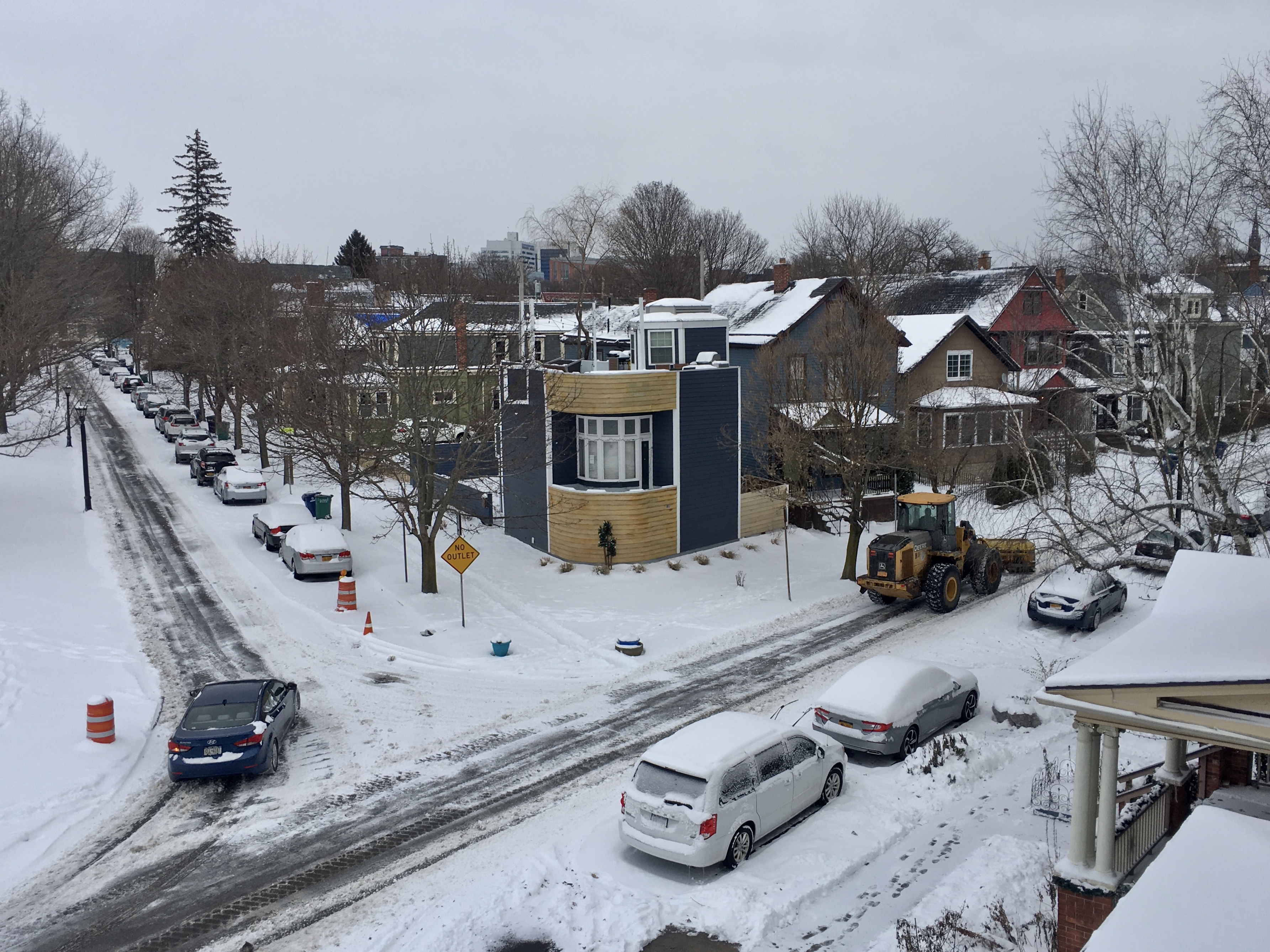
Buffalo winters are legendary - the lake-effect snow that dumps feet in hours, the blizzard of '77 that buried the city, the annual struggle against cold and accumulation. The weather is not exaggerated: Buffalo averages 95 inches of snow annually, with the southern suburbs getting more. The population declined partly because people fled the cold; the population that remains is toughened by it. The Bills play in an open-air stadium in January, the fans tailgating in parking lots regardless of temperature, the suffering becoming badge of honor. Buffalo's relationship with winter is acceptance bordering on pride - if you can't beat it, embrace it.
The Wings
Buffalo wings were invented in 1964 at the Anchor Bar when Teressa Bellissimo deep-fried chicken wings and tossed them in hot sauce. The dish became American bar food standard; the arguing about authentic preparation became Buffalo tradition. Proper Buffalo wings are fried (not baked), tossed in Frank's Red Hot and butter, served with celery and blue cheese (never ranch). The bars that claim origin, the debates about who does it best, the Duff's versus Anchor Bar rivalry - the wings became Buffalo's culinary identity, the contribution this declining city made to American food culture. The wings are simpler than they seem; getting them right is harder than it looks.
Visiting Buffalo
Buffalo is served by Buffalo Niagara International Airport (BUF). The Darwin Martin House requires advance booking; tours reveal Wright's Prairie style at its peak. The Albright-Knox Art Gallery holds a strong modern collection. The grain elevators along the Buffalo River are industrial heritage worth exploring. Canalside offers waterfront activities in the former Erie Canal terminus. For wings, locals recommend Duff's over the Anchor Bar; make your own judgment. Niagara Falls is 20 minutes north - the Canadian side offers better views. The weather is best May through October; winter requires commitment. The city rewards exploration; the architecture surprises visitors who expected nothing.
From the Air
Located at 42.89°N, 78.88°W at the eastern end of Lake Erie where the Niagara River begins its flow toward the falls. From altitude, Buffalo appears as urban development along the lakeshore - the grain elevators visible along the Buffalo River, the downtown cluster smaller than the architecture would suggest. Niagara Falls is visible 20 miles north. What appears from altitude as a mid-sized Great Lakes city is the remnant of something much greater - where the Erie Canal built fortunes, where the architecture tells of vanished wealth, and where the comeback continues one decade at a time.