Buffalo Trace Distillery
Long before bourbon had a name, American bison wore a trackway into the limestone bluffs where the Kentucky River bends through Franklin County. Settlers followed those buffalo traces to reach the interior, and in 1775, brothers Hancock and Willis Lee began distilling spirits on the very ground where the animals had crossed. Willis died the following year, but the copper stills kept working. Two and a half centuries later, they still have not stopped. Buffalo Trace Distillery in Frankfort, Kentucky, now owned by the Sazerac Company, claims to be the oldest continuously operating distillery in the United States -- a place that outlasted the Revolution, the Civil War, and Prohibition by declaring its whiskey medicinal. Whether that claim edges out the rival Burks' Distillery, now home to Maker's Mark and listed in the Guinness Book of World Records as the oldest operating bourbon distillery, depends on how you count the years. Either way, the limestone-filtered water still flows and the barrels still age.
Copper, Fire, and a Changing Name
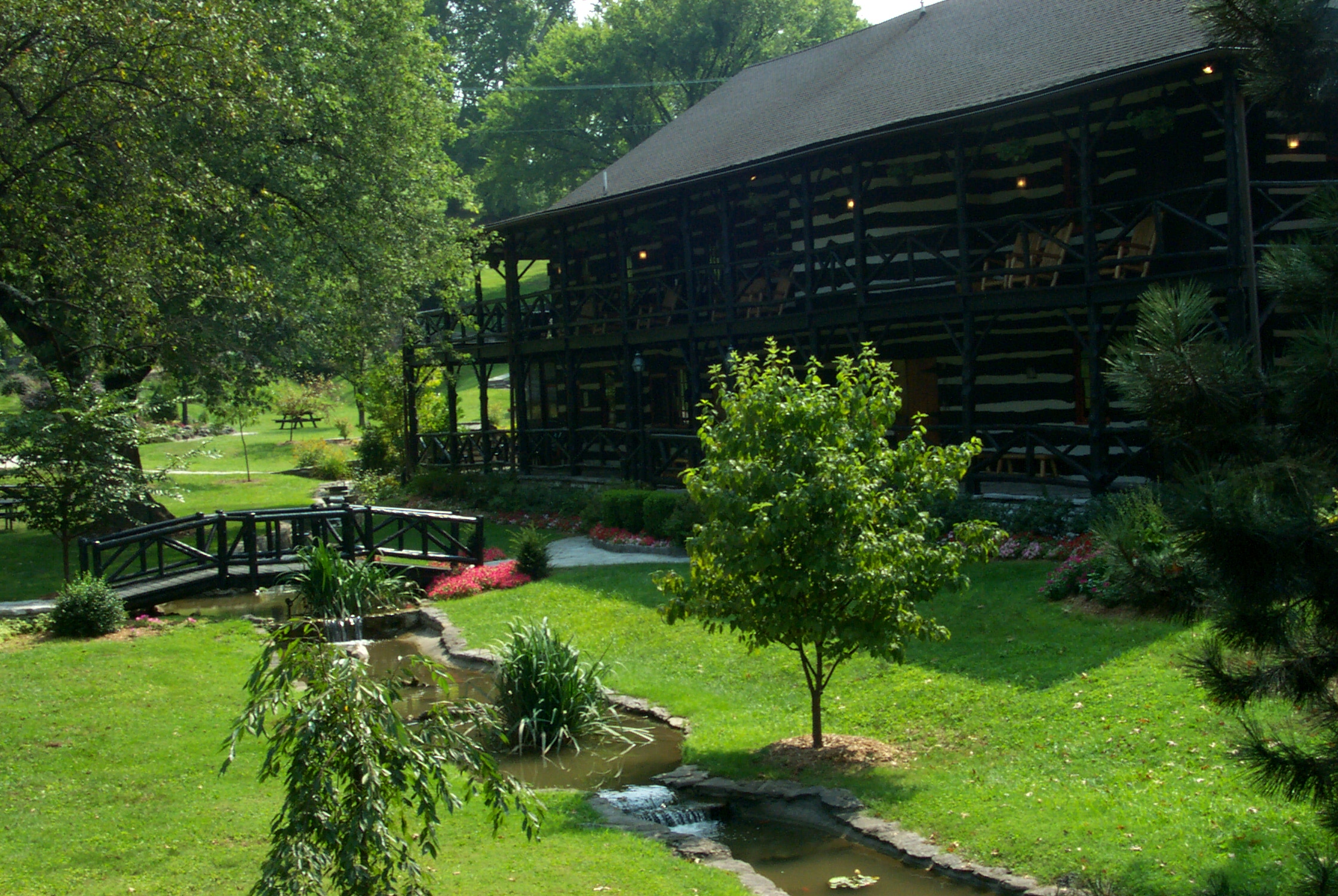
The first proper distillery building rose on the site in 1812, constructed by Harrison Blanton. In 1870, Edmund H. Taylor purchased the operation and christened it the Old Fire Copper Distillery -- the O.F.C. -- investing heavily in modern production methods that would set standards for the bourbon industry. The distillery later bore the name of George T. Stagg before the Sazerac Company acquired it in 1992 and renamed it Buffalo Trace in 1999, reviving the memory of those ancient animal paths. In October 2016, workers renovating a building for event space uncovered the stone foundation of the original 1873 distillery, which had burned down in 1882. Alongside the foundation lay the remains of fermenters from that same year, artifacts that had been quietly sealed beneath a replacement building for over a century. The site is now open to visitors.
Surviving Prohibition with a Prescription Pad
When Prohibition swept the nation in 1920, most distilleries shuttered their doors and watched their inventory evaporate -- sometimes literally, as barrels were seized or abandoned. Buffalo Trace was among a small handful granted federal permits to continue producing whiskey for medicinal purposes. Doctors could prescribe bourbon for ailments ranging from the common cold to general debility, and pharmacies dispensed it by the pint. The arrangement kept the stills warm, the workforce employed, and the institutional knowledge of bourbon-making intact through 13 dry years. When Repeal arrived in 1933, the distillery was ready to resume full production while competitors scrambled to rebuild from nothing.
A Roster of American Originals
The bourbon that flows from Buffalo Trace's warehouses today reads like a collector's wish list. The distillery produces its namesake Buffalo Trace Kentucky Straight Bourbon alongside Eagle Rare, Blanton's Single Barrel, the barrel-proof George T. Stagg, and the coveted W.L. Weller line whose wheated mash bill is nearly identical to that used for the Van Winkle brands. Since June 2002, an agreement with the Van Winkle family has kept Pappy Van Winkle's Family Reserve, Old Rip Van Winkle, and Van Winkle Special Reserve distilled and aged on site. The distillery also produces Col. E.H. Taylor small batch and single barrel expressions, Sazerac straight rye, Thomas H. Handy barrel-proof rye, and even Wheatley vodka. A partnership with country musician Chris Stapleton produced Traveller blended whisky. Beyond bourbon, the operation bottles Peychaud's Bitters, the aromatic backbone of the Sazerac cocktail itself.
When the River Rose
In early April 2025, days of heavy rainfall dumped more than 15 inches on parts of central Kentucky, and the Kentucky River at Frankfort climbed to 48.24 feet -- the second-highest level in the distillery's two-century history. Significant portions of the campus went underwater. Tours were suspended, an Easter event was canceled, and access was restricted to recovery crews assessing damage across the sprawling grounds. The flood was a reminder that the same river whose limestone-filtered water gives Kentucky bourbon its character can also turn hostile. Cleanup began in phases, with the distillery methodically working through each building before reopening.
From the Air
Located at 38.218N, 84.869W on the banks of the Kentucky River in Frankfort, Kentucky, the state capital. From the air, the distillery campus is visible as a cluster of large aging warehouses and industrial buildings along a bend in the river, immediately northwest of downtown Frankfort. The Kentucky State Capitol dome provides a landmark reference point roughly one mile southeast. Capital City Airport (KFFT) is one nautical mile southwest of downtown Frankfort. Blue Grass Airport in Lexington (KLEX) lies about 25 miles east. Best viewed at 2,000-4,000 feet AGL for detail of the riverside campus and barrel warehouses.