Bui National Park
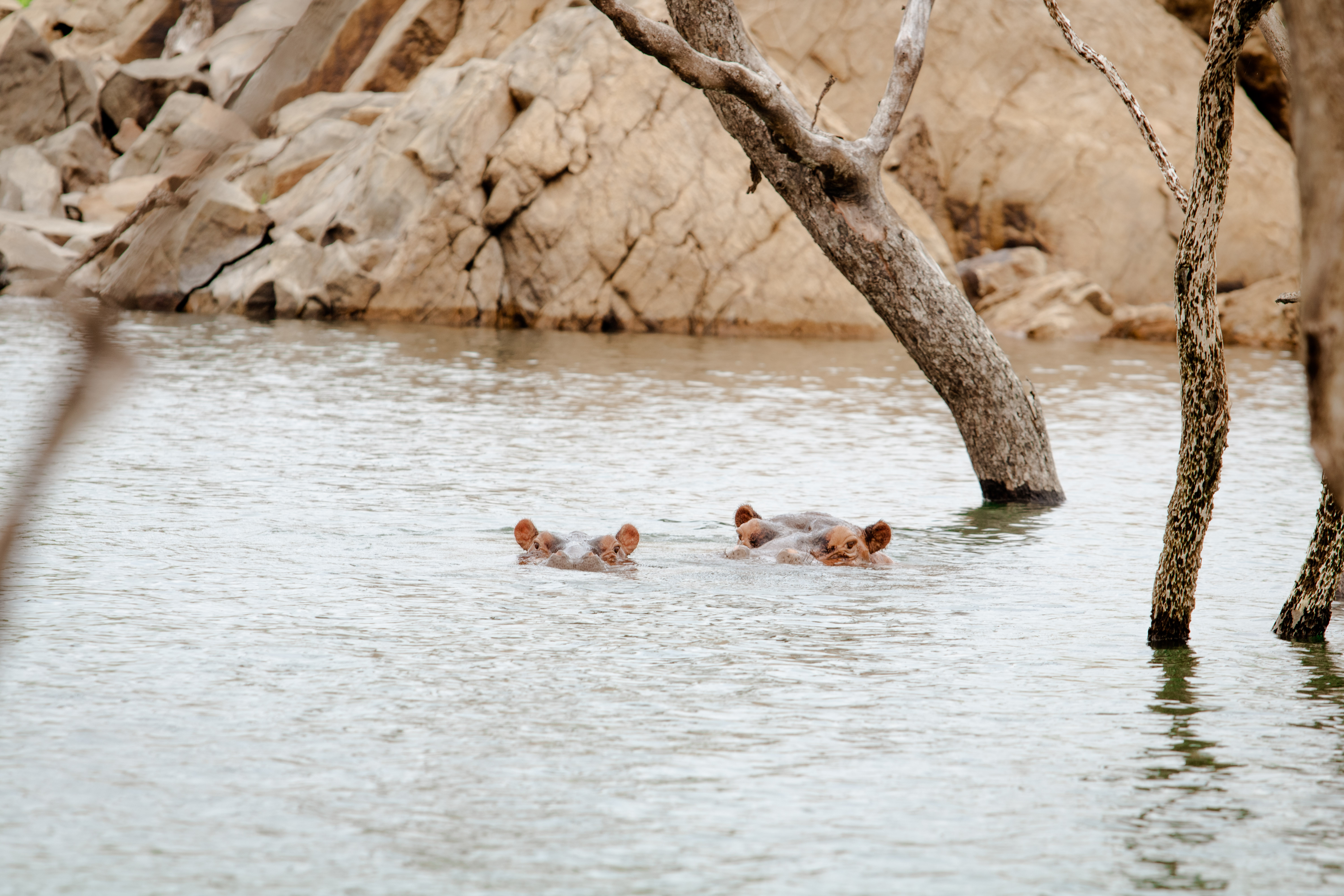
The hippos surface at dusk. Their ears and nostrils break the water of the Black Volta first, then the massive bulk of their bodies rises into view, glistening in the last light. Bui National Park holds the larger of Ghana's only two viable hippopotamus populations, an estimated 250 to 350 animals that have made this stretch of river their home. But since 2013, the river the hippos depend on has also been a reservoir. The Bui Dam, a 400-megawatt hydroelectric project, inundated roughly 20% of the park, drowning forest and savanna beneath 444 square kilometers of water. What remains is a landscape caught between conservation and development, where hippos share their habitat with turbines and the park's future depends on how well those competing demands are managed.
A River Through the Middle
The Black Volta bisects Bui National Park, dividing its 1,821 square kilometers between the Bono Region to the west and the Savannah Region to the east. To the west, the park presses against the Ivory Coast border. The river, which originates in Burkina Faso and flows south to join the White Volta, has carved the Bui Gorge through the landscape, a dramatic passage that was the principal reason the dam was sited here. Before the reservoir, the gorge was one of the most striking geological features in the park. Now the water level has risen to fill it, transforming a narrow river corridor into a broad lake flanked by mountains. The closest towns, Nsawkaw, Wenchi, and Techiman, lie to the south and east, making the park relatively remote and difficult to access.
Wings Over the Savanna
BirdLife International designated Bui National Park an Important Bird Area for good reason. Over 250 species have been recorded in its woodland savanna, a tally that includes several species difficult to find elsewhere. Violet turacos move through the canopy in flashes of iridescent purple. Red-throated bee-eaters hawk insects from exposed perches along the riverbanks. Bearded barbets, Senegal parrots, and yellow-billed shrikes populate the mid-story, while oriole warblers, Senegal eremomelas, and white-crowned robin-chats work the understory. Heuglin's masked weavers build their intricate nests near water. The park also supports the endangered ursine colobus, a variety of antelopes, and two threatened species of crocodile: the dwarf crocodile and the slender-snouted crocodile, both of which occur in the Black Volta.
The Dam's Bargain
Ghana needed electricity. The Bui Dam, constructed between 2007 and 2013, provides 400 megawatts of hydroelectric power through three Francis turbine units and a smaller turbinette. The reservoir behind it holds 12.57 billion cubic meters of water and stretches an average of 40 kilometers in length. The cost was measured in more than concrete and steel. Roughly 20% of the national park was submerged, and 1,216 people were resettled from communities within the flood zone. Hippo habitat along the river was permanently altered. Whether the animals will adapt to the reservoir as they did to the natural river remains an open question. The park's management now contends with a body of water that did not exist when the boundaries were drawn in 1971, and with the reality that conservation in a developing nation must negotiate with energy needs rather than simply assert itself.
What Endures
From the top of Sunshine Mountain, the view across Bui National Park takes in the full sweep of what this landscape has become: reservoir glinting between forested hills, savanna stretching east toward the flatlands of the Savannah Region, and somewhere below, hippos moving through water that is both their ancient home and a modern infrastructure project. Visitors who reach the park can take boat safaris on the reservoir, guided wildlife tours through the surviving woodland, and birdwatching expeditions into habitat that remains among the richest in Ghana. The park was established in 1971 to protect this ecosystem. The dam arrived four decades later, reshaping but not erasing what the protection was meant to preserve. Cormorants rest on the branches of trees drowned by the rising water, their silhouettes visible from the boats that carry tourists past them. The landscape has changed, but it has not been emptied of life.
From the Air
Located at 8.30N, 2.36W, Bui National Park is visible from altitude as a large reservoir surrounded by forested hills and woodland savanna. The Bui Dam and its reservoir (444 km2) are the most prominent features, the water body clearly visible against the green landscape. The Black Volta River enters from the northwest (Burkina Faso) and exits to the southeast. The Ivory Coast border is immediately to the west. Nearest airport is Sunyani Airport (DGSN), approximately 120 km to the south. Tamale Airport (DGLE) is roughly 250 km to the northeast.