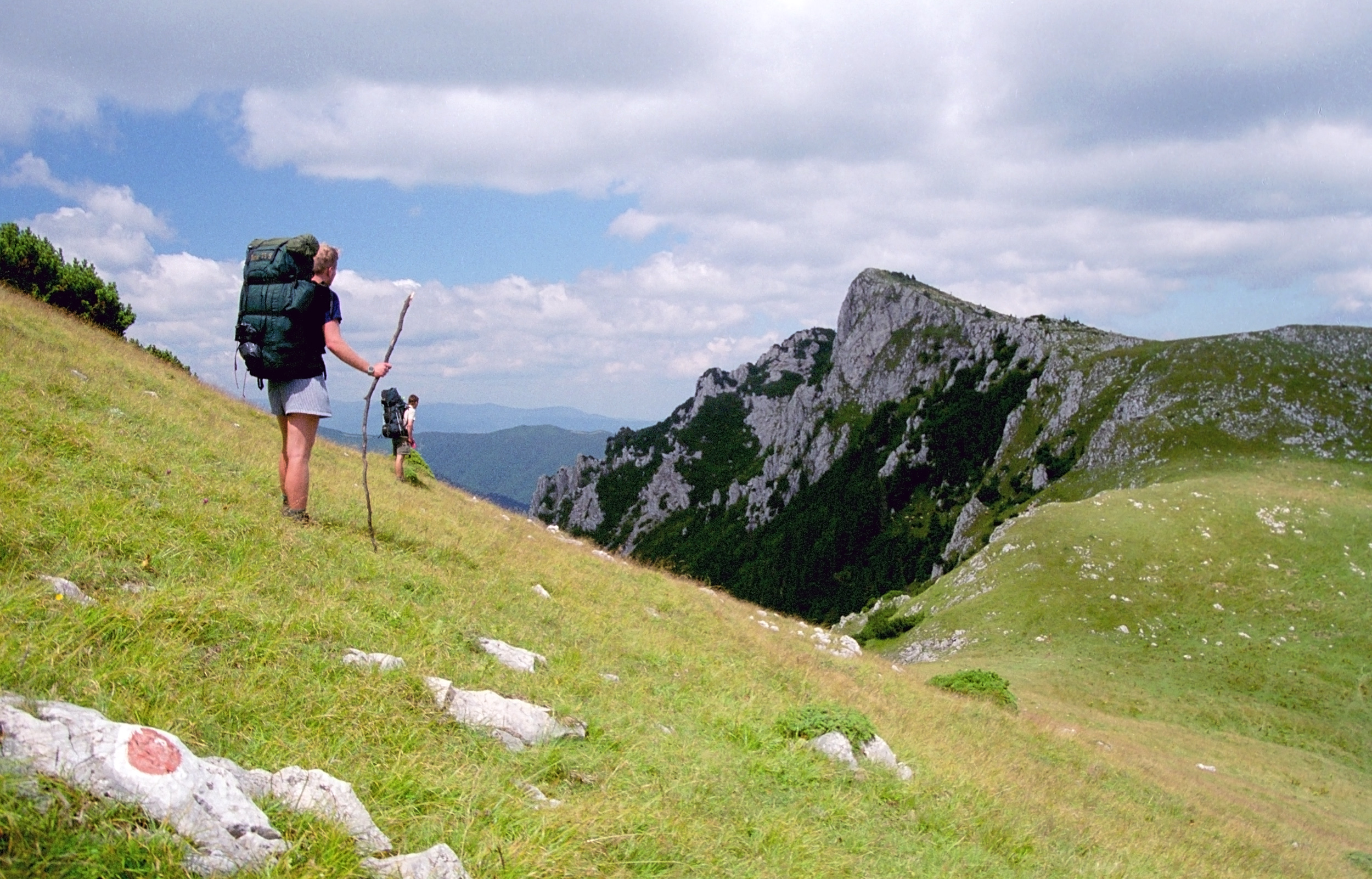
Buila-Vanturarita National Park
Vanturarita Mare Peak tops out at 1,885 meters, and from its summit ridge the Southern Carpathians roll outward in every direction like a crumpled green blanket. Buila-Vanturarita National Park occupies a relatively small piece of this landscape in Valcea County, but what it lacks in acreage it compensates for in biological density. Declared a protected area by Romanian government decision in 2004, the park sits within the Capatanii Mountains, a subgroup of the Parang range. Below the exposed limestone ridges, forests of European beech and Norway spruce descend into valleys where five named cave systems -- Arnauți, Clopot, Munteanu-Murgoci, Pagoda, and Valea Bistrița -- bore into the karst bedrock. The park also contains the Trovant Museum, where naturally cemented sand concretions have puzzled geologists and delighted visitors for decades.
The Forest Below, the Rock Above
The vertical range of Buila-Vanturarita creates a compressed tour through Carpathian ecosystems. At lower elevations, English oak and European ash share the canopy with linden and birch. Higher up, the forest transitions to Norway spruce, fir, and Scots pine, with pockets of the ancient European yew clinging to sheltered slopes. Near the ridgeline, the trees give way to mountain pine and common juniper scrub, and then to exposed rock where edelweiss flowers grip the limestone. Lady's slipper orchids bloom in the forest clearings below, alongside globe-flowers, yellow anemones, and the toxic beauty of belladonna. The mountain bellflower grows on alpine faces where the wind never stops, and martagon lilies nod their spotted heads in subalpine meadows. This botanical range exists because the Carpathians sit at a crossroads between Central European, Mediterranean, and steppe climates, concentrating species that elsewhere occupy separate continents.
Predators and Their Domain
Romania holds Europe's largest populations of brown bears, wolves, and lynx, and Buila-Vanturarita shelters all three. The park is compact enough that a wolf pack's territory might extend beyond its boundaries, but the dense forest and steep terrain provide the kind of cover large predators require. Chamois navigate the rocky upper ridges with a confidence that borders on contempt for gravity, while roe deer and wild boar move through the lower forests. Pine martens hunt in the canopy; badgers work the forest floor at night. The caves harbor their own residents -- barbastelle bats, lesser mouse-eared bats, and brown long-eared bats roost in the darkness of Arnauți and Pagoda caves. Above the tree line, western capercaillie perform their elaborate mating displays in spring, and red kites circle on thermals rising off the south-facing slopes.
Underground Architecture
The limestone bedrock beneath Buila-Vanturarita has been dissolving for millions of years, and the result is a network of caves that draws speleologists from across Romania. Arnauți Cave and Pagoda Cave are among the most studied, their passages shaped by underground rivers that still flow through some sections during wet seasons. The karst geology that creates caves also produces the park's surface drama: sinkholes, disappearing streams, and exposed rock faces that glow white against the surrounding green. Fire salamanders patrol the damp cave entrances, their black-and-yellow warning colors vivid against the grey stone. Alpine newts breed in the cold pools that collect at the base of cliff faces. Even the common European adder, coiled on sun-warmed limestone, belongs to this ecosystem -- a predator calibrated for exactly this terrain.
Reaching the Ridge
Getting to Buila-Vanturarita requires commitment. The main access follows European route E81 from Bucharest through Pitesti and Ramnicu Valcea, then turns onto smaller national and county roads toward the village of Cheia. An alternative approach from the north follows DN7 from Sibiu through Talmaciu and down the Olt Valley to Brezoi. Neither route is quick, and the final stretches on county road DJ654 wind through valleys that feel increasingly remote. The mountain pass called Curmatura Builei connects the park's two main ridges and offers the most dramatic walking in the park -- a narrow traverse with exposure on both sides and views that extend to the Fagaras Mountains on clear days. It is not wilderness on the scale of Yellowstone or the Serengeti, but it is wild in the way that matters: big enough to get lost in, steep enough to demand respect, and populated by animals that do not care whether you came.
From the Air
Located at 45.24N, 24.10E in the Southern Carpathians. The park's limestone ridges and Vanturarita Mare Peak (1,885m / 6,184 ft) are visible from cruising altitude. Best viewed from 4,000-6,000 feet AGL, where the contrast between forested slopes and exposed ridge crests stands out. The Olt River valley runs to the east. Nearest airports: Craiova (LRCV) approximately 60 nm southwest, Sibiu International (LRSB) approximately 40 nm north.