Bujagali Hydroelectric Power Station
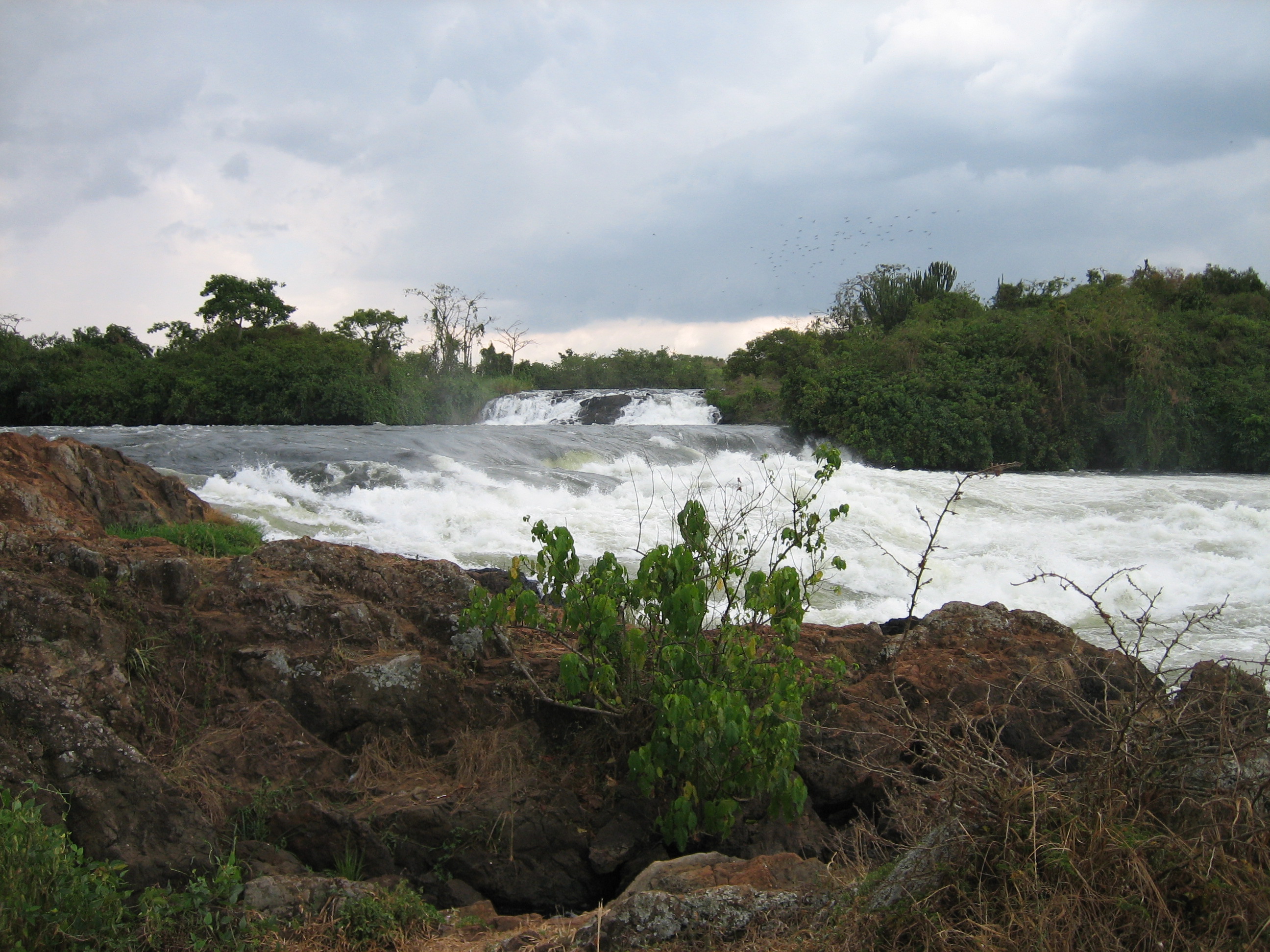
The Bujagali Falls no longer exist. Where the Victoria Nile once churned through a series of rapids considered sacred by the Basoga people -- a place where spirits were said to dwell in the white water -- there is now a concrete dam generating 250 megawatts of electricity. The Bujagali Hydroelectric Power Station, completed in 2012 about 15.5 kilometers northwest of Jinja, represents one of the starkest trade-offs in modern East African development: ancient spiritual landscape sacrificed for desperately needed power in a country where, at the time of construction, only 26 percent of the population had access to grid electricity.
A Decade of False Starts
Uganda began planning a hydroelectric plant at Bujagali Falls as early as 2001. The original developers were AES Energy, an American firm, and Uganda's Madhvani Group. But the project collapsed in 2003 when AES withdrew amid fraud investigations and persistent objections from environmentalists who warned of the ecological and cultural costs of flooding the rapids. A new consortium, Bujagali Energy Limited, was formed by Sithe Global Power of the United States and Industrial Promotion Services, a division of the Aga Khan Fund for Economic Development. This time the project moved forward. Construction began in June 2007 with Italian firm Salini Impregilo as lead contractor. At the peak of activity, over 2,500 workers were employed on the site, roughly 2,200 of them Ugandan nationals. The dam's five turbines were commissioned one by one, with the first coming online in February 2012 and the last in June, bringing the station to its full 250-megawatt capacity.
What the Water Carried Away
The falls that gave the dam its name held deep spiritual significance for communities along the Nile. Local tradition held that the rapids were home to powerful spirits, and spiritual ceremonies were conducted at the site. Environmentalists and cultural advocates had fought the project for years, arguing that the loss of the falls represented an irreversible destruction of both natural heritage and living spiritual tradition. Proponents countered that Uganda's energy poverty was itself a form of suffering -- that hospitals without reliable power, schools without lights, and businesses unable to operate after dark exacted their own toll on human welfare. The debate was never cleanly resolved; it was simply overtaken by construction. When President Yoweri Museveni and Aga Khan IV officially inaugurated the station on October 8, 2012, the falls were already underwater.
Power at a Price
The electricity generated by Bujagali was expensive. As of 2016, the dam operated at roughly 70 percent utilization, and end-users paid about $0.11 per kilowatt-hour, the highest rate in the East African Community. The financial structure that produced these costs was labyrinthine: the International Finance Corporation, the African Development Bank, the European Investment Bank, and nearly a dozen other international lenders and development agencies held stakes in the project. In 2016, the Ugandan government began negotiating with equity partners and lenders to restructure the financing, aiming to bring the consumer rate down to about $0.072 per kilowatt-hour. In 2018, the IFC and MIGA approved plans to refinance more than $400 million in construction debt, a move intended to extend loan terms and, combined with government tax waivers, reduce the burden on Ugandan consumers. Whether the dam ultimately fulfills its promise depends on whether cheaper electricity can reach the rural areas -- home to 96 percent of Uganda's poor -- where only 8 percent had grid access when construction began.
The Nile Flows On
From the air, the Bujagali dam appears as a low concrete barrier across the broad green ribbon of the Victoria Nile, the reservoir behind it calm where rapids once roared. Upstream lies Jinja, Uganda's second city, where the Nile begins its long journey from Lake Victoria toward the Mediterranean. Upstream, the older Nalubaale station sits at Owen Falls, where the Nile leaves Lake Victoria; further projects are planned or under construction downstream. The Victoria Nile is becoming an industrial corridor as much as a natural one. For the communities who remember the falls, the dam is a wound that generates light. For the millions who now have electricity they did not have before, it is something harder to argue against. Bujagali sits at the intersection of these truths, a place where progress and loss are measured in the same current.
From the Air
Located at 0.50N, 33.14E on the Victoria Nile, approximately 15.5 km northwest of Jinja, Uganda. The dam and reservoir are visible from altitude as a barrier across the river with calm water upstream and the natural river course downstream. Nearest airport: Jinja Airfield. Entebbe International Airport (HUEN) is roughly 80 km to the southwest. Lake Victoria is visible to the south. The Nile's course from its Lake Victoria source at Jinja can be traced northward past the dam.