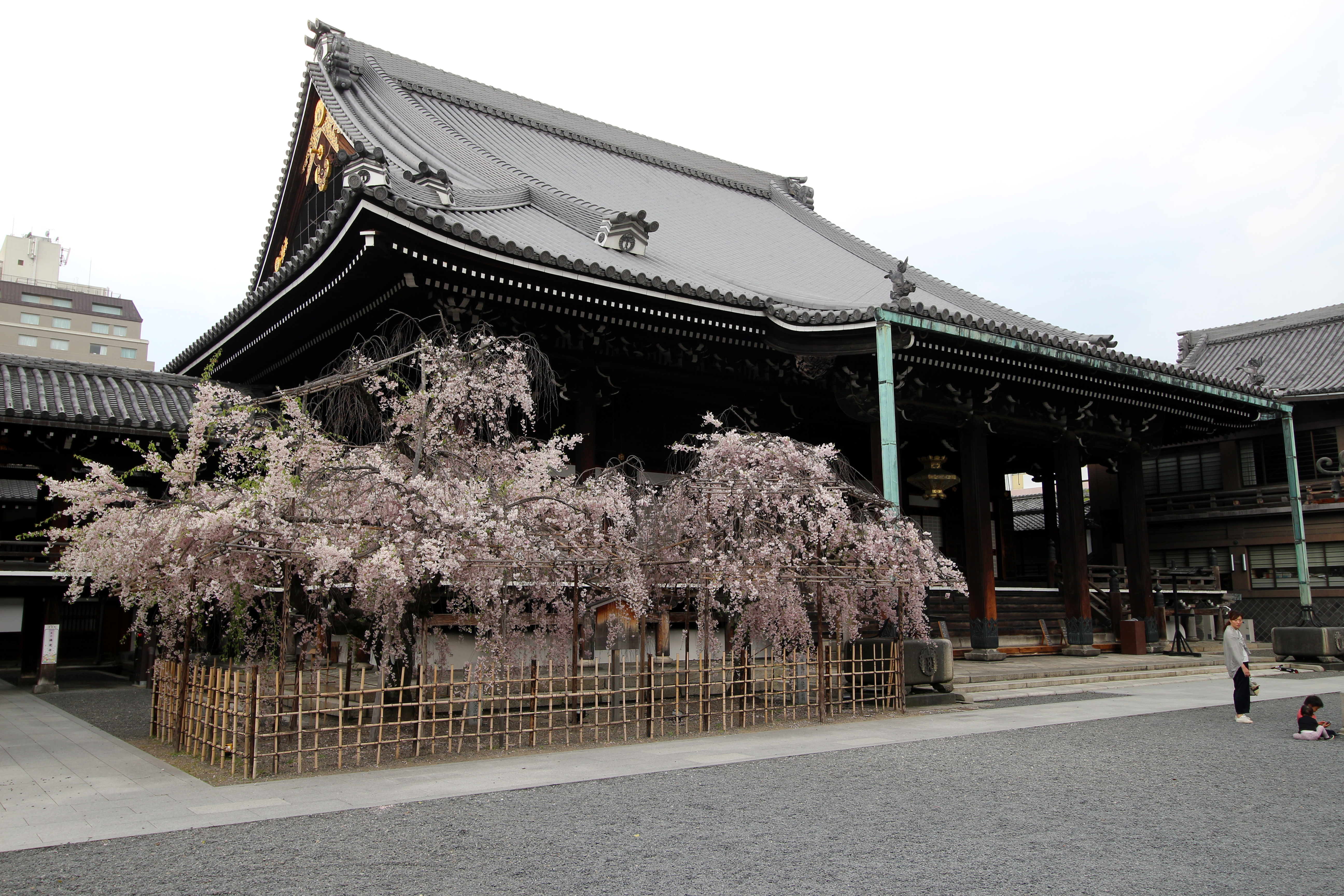
Bukko-ji
The name means "Temple of the Buddha's Light," but the story of Bukko-ji is really about shadow -- the long shadow cast by institutional rivalry in medieval Japan, and the shorter, sharper one cast by a murdered founder whose evangelical genius built something too successful for its own good. Tucked into the heart of Kyoto today, Bukko-ji began as a small chapel in the Yamashina district, founded in 1324 by a monk named Ryogen who had a talent his superiors at the Hongan-ji found deeply unsettling: he was better at spreading the faith than they were.
A Father, a Son, and a Falling Out
The founding of Bukko-ji reads like a family drama. Ryogen, born in 1295, was a Jodo Shinshu Buddhist from the Kanto region who arrived in Kyoto around 1320 to establish a chapel. Kakunyo, the head of the powerful Hongan-ji, initially approved and gave the new temple its first name, Kosho-ji. He even assigned his own son, Zonkaku, to mentor Ryogen. But the warmth curdled quickly. By 1324, the rift between Kakunyo and Zonkaku had grown so bitter that Kakunyo disinherited his son and cut ties with Ryogen entirely, citing differences in interpreting the teachings of Honen and Shinran. Zonkaku responded by renaming the temple Bukko-ji -- a deliberate act of separation. Father and son were now on opposite sides of an institutional divide that would shape Japanese Buddhism for generations.
The Art of Outreach
What made Bukko-ji threatening was its method. Ryogen borrowed techniques from the Ji-shu school to build a system of engagement that the more passive Hongan-ji could not match. He issued nembutsu inscriptions to followers. He created "salvation registers" -- formal records in which believers declared their faith in Amitabha Buddha, forging a documented spiritual bond. He distributed portrait lineages that visually traced a follower's connection through their local priest all the way back to the great Pure Land masters. The result was a hierarchical structure that placed real importance on local priests, who in turn depended on the parent temple. By the 1330s, Bukko-ji had outgrown Hongan-ji in both membership and geographic reach, its branch temples spreading across the provinces of Totomi, Iga, Ise, Owari, and Mikawa. Like all Shinshu sects, priests married and raised families, drawing followers from peasant and artisan communities across western Japan.
Murder on the Road
In 1336, while traveling the provinces to teach and recruit, Ryogen was killed by bandits. He was 41 years old. His son Genran, just 18, took over leadership but died himself in 1347 at the age of 29. Despite losing two leaders within a decade, the temple continued to grow. Kakunyo, who had once blessed the venture, spent his later years writing pointed criticism of Bukko-ji's evangelical practices. The temple's success clearly stung. But it was the arrival of Rennyo at the helm of Hongan-ji in the late fifteenth century that changed everything. Rennyo was a unifier, and he drew Bukko-ji's scattered congregations into the Hongan-ji fold with a combination of charisma and institutional pressure.
The Name That Came Back
The final twist carries a particular irony. Kyogo, who had been next in line to lead Bukko-ji, left to train under Rennyo at Hongan-ji. His motives remain unclear. When he founded his own temple in affiliation with Hongan-ji, he gave it the name Kosho-ji -- the original name that Kakunyo had bestowed on Ryogen's chapel before the split. It was as if the whole cycle of rebellion, success, and absorption had been written in that name from the beginning. By around 1481, Bukko-ji had become subordinate to Hongan-ji. Much of its congregation transferred allegiance. Today Bukko-ji remains technically independent as a Jodo Shinshu branch, but its close ties to the Hongan-ji lineage have persisted since Rennyo's time. The Temple of the Buddha's Light still stands in Kyoto, a monument to the truth that in medieval Japan, being too successful could be just as dangerous as failing.
From the Air
Located at 35.0007N, 135.7623E in central Kyoto, Japan. The temple sits in the dense urban grid of downtown Kyoto and is not easily distinguishable from the air, but the broader Kyoto temple district is unmistakable -- look for the green patches of temple grounds amid the gray urban fabric. Nearest major airports: Osaka Itami (RJOO) approximately 20nm southwest, Kansai International (RJBB) approximately 45nm south. Kyoto itself has no commercial airport. Recommended altitude for Kyoto temple viewing: 2,000-3,000 feet AGL. Visibility is often reduced by haze in the Kyoto basin, particularly in summer.