Bunker Hill
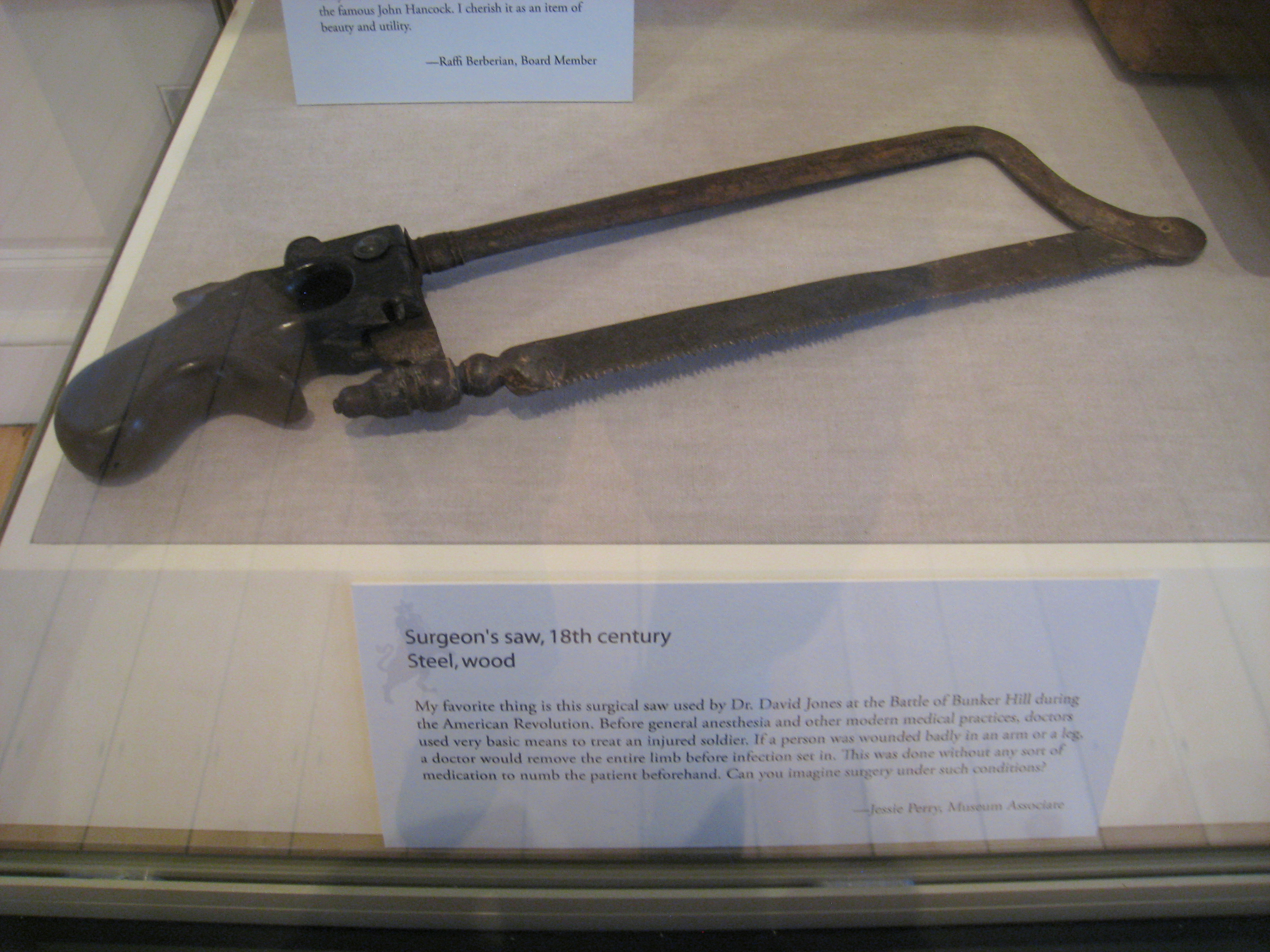
The Battle of Bunker Hill was fought on Breed's Hill. This geographic confusion - never corrected, perhaps never correctable - is fitting for a battle full of contradictions. On June 17, 1775, American militia fortified a hill overlooking Boston Harbor, and British regulars attacked uphill into murderous fire. The British eventually took the hill, but at catastrophic cost: over 1,000 casualties, including a staggering percentage of their officers. American losses were lighter, though they included the death of beloved leader Joseph Warren. The British won the battle and lost the war's strategic calculus. They had proven that American farmers could stand against professional soldiers, and they had demonstrated that victories in America would be bought at prices Britain couldn't afford. 'Don't fire until you see the whites of their eyes' - the famous command, probably apocryphal - captures the disciplined defiance that shocked the British Empire.
The Fortification
After Lexington and Concord in April 1775, American forces besieged Boston. On the night of June 16, Colonel William Prescott led 1,200 men to fortify Bunker Hill on the Charlestown peninsula, which overlooked the city. Instead, they fortified Breed's Hill, closer to Boston and more vulnerable but also more threatening. By dawn, they had built a substantial redoubt. British commanders saw the position and recognized the threat: American guns on that hill could bombard Boston and the fleet. They decided to take it by frontal assault, confident that professional soldiers would easily scatter untrained militia.
The Battle
The British attacked in the early afternoon, 2,200 men advancing uphill in formation against 1,500 Americans. The first assault was stopped cold by disciplined volleys from the redoubt. The British regrouped and attacked again. Again they were thrown back, leaving the hillside carpeted with red-coated bodies. On the third assault, with American ammunition exhausted, the British finally carried the position in brutal hand-to-hand fighting. General Joseph Warren, who had chosen to fight as a private soldier, was killed in the final moments. British Major John Pitcairn, who had commanded at Lexington, also fell.
The Cost
British casualties were staggering: 226 dead and 828 wounded - over 40% of the attacking force. American losses were 140 dead and 301 wounded. Among the British dead and wounded were an extraordinary number of officers, targeted by American marksmen. The psychological impact exceeded the tactical significance. British General Henry Clinton called it 'a dear bought victory; another such would have ruined us.' The Americans had lost a hill but proven they could fight. George Washington, appointed commander-in-chief the day before the battle, would build on that foundation.
The Monument
The Bunker Hill Monument, a 221-foot granite obelisk completed in 1843, actually stands on Breed's Hill - perpetuating the geographic error. It was one of America's first major memorial projects, taking 17 years to complete and requiring multiple fundraising efforts. Daniel Webster spoke at both the cornerstone laying (1825) and the dedication. The monument offers views of Boston after climbing 294 steps - there is no elevator. A small museum at the base tells the battle's story. The monument stands in Charlestown, now part of Boston, on land that has been urban for two centuries.
Visiting Bunker Hill
The Bunker Hill Monument is located in Charlestown, Boston, part of Boston National Historical Park and the Freedom Trail. The monument grounds are free; climbing the monument's 294 steps offers panoramic views of Boston. The Bunker Hill Museum at the monument's base has exhibits and a diorama of the battle. The actual Bunker Hill is a few hundred yards to the northwest, now covered by residential streets with a modest marker. The entire Charlestown peninsula has been urbanized since 1775; imagining the battle requires mental reconstruction. The Freedom Trail connects Bunker Hill to other Revolutionary sites. Boston Logan Airport (BOS) is two miles away. The Orange Line's Community College station provides transit access.
From the Air
Located at 42.38°N, 71.06°W in Charlestown, Boston, Massachusetts. From altitude, the Bunker Hill Monument is visible as a tall granite obelisk in the urban landscape of Charlestown. The peninsula that was the battle site is now densely developed. Boston Harbor lies to the east; downtown Boston is across the Charles River to the south. The geographic relationship between Breed's Hill (monument location) and actual Bunker Hill (northwest) is visible from above.