Burke-Gilman Trail
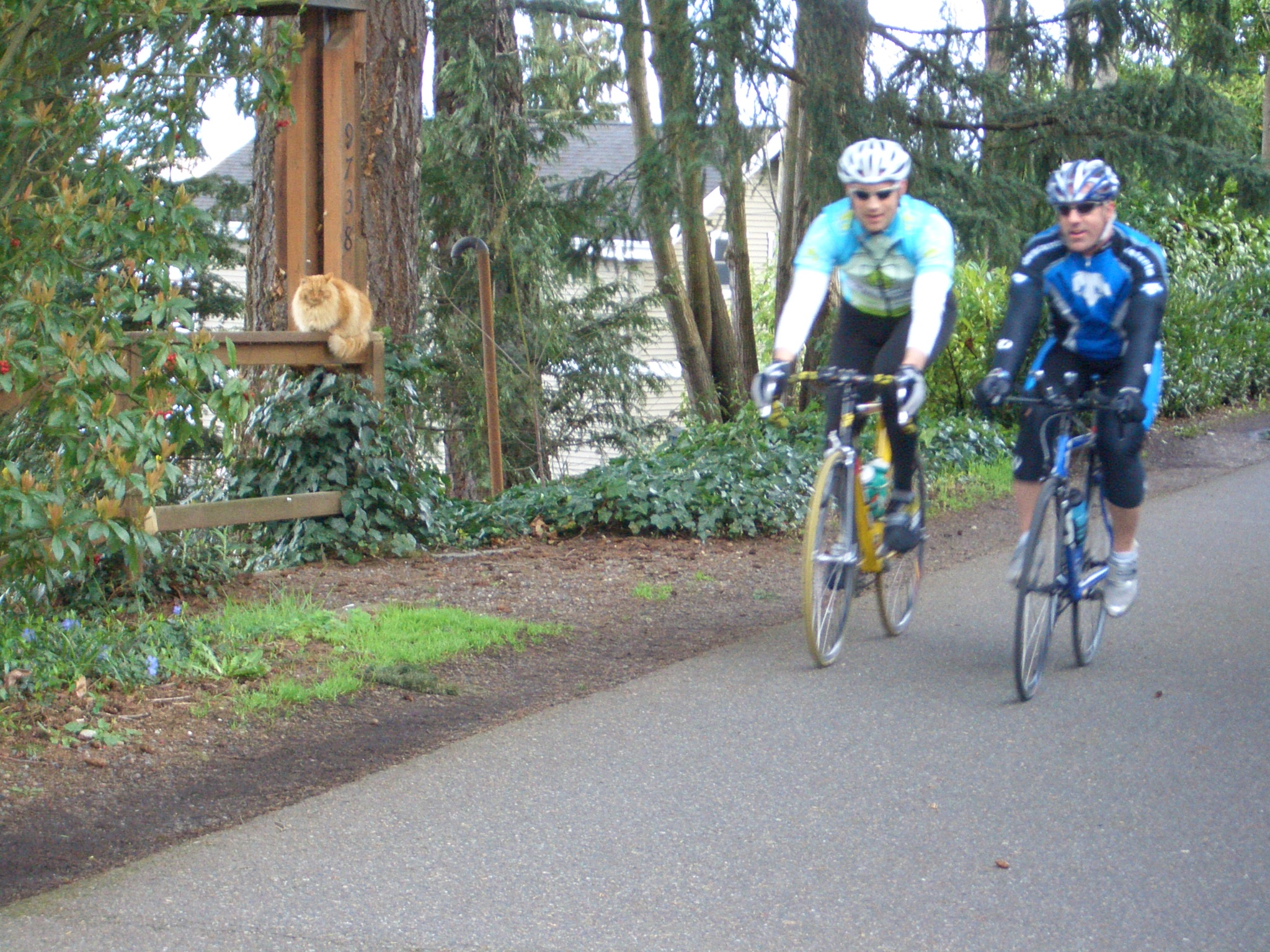
The train whistle that once echoed along the north shore of Lake Washington fell silent in 1971, and in its place came a different kind of traffic. Joggers, cyclists, dog walkers, and commuters on two wheels now travel the path where the Seattle, Lake Shore and Eastern Railway hauled coal, lumber, and passengers for nearly a century. The Burke-Gilman Trail follows the old railbed from Ballard through the University District, past the shoreline neighborhoods of northeast Seattle, and onward through suburbs to Redmond, a continuous ribbon of asphalt that stretches 42 miles when connected to the Sammamish River Trail. It is the backbone of Seattle's cycling infrastructure, a commuter artery for thousands, and a living monument to two nineteenth-century dreamers whose railroad ambitions reshaped the region long before anyone thought to pave a bike path over their tracks.
The Judge, the Lawyer, and Their Railroad
On April 15, 1885, ten men led by Judge Thomas Burke and lawyer Daniel Hunt Gilman incorporated the Seattle, Lake Shore and Eastern Railway with a grand vision: connect Seattle northward to the Canadian border and eastward across the Cascades to meet the transcontinental railroads, bypassing the Northern Pacific Railway's stranglehold on regional shipping. In its heyday, the SLS&E stretched from downtown Seattle north to Arlington and east to Rattlesnake Prairie above Snoqualmie Falls. The railroad transformed sleepy lakeside communities into commuter towns and opened timber and coal country to extraction. But independence was short-lived. The Northern Pacific absorbed the line around 1890, and it passed through successive corporate hands until Burlington Northern inherited it in 1970. One year later, the railroad was abandoned, leaving behind a narrow right-of-way winding through some of the most desirable real estate in King County.
Seven Years of Advocacy
Abandoned railroad corridors rarely become public trails without a fight, and the Burke-Gilman was no exception. After Burlington Northern ceased operations in 1971, advocates spent seven years pushing for the right-of-way to be converted into a multi-use trail rather than sold off to adjacent property owners. On August 19, 1978, the first stretch opened, running from Gas Works Park on the south shore of Lake Union to Tracy Owen Station in Kenmore. The trail was named for the railroad's founders, a nod to the fact that Burke and Gilman's ambition had created the corridor now being repurposed for recreation. The initial segment became an instant success, demonstrating that a paved path free of automobile traffic could attract walkers, runners, and cyclists in numbers that justified the investment. It set the template for what would become an expanding network of rail-trails across the Puget Sound region.
A Trail Through the Neighborhoods
The Burke-Gilman Trail is less a single path than a tour of Seattle's neighborhoods. Starting in Ballard, the trail follows the Lake Washington Ship Canal past Fremont and through the University District, where it skirts the edge of the University of Washington campus and University Village shopping center. Continuing northeast, it passes the sand beaches of Matthews Beach Park and the broad lawns of Magnuson Park before crossing into the suburban communities of Lake Forest Park and Kenmore. At Bothell, the trail transitions into the Sammamish River Trail, paralleling the slow-moving Sammamish River southeast through Woodinville's winery district to Redmond. With the completion of a connector trail through Marymoor Park in 2009, users can continue to Issaquah via the East Lake Sammamish Trail. The connected network reaches all the way to the Snoqualmie Valley Trail in North Bend, where it links to Iron Horse State Park at Rattlesnake Lake.
The Missing Link and Modern Challenges
For decades, the Burke-Gilman Trail's most notorious gap was the so-called "Missing Link" in Ballard, a stretch between the Ballard Locks and 11th Avenue NW where industrial landowners and legal challenges prevented construction. The gap forced cyclists onto busy surface streets shared with commercial truck traffic. A railroad crossing under the Ballard Bridge became a persistent hazard, recording 39 crashes and incidents between 2015 and 2020 before the city finally removed it in October 2023. Extensions at the western end now reach along Shilshole Bay to Golden Gardens Park, and planning continues to fully close the Missing Link. The trail can be busy and even crowded at peak hours, a testament to its success, but also a sign that the corridor designed for a nineteenth-century railroad sometimes struggles to accommodate twenty-first-century demand.
From the Air
The Burke-Gilman Trail follows a winding corridor centered roughly at 47.696N, 122.278W, tracing the north shore of the Lake Washington Ship Canal and the western shore of Lake Washington before turning east along the Sammamish River valley. From the air, the trail is difficult to see as a single feature, but the corridor is marked by the obvious linear gap in urban development along the canal and lakefront. Key visual anchors include Gas Works Park (distinctive gasification towers on a peninsula), the Ballard Locks, and Marymoor Park in Redmond (large open fields). Nearest airports: Boeing Field (KBFI) 8nm south, Renton Municipal (KRNT) 8nm southeast, Kenmore Air Harbor (S60) directly on the trail's northern segment. Best appreciated at 3,000-5,000 feet following the lakeshore north from downtown Seattle.