Burma Campaign
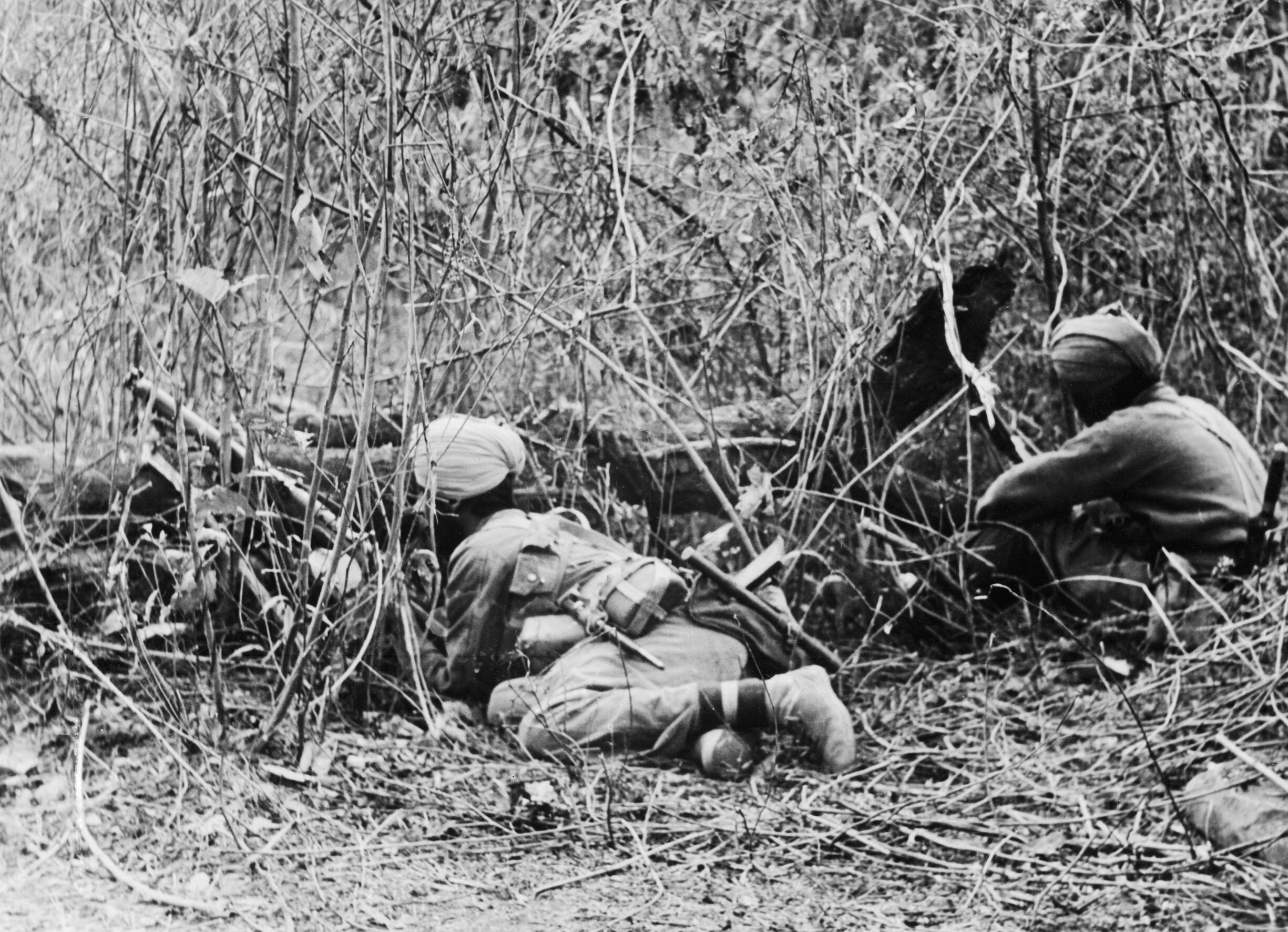
They called it the Forgotten War. While Europe absorbed the world's attention, a million soldiers fought across the mountains, rivers, and jungles of Burma in a campaign that would produce Japan's worst land defeat and reshape the political map of South and Southeast Asia. The Burma campaign of 1942 to 1945 stretched across a front longer than the Western European theater, encompassing everything from amphibious landings and armored thrusts to guerrilla warfare and one of history's most audacious long-range penetration operations. It was a war fought not just against an enemy but against terrain, disease, and the monsoon itself.
The Fall and the Forgotten
Japan's invasion of Burma in early 1942 was swift and devastating. After capturing the port of Moulmein, Japanese forces advanced north, outflanking British defensive positions with an agility that stunned their opponents. The critical moment came on 23 February when the Sittaung Bridge was demolished to prevent its capture, stranding two brigades of the 17th Indian Division on the wrong side of the river. Rangoon fell in March, and the remains of Burma Army began an agonizing retreat toward India through mountains and jungle. Starving refugees, disorganized stragglers, and the wounded clogged the primitive tracks leading west. Chinese forces fared even worse: those who tried to return to Yunnan through remote mountain forests lost at least half their number. By the time the monsoon broke in May 1942, the survivors had reached India with little more than their lives.
Learning to Fight in the Jungle
The years 1942 and 1943 were a painful education. A British offensive into the Arakan coast stalled against well-entrenched Japanese bunkers, and repeated frontal assaults achieved nothing but casualties. The one bright spot was controversial: Brigadier Orde Wingate's Chindits, a long-range penetration force of 3,000 men, marched deep behind Japanese lines, cutting the railway and proving that British and Indian soldiers could match the Japanese in jungle warfare. The Chindits suffered heavy losses and their military results were debated, but the psychological impact was real. Meanwhile, the Allied buildup in eastern India was hampered by the Quit India protests, a catastrophic famine in Bengal that killed an estimated three million people, and the sheer inadequacy of the region's infrastructure. Under Lieutenant General William Slim, the newly formed Fourteenth Army began transforming itself through rigorous training, improved health measures against malaria and dysentery, and a revolutionary reliance on air supply.
The Tide Turns at Imphal and Kohima
In March 1944, Japan launched Operation U-Go, sending three divisions and elements of the Indian National Army across the Chindwin River to invade India. The offensive targeted Imphal and Kohima in Manipur, and its failure became the greatest catastrophe in Japanese military history to that date. At Kohima, a small British garrison held out from 5 to 18 April in fighting so close that opposing trenches were separated by the width of a tennis court. At Imphal, IV Corps withstood repeated Japanese assaults while being supplied entirely by air. The Japanese, unable to capture Allied supply dumps as planned, began to starve. Disease ravaged their ranks during the monsoon. By July, when the operation was finally called off, Japan had suffered between 50,000 and 60,000 dead and over 100,000 total casualties. Allied losses were 12,500, including 2,269 killed. The Japanese commanders who had staked everything on breaking through to the Brahmaputra valley had gambled and lost.
The Race for Rangoon
With the Japanese shattered, Fourteenth Army launched its own offensive in late 1944. Slim executed a masterful deception, secretly switching IV Corps from one flank to the other to strike at the Japanese supply hub of Meiktila while XXXIII Corps fixed enemy attention on Mandalay. Meiktila fell in four days in early March 1945, and Japanese counterattacks failed to retake it. Mandalay followed on 20 March, though not before much of its historically significant architecture had been burned. Now began a desperate race: Fourteenth Army had to reach Rangoon before the monsoon turned every road to mud and made supply impossible. Karen guerrillas, organized by the clandestine Force 136, rose up behind Japanese lines, and the Burma National Army defected to the Allied side. On 1 May, Gurkha paratroopers dropped at Elephant Point to clear the mouth of the Yangon River. The 26th Indian Division landed the next day to find that the Japanese had already evacuated. On the afternoon of 2 May, the monsoon rains began in force. The race had been won with hours to spare.
A Legacy Written in the Jungle
The Burma campaign ended as one of the British Indian Army's greatest triumphs, but its consequences extended far beyond the battlefield. The American historian Raymond Callahan wrote that Slim's victory "helped the British, unlike the French, Dutch or, later, the Americans, to leave Asia with some dignity." Within three years of the war's end, both Burma and India were independent nations. The campaign had demonstrated that colonial armies could defeat a formidable enemy in the most punishing conditions imaginable, but it had also shown the colonial soldiers who fought it that independence was not only possible but inevitable. For the hundreds of thousands of soldiers from India, East Africa, and West Africa who served in Burma, the Forgotten War would not be forgotten at all. It was the crucible in which the post-colonial world was forged.
From the Air
Centered approximately at 21.0N, 96.0E over central Myanmar. The campaign stretched from the Indian border (Imphal at 24.8N, 93.9E) to Rangoon/Yangon (16.8N, 96.2E). Key landmarks visible from altitude include the Irrawaddy River winding through central Burma, the Chindwin River to the west, and the Shan Plateau to the east. Nearest major airports: Mandalay International (VYMD), Yangon International (VYYY), Heho (VYHE). The terrain transitions from flat Irrawaddy delta to mountainous jungle along the Indian border.