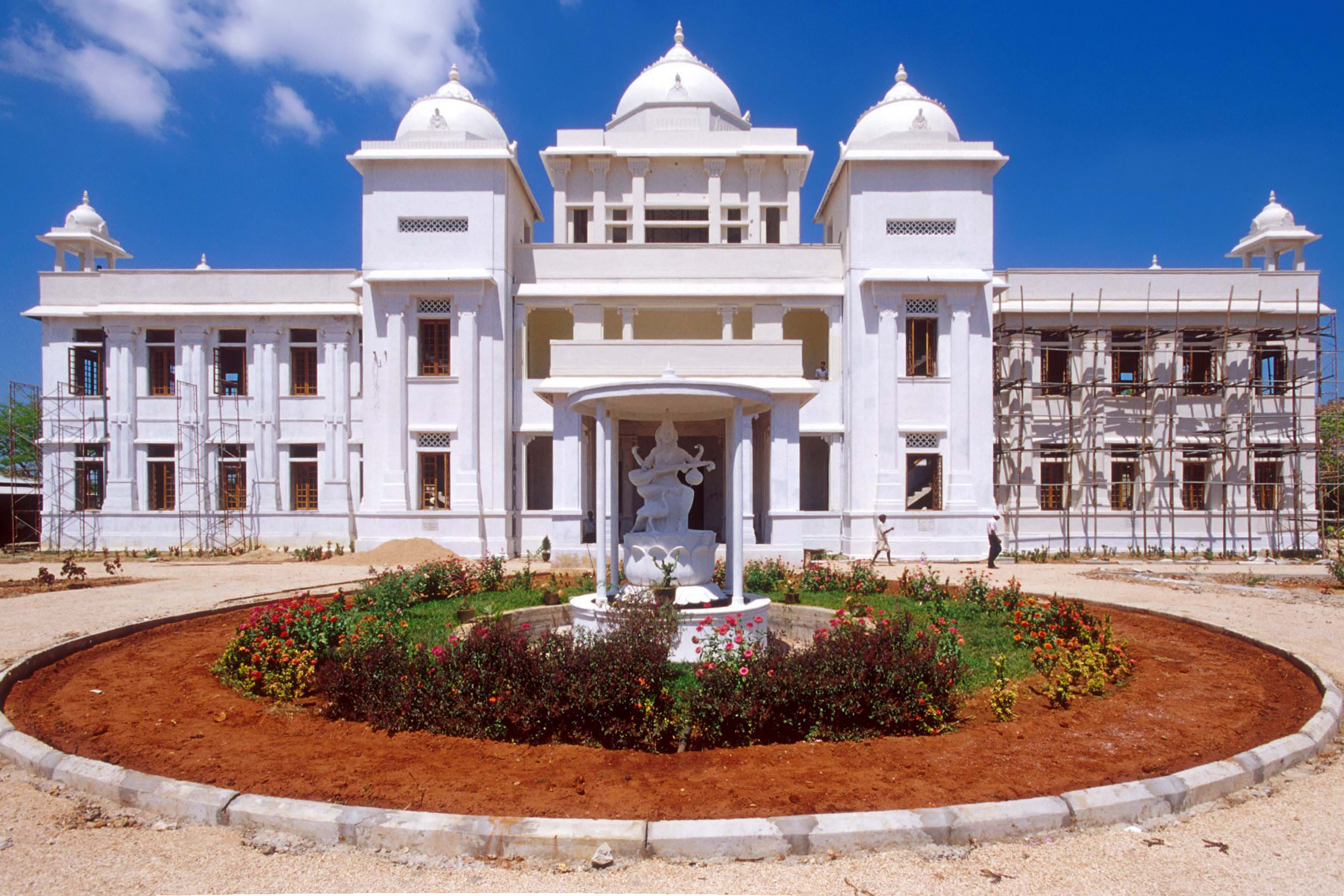
Burning of Jaffna Public Library
Ninety-seven thousand volumes. That is the number most often cited, but numbers do not capture what burned on the night of June 1, 1981. Among the 97,000 books and manuscripts consumed in the Jaffna Public Library were palm-leaf ola texts that existed nowhere else on earth. The Yalpanam Vaipavama, a history of Jaffna, survived only in this building. Scrolls documenting centuries of Tamil literary, religious, and philosophical tradition -- some dating back generations -- turned to ash in a single night. What happened at the Jaffna Public Library was not a fire. It was an erasure, carried out with deliberate intent against a people's cultural memory.
The Night of June 1
The destruction took place during District Development Council elections, a period of heightened political tension between the Sinhalese-dominated government and Tamil political parties in the north. On the night of May 31 and into June 1, 1981, uniformed security personnel and plainclothes mobs carried out organized acts of destruction across Jaffna. They burned the library, the offices of the Tamil newspaper Eelanadu, the home of the Tamil member of parliament for Jaffna, and the local headquarters of the Tamil United Liberation Front. Two cabinet ministers -- Gamini Dissanayake and Cyril Mathew -- were present in the town of Jaffna that night, along with several high-ranking security officers. The national newspapers did not report the incident. The library, one of the largest in Asia at the time of its destruction, was left a shell -- its walls blackened with the smoke of burnt books, pocked with bullet holes.
What Was Lost
The Jaffna Public Library was not merely a repository of books. It was the intellectual heart of Sri Lankan Tamil culture. Its collection included irreplaceable palm-leaf manuscripts in Tamil, works and manuscripts connected to the philosopher and art historian Ananda Coomaraswamy, historical documents tracing the lineage of the Jaffna Kingdom, and newspapers and periodicals that constituted the primary record of Tamil public life in the north. Many of these items had no copies. When they burned, the knowledge they contained was extinguished permanently -- not suppressed, not scattered, but annihilated. Scholar Rebecca Knuth later classified the act as "libricide," the deliberate destruction of a library as an instrument of political or ethnic violence. The burning of the Jaffna Public Library belongs in the same grim lineage as the destruction of the Library of Alexandria and the burning of Nalanda.
Complicity and Silence
The question of responsibility was never seriously in doubt, only whether anyone would be held accountable. President J. R. Jayewardene admitted that members of his United National Party had encouraged the violence against Tamils during this period. In 1991, President Ranasinghe Premadasa publicly accused his political rivals Lalith Athulathmudali and Gamini Dissanayake of direct involvement in the burning. In 2016, Prime Minister Ranil Wickremesinghe formally apologized on behalf of the UNP for the destruction. But no independent investigation was ever conducted. Amnesty International's 1982 fact-finding mission to Sri Lanka noted that the government failed to establish responsibility or take measures against those involved. In parliamentary debates following the burning, some Sinhalese members told Tamil politicians that if they were unhappy in Sri Lanka, they should leave for their "homeland" in India -- a response that revealed the depth of the hostility the library burning represented.
From Ashes, a Library Again
The rebuilding was slow, contested, and freighted with symbolism. Approximately one million US dollars was spent, and over 25,000 books were collected to restock the shelves. By 2001 the replacement building was complete, but even its reopening became a battleground. The LTTE opposed reopening, arguing that the burnt remnants of the original building should stand as a memorial and a new library be built elsewhere. The pressure was intense enough that all 21 members of the Jaffna municipal council, led by Mayor Sellan Kandian, resigned in protest. The library eventually opened to the public, but the debate exposed a raw nerve: Was rebuilding an act of healing, or did it risk papering over a wound that had never been acknowledged? For many Tamil Sri Lankans, the burning remains one of the defining traumas of the twentieth century -- a moment when the state made clear that their culture was not merely marginalized but targeted for destruction.
What the Shelves Cannot Hold
The rebuilt Jaffna Public Library stands today in the center of the city, an imposing structure inspired by ancient Dravidian architecture. Its shelves hold books again. Students study at its desks. But the collection it houses is not the collection that burned. No amount of reconstruction can replace a palm-leaf manuscript that was the only copy in existence, or a historical scroll that recorded events no other source preserved. Twenty years after the burning, the mayor of Jaffna, Nadarajah Raviraj, still grieved at the memory of the flames he had witnessed as a university student. The library's restoration is an achievement, but it is also a reminder: what a mob can destroy in one night, a civilization cannot rebuild in a generation. The empty spaces on those shelves -- the books that should be there but are not -- are the library's truest collection.
From the Air
Located at 9.662N, 80.012E in central Jaffna, Sri Lanka. The rebuilt library is a large, distinctive building near Jaffna Fort and visible from lower altitudes. Jaffna International Airport (VCCJ/JAF) is approximately 7 nautical miles north. The Jaffna Peninsula itself is clearly identifiable from cruising altitude, connected to the Sri Lankan mainland by a narrow strip of land. The library sits in the dense urban core of Jaffna, surrounded by the grid of streets that make up the city center.