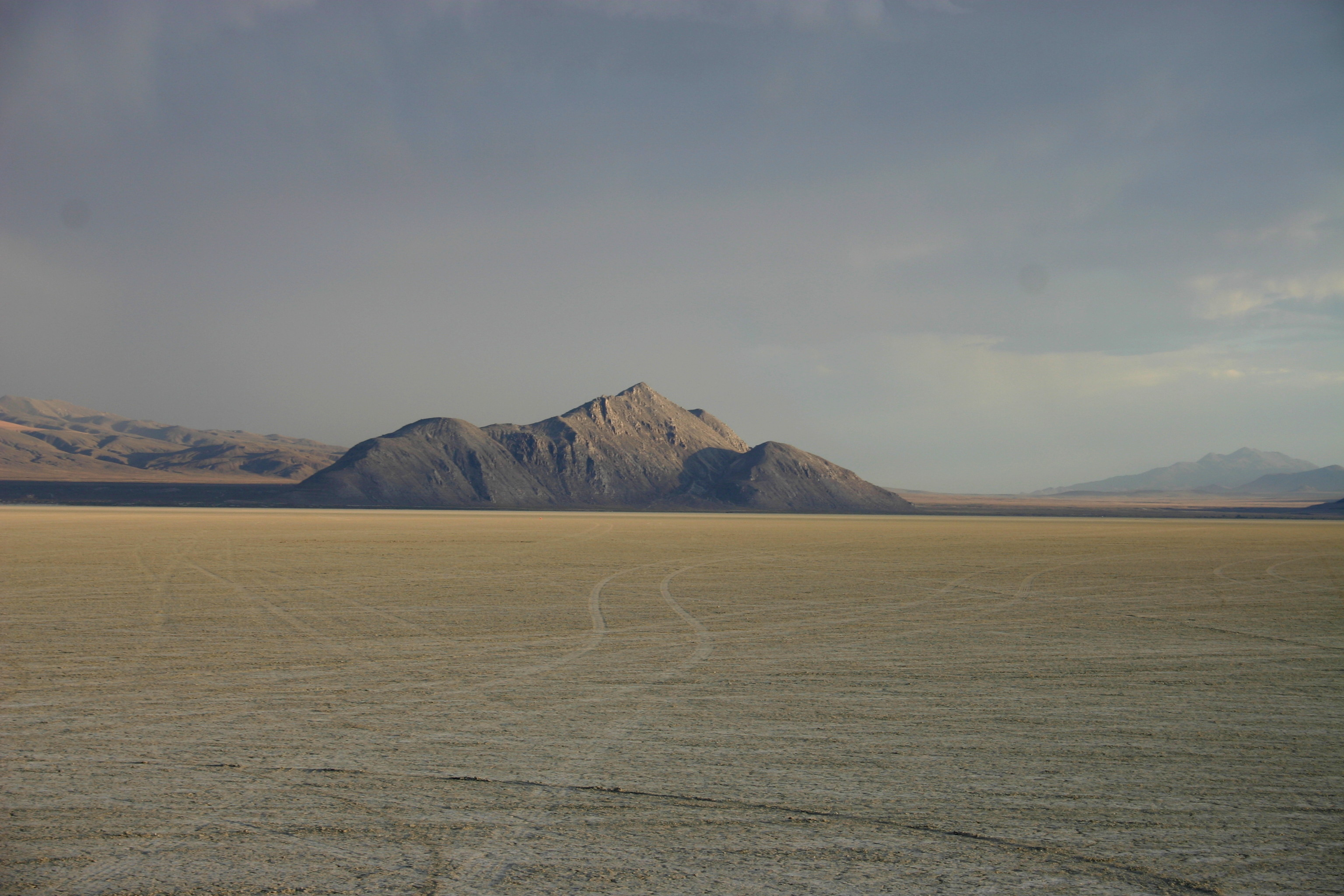
Black Rock Desert: Home of Burning Man
In the Black Rock Desert of northwestern Nevada, an ancient lakebed stretches flat and white for 200 square miles. For 51 weeks a year, it's empty - a prehistoric lake floor baked to cracked alkaline clay, one of the flattest places on Earth. For one week in late August, it becomes Black Rock City, home to Burning Man. Approximately 80,000 people construct a temporary metropolis of art installations, theme camps, and elaborate structures, then burn a 100-foot wooden effigy called 'The Man.' When it's over, they remove everything. The playa returns to emptiness. No trace remains of the city that was. Burning Man has grown from a small beach gathering in San Francisco in 1986 to one of the world's most significant cultural events - part art festival, part social experiment, part temporary autonomous zone.
The Desert
The Black Rock Desert is a playa - the dry bed of ancient Lake Lahontan, which covered much of Nevada during the last Ice Age. The lakebed is extraordinarily flat, making it ideal for land speed record attempts. The current land speed record - 763 mph, the first supersonic speed on land - was set here in 1997. The playa surface is alkaline clay, white when dry, treacherously muddy when wet. Temperatures regularly exceed 100°F; dust storms can reduce visibility to zero. There's no water, no shade, no services. Survival requires complete self-reliance. This hostility is part of Burning Man's appeal - the harshness strips away comfort and forces community.
The Event
Burning Man began in 1986 when Larry Harvey and Jerry James burned an 8-foot wooden man on San Francisco's Baker Beach. The gathering grew and moved to Black Rock Desert in 1990. By the late 1990s, it had evolved into a city of tens of thousands. Today, Black Rock City appears in late August: a semicircular grid of streets named for the hours of a clock, with 'The Man' at the center and large-scale art installations scattered across the playa. Participants create theme camps, art cars, performance spaces, and interactive installations. The economy is gift-based - no commerce except for coffee, ice, and tickets. On the final Saturday, The Man burns. The next night, The Temple - a meditative structure for grief and remembrance - burns too.
The Principles
Burning Man operates on ten principles: radical inclusion, gifting, decommodification, radical self-reliance, radical self-expression, communal effort, civic responsibility, leaving no trace, participation, and immediacy. These aren't rules but guidelines for a different kind of society. 'Leave No Trace' is taken literally - the Bureau of Land Management inspects the site after the event, and even a single feather left behind is documented. 'Radical self-reliance' means bringing everything you need to survive. 'Gifting' means giving without expectation of return. Whether these principles create genuine community or privileged escapism is debated. But the principles shape an experience unlike any other gathering.
The Art
The art at Burning Man ranges from intimate to monumental. The Temple is designed anew each year, a sacred space where people leave memorials to lost loved ones before it burns. Art cars - mutant vehicles - roam the playa as mobile sculptures. Installations may be 50 feet tall, interactive, illuminated, or all three. Some famous Burning Man works have been recreated for museums and public spaces worldwide. The art is largely funded by artists themselves or through grants from the Burning Man organization. Much of it is designed to burn or be dismantled. Impermanence is the point - art exists intensely for one week, then is gone.
Visiting Black Rock Desert
Black Rock Desert is located in Pershing County, Nevada, approximately 100 miles north of Reno via State Route 447 through Gerlach. The playa is public land managed by the Bureau of Land Management and is accessible year-round (weather permitting). Burning Man requires tickets purchased months in advance; the event typically sells out. The nearest services are in Gerlach or Empire. Reno-Tahoe International Airport is the closest major airport. Outside of Burning Man, the playa hosts land speed record attempts, rocket launches, and visitors seeking solitude on the ancient lakebed. The desert can flood with winter rains - check conditions before visiting. There's nothing there - that's the point.
From the Air
Located at 40.78°N, 119.21°W in the Black Rock Desert of northwestern Nevada. From altitude, the Black Rock Playa is unmistakable - a vast white expanse of dried lakebed stretching across the desert. During Burning Man (late August), the temporary city is visible as a semicircular pattern of structures with a central figure. The rest of the year, the playa is empty. The Granite Range rises to the east; Gerlach is visible as a tiny settlement at the playa's southern edge. Reno is 100 miles south. The Burning Man site is marked by the Black Rock Point peninsula extending into the playa.