Burrup Peninsula
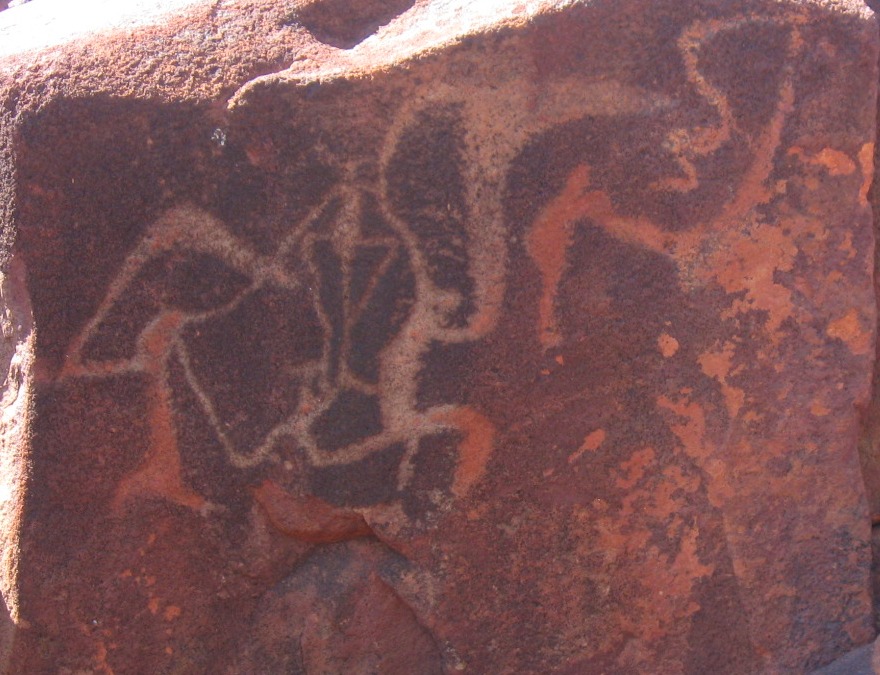
Somewhere on this peninsula, etched into 2.7-billion-year-old igneous rock, is what may be the oldest depiction of a human face ever carved in stone. Nearby, the flare stacks of a liquefied natural gas plant burn around the clock. The Burrup Peninsula -- known to its traditional owners as Murujuga -- holds approximately one million petroglyphs, some dating back 50,000 years, making it the largest and most significant collection of rock art on Earth. It was designated a World Heritage Site in July 2025. It is also the industrial heart of Western Australia's Pilbara gas industry, and whether the two can coexist has been the subject of fierce, unresolved debate for decades.
Murujuga Before the Causeway
The Burrup was once an island, lying off the Pilbara coast in the Dampier Archipelago. Its traditional owners, the Yaburara people, were among the Aboriginal nations who carved the rock surfaces over tens of thousands of years -- figures of humans, animals, and spiritual beings etched through the red-brown iron oxide patina to expose pale weathered clay beneath. Between February and May 1869, a great number of Yaburara people were killed in the Flying Foam Massacre. In the aftermath, five clans -- Yaburara, Ngarluma, Mardudhunera, Yindjibarndi, and Wong-Goo-Tt-Oo -- assumed custodianship of the land. The English named the island after William Dampier, the navigator who explored these waters in the late 1600s. In 1963, a causeway connected it to the mainland for a road and railway, turning an island into a peninsula. In 1979, it was renamed after Mount Burrup, itself named for Henry Burrup, a bank clerk murdered at Roebourne in 1885.
A Million Engravings on Ancient Stone
The scale of Murujuga's rock art defies easy comprehension. Across the peninsula and its surrounding islands, around a million individual engravings have been identified, along with approximately 2,500 archaeological sites including quarries, shell middens, and campsites. Some carvings depict animals that have been extinct in the region for thousands of years, providing a visual record of environmental change that predates written history by an immeasurable margin. Most of the rock art is inscribed on igneous rock composed of granophyre, gabbro, dolerite, and granite -- material 2.7 billion years old, among the most ancient rock on the planet's surface. The petroglyphs were created by chipping away the outer millimetres of red-brown iron oxide to reveal the lighter rock beneath. Over millennia, the exposed surfaces re-darkened as new patina formed. This layering effect allows researchers to estimate the relative age of carvings, though precise dating remains challenging and contested.
Gas Plants Among the Petroglyphs
The collision between heritage and industry on the Burrup began in earnest in the 1960s, when the town of Dampier was established to support iron ore exports. LNG processing followed. A 1996 land use plan divided the peninsula into a conservation area covering 62 percent and an industrial zone covering 38 percent. The World Monuments Fund listed the Dampier Rock Art Precinct among the 100 Most Threatened Monuments in the world in 2003, and repeated the listing in 2004, 2006, and 2008. Claims emerged that the gas industry had destroyed thousands of petroglyphs -- a Woodside electrician alleged on national radio that the company had crushed 10,000 rock engravings for road fill, including the oldest depiction of a human face. The Western Australian government disputed the scale of destruction, estimating that only 4 percent of sites had been affected since 1972. National Heritage listing came in 2007, covering 90 percent of remaining undisturbed rock art areas, but campaigners argued this still left critical zones exposed to industrial expansion.
World Heritage and an Unresolved Question
In January 2020, Australia formally submitted the Murujuga Cultural Landscape for the World Heritage Tentative List, and in July 2025 it achieved World Heritage status. But the listing arrived alongside deepening controversy. A five-year Murujuga Rock Art Monitoring Program, led by the Murujuga Aboriginal Corporation, Curtin University, and the state environmental regulator, released its Year Two report in May 2025 -- just days before the federal environment minister gave preliminary approval for Woodside to operate its North West Shelf assets on the Burrup until the 2070s. The report found air quality ranging from "good" to "very good" and no evidence of acid rain. But rock art specialist Professor Ben Smith publicly accused the government of misrepresenting the report's findings, claiming the executive summary contradicted the full 800-page study. In 2022, traditional owner Raelene Cooper presented concerns to the United Nations in Geneva, declaring: "The rock art archives our lore. It is written not on a tablet of stone, but carved into the ngurra, which holds our Dreaming stories and Songlines." The tension between preservation and extraction on the Burrup is not a problem with a tidy resolution. It is a question that Australia continues to answer, one industrial approval and one heritage listing at a time.
From the Air
The Burrup Peninsula lies at approximately 20.58S, 116.81E in the Dampier Archipelago, Pilbara region of Western Australia. From altitude, the peninsula is visible as a rocky landmass connected to the mainland by a causeway, with the town of Dampier on its southern shore and large industrial facilities (LNG plants, port infrastructure) clearly visible. The surrounding islands of the Dampier Archipelago contain additional rock art sites. Nearest airport: Karratha (ICAO: YPKA), approximately 20 km southeast. Best viewed at 3,000-8,000 ft for the contrast between industrial infrastructure and the rugged, petroglyph-covered terrain of Murujuga National Park.