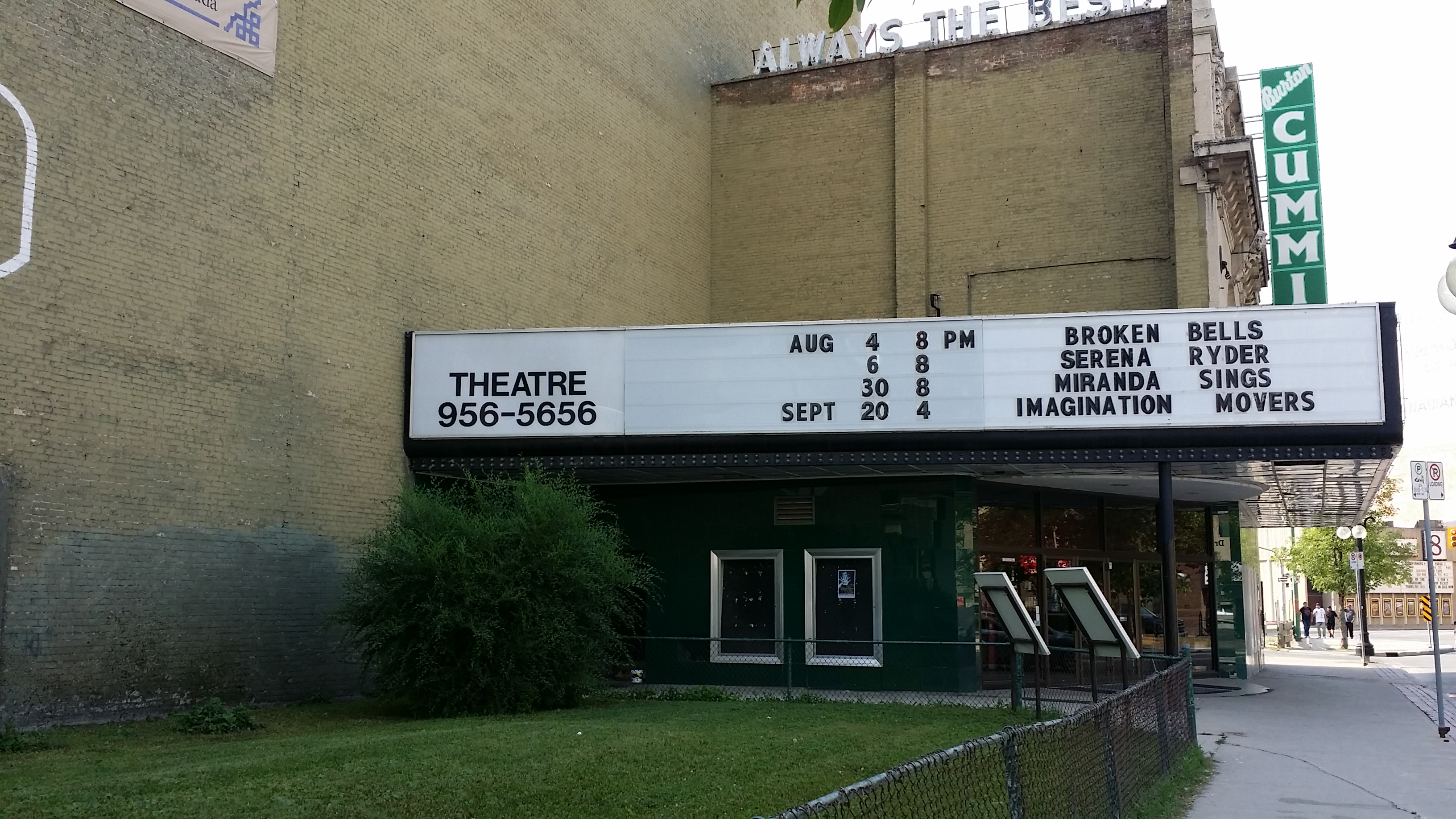
Burton Cummings Theatre
On the evening of February 18, 1907, the curtain rose on Puccini's Madame Butterfly inside a brand-new theatre on Smith Street, and Winnipeg suddenly had a cultural venue to rival anything east of the Great Lakes. Impresario Corliss Powers Walker had spent two years and a small fortune building what he boldly claimed was the first fireproof theatre in Canada -- a steel cage wrapped in concrete and terracotta, its floors covered in fire-resistant wool carpet, its stairways sheathed in slate-covered metal. Walker was not merely building a playhouse. He was building a statement: that this prairie city, barely a generation removed from fur-trade outpost, deserved the finest theatrical experience money could buy.
The Red River Valley Circuit
Walker's ambitions stretched far beyond a single building. He allied himself with Klaw and Erlanger, the powerful New York theatrical syndicate that controlled access to Broadway's biggest productions. By positioning his chain of theatres along the railway route, Walker created the Red River Valley Theatre Circuit, funneling touring companies from New York through the Canadian prairies. The Walker Theatre sat at the heart of this network, a 2,000-seat jewel designed by Montreal architect Howard Colton Stone, who modeled it after Chicago's celebrated Auditorium by Adler and Sullivan. The ornate streetfront facade fronted a masonry cube of a building, three storeys tall, that retained many of its original interior features through decades of changing use. For its first quarter-century, the theatre brought the world to Winnipeg -- Shakespeare and opera, vaudeville and melodrama -- via the iron rails that were remaking the West.
A Stage for Suffrage
The Walker Theatre was never just about entertainment. Its cavernous hall doubled as a gathering place for the political movements reshaping early-twentieth-century Canada. Labour organizers debated from its stage during Winnipeg's tumultuous years of worker activism. Most memorably, in January 1914, Nellie McClung and the Political Equality League staged a mock parliament on the Walker's stage, a satirical performance in which women played parliamentarians debating whether men should be granted the right to vote. McClung's devastating mimicry of Premier Rodmond Roblin brought the house down and became a landmark moment in the Canadian women's suffrage movement. The theatre that Walker built for Broadway spectacles had become a platform for social change -- a duality that would echo through the building's long life.
Dark House, New Name
Live theatrical performances ended at the Walker in 1933, a casualty of the Great Depression and the rise of cinema. The building was converted into a movie theatre in 1945 and screened films until 1990. By then, the once-grand interior had suffered decades of neglect. Recognition came in stages: a Provincial Heritage Building designation in 1991, followed by federal status as a National Historic Site. But heritage plaques do not pay for repairs. In 2002, the theatre was renamed for Burton Cummings, the Winnipeg-born singer and keyboardist whose voice powered The Guess Who through hits like 'American Woman' and 'These Eyes.' Cummings, born in the city in 1947, became one of Canada's most successful rock musicians, and lending his name to the old Walker gave the building a fresh identity rooted in Winnipeg pride.
Rescued by True North
The renaming alone could not save a deteriorating structure. In May 2014, locally based True North Sports and Entertainment assumed management of the theatre and began critical repairs. A new board was formed, drawing members from True North, CentreVenture, Forks North Portage Partnership, and the original theatre board. By spring 2016, True North exercised its option to purchase the building outright. Today, the Burton Cummings Theatre hosts concerts, comedy, and -- in a nod to its earliest days of spectacle -- an annual professional wrestling event that harks back to the wrestling shows staged on its boards in the 1910s. The fireproof steel cage Corliss Powers Walker insisted upon more than a century ago still stands, a monument to one impresario's conviction that the Canadian prairie deserved nothing less than the best.
From the Air
Located at 49.896N, 97.144W in downtown Winnipeg, Manitoba. The theatre sits on Smith Street, roughly 1 km south of Portage and Main. From altitude, look for the dense block pattern of downtown Winnipeg between the Red River to the east and the Assiniboine River to the south. Nearest major airport: Winnipeg James Armstrong Richardson International (CYWG), approximately 7 km west-northwest. Recommended viewing altitude: 3,000-5,000 ft AGL for downtown context.