Busan
The first thing you notice about Busan is that the mountains are everywhere -- not on the horizon, but in the city itself, shouldering between neighborhoods, forcing the urban grid to bend and fragment around them. South Korea's second largest city, home to around 3.3 million people, did not sprawl across a plain the way most metropolises do. It wedged itself into the valleys and coastline of the Korean Peninsula's southeastern tip, and the result is a city that feels like several cities stacked together: beach resort, industrial port, mountain hiking destination, and seafood capital, all compressed into the same frame.
Fish and Fire
Jagalchi Market is the reason people talk about Busan seafood the way they talk about Parisian bread -- as something that defines a city's identity. Located in the old port district, it is the most famous seafood market in Korea, a multi-story complex where tanks of live octopus, flounder, and sea squirt line the ground floor and restaurants above prepare whatever you just pointed at downstairs. The experience is not sanitized for tourists, though plenty come. Vendors shout over one another, the floor is wet, and the smell of the sea is inescapable. Beyond Jagalchi, Busan's culinary identity runs deep into specialties unavailable elsewhere in Korea: dong-nae pajeon, the seafood and green onion pancake; daegu tang, a flaky cod soup; and bokguk, the pufferfish soup that requires a licensed chef to prepare safely -- the same fish the Japanese call fugu.
Sand, Surf, and Celluloid
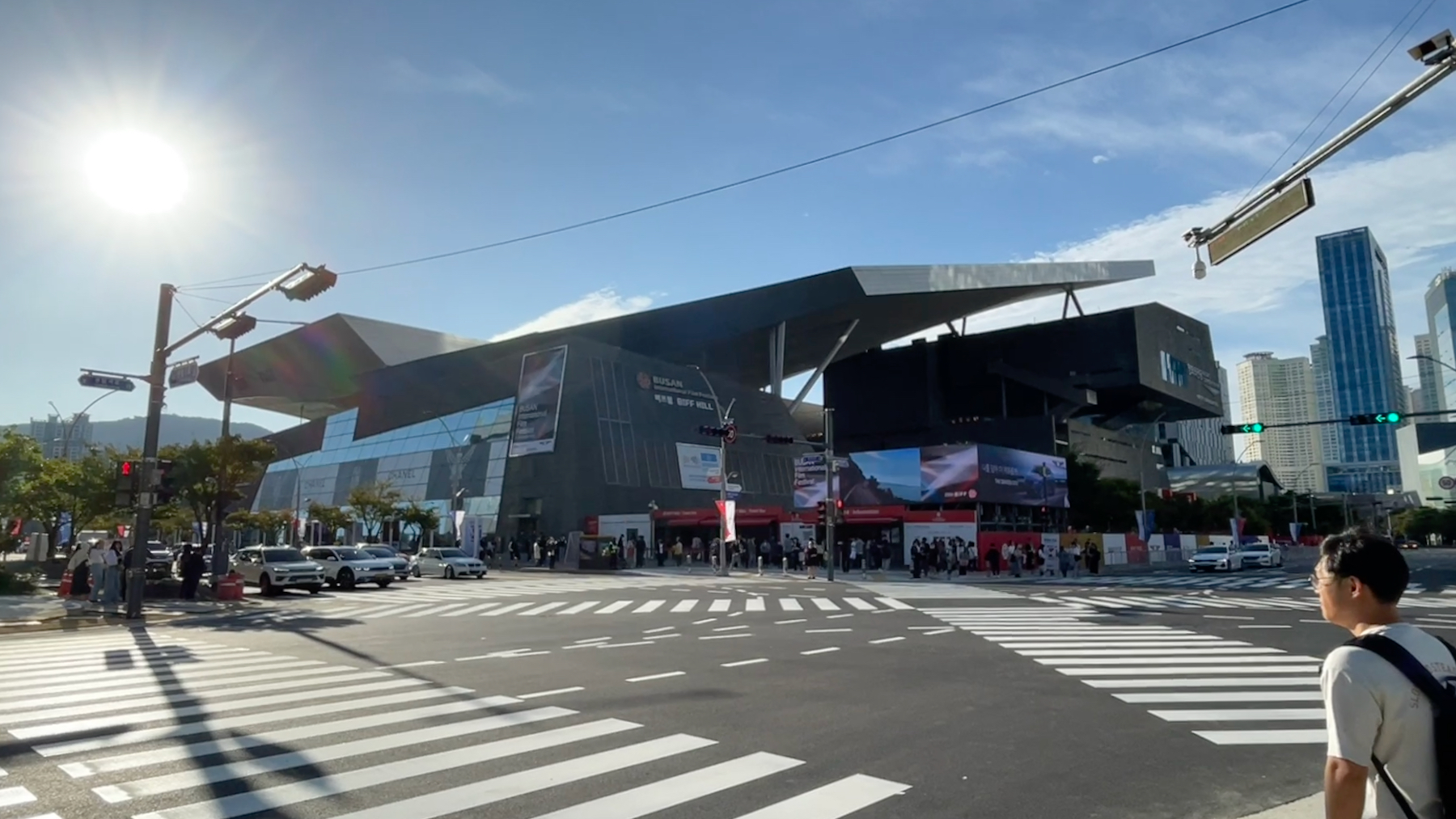
Haeundae Beach is the headline, and deservedly so -- a wide crescent of sand backed by luxury high-rises that draws over ten million visitors a season. But Busan's coastline extends well beyond a single beach. Gwangalli Beach offers views of the illuminated Gwangan Bridge at night, while Songjeong to the northeast provides calmer waters and a more local atmosphere. Every October, Haeundae transforms into a film precinct when the Busan International Film Festival takes over, screening hundreds of films and hosting red-carpet premieres on the sand. The festival has made Busan a genuine cultural capital, not just a beach town. In January, the same stretch of sand hosts the Polar Bear Festival, where thousands plunge into near-freezing water, which suggests something about the local temperament.
Temples on the Ridge
The mountains that interrupt Busan's skyline are not just scenery -- they are destinations. Geumjeongsan, the highest peak within city limits, holds the seventh-century Beomeosa Temple on its slopes and the ruins of Geumjeong Fortress along its ridge. A nine-kilometer hiking trail connects the fortress's South Gate to its North Gate and descends to the temple, passing through forest that feels impossibly remote given that a city of millions sits below. Seokbulsa Temple, about ninety minutes by trail from the cable car station, features Buddhist statues carved directly into the cliff face. Jangsan Mountain in Haeundae offers its own trails, though the military installations at the summit -- fenced and clearly marked -- serve as a reminder that the border with North Korea is only a few hundred kilometers away.
Layers of the Old Town
Central Busan around Nampodong and the Jungang area preserves the texture of a city that was, until recently, defined more by its port than its beaches. The '40 Steps' staircase near Jungang Station became a gathering point for refugees during the Korean War, when Busan served as South Korea's temporary capital and its population swelled with displaced families. Gamcheon Village, sometimes called the Machu Picchu of Busan, is a hillside neighborhood of pastel-painted houses that was originally a settlement for Korean War refugees and has been reinvented as an open-air art installation. From Yongdusan Park and Busan Tower, the view sweeps across the container port, the ferry terminals, and the old commercial district -- a panorama of a working city rather than a resort.
Getting There and Getting Around
Busan sits roughly 450 kilometers southeast of Seoul, connected by KTX high-speed trains that cover the distance in two to two and a half hours. Gimhae International Airport serves both domestic and international routes, though the KTX has made flying from Seoul largely unnecessary. International ferries link the city to Tsushima Island, Fukuoka, Shimonoseki, and Osaka in Japan -- making Busan a natural gateway between two countries. Within the city, four metro lines and an extensive bus network reach most areas of interest. The metro signs and announcements come in both Korean and English, and a Cashbee or T-money transit card makes transfers between bus and rail seamless. Taxis are plentiful, though drivers rarely speak English. The city's geography -- mountains dividing neighborhoods, coastline stretching in both directions -- means walking between districts is impractical, but within each district, the best discoveries come on foot.
From the Air
Coordinates: 35.18°N, 129.07°E at the southeastern tip of the Korean Peninsula. The city stretches along the coast with mountains penetrating the urban area. Nearest airport: RKPK (Gimhae International Airport, west of the city center). Haeundae Beach and the Gwangan Bridge are prominent visual landmarks from the air. The container port is one of the largest in Asia. Best viewed at 5,000-8,000 ft to appreciate how the mountains fragment the urban grid. On clear days, Tsushima Island (Japan) is sometimes visible to the southeast.