Butchart Gardens: The Quarry That Bloomed
Robert Butchart made cement; Jennie Butchart made beauty. In 1904, Robert's Portland cement plant had exhausted the limestone quarry on their Vancouver Island estate, leaving an ugly pit that depressed Jennie every time she looked at it. So she started filling it with soil, planting flowers, and dreaming bigger. Over four decades, Jennie transformed 55 acres of industrial wasteland into a garden paradise - the Sunken Garden in the old quarry, the Rose Garden on the tennis courts, the Japanese Garden beside the sea. She opened the grounds to visitors in 1920; by her death in 1950, Butchart Gardens was world-famous. The gardens remain in the family, still privately owned, still showing what one woman's vision can create from one man's destruction.
The Quarry
Robert Pim Butchart arrived on Vancouver Island in 1904 to manufacture Portland cement - the limestone deposits near Tod Inlet were perfect for the process. The operation was successful; by 1908, the quarry was exhausted. What remained was a scar: gray rock walls, bare floor, industrial waste. Most industrialists would have abandoned the pit and moved on. But Jennie Butchart saw possibility where her husband saw garbage. She had tons of topsoil brought in by horse and cart, planted ivies on the walls, and began filling the quarry floor with flowers. She hung over the cliff edges in a bosun's chair, tucking plants into crevices. The Sunken Garden was born.
The Vision
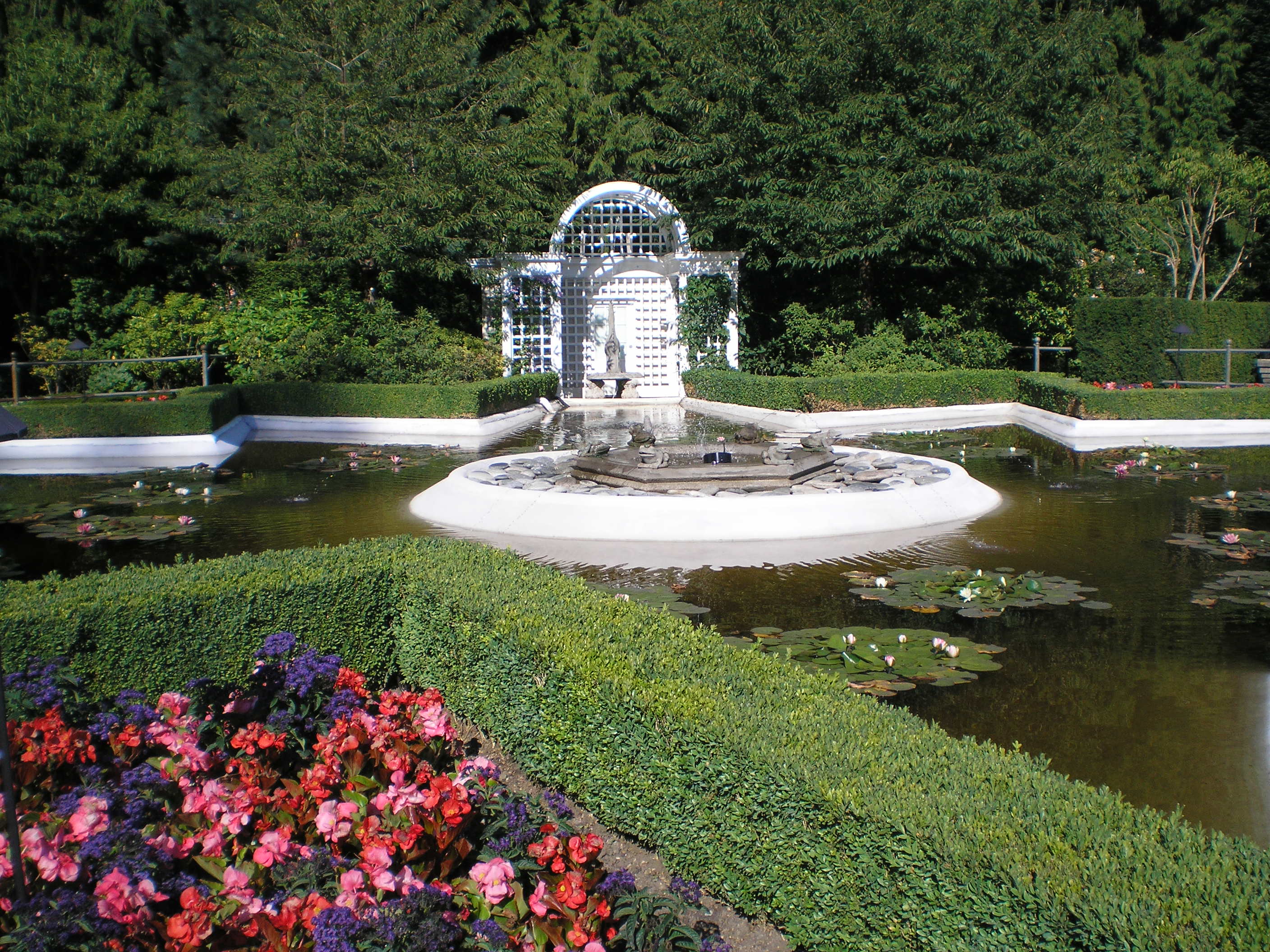
Jennie didn't stop at the quarry. The tennis courts became the Rose Garden - formal beds surrounding a fountain, roses climbing every available surface. The vegetable garden became the Italian Garden, with geometric beds and a star-shaped pond. She hired Japanese landscape designer Isaburo Kishida to create a Japanese Garden above Tod Inlet, complete with a moon bridge and careful asymmetry. By the 1920s, the grounds required a staff of 50 gardeners. Jennie personally greeted visitors, offering tea and tours. She collected plants from around the world, experimented constantly, and never stopped expanding. The gardens became her life's work, a private obsession made public.
The Spectacle
Butchart Gardens is engineered for impact. In spring, thousands of tulips bloom simultaneously; in summer, the Sunken Garden is a riot of color visible from viewpoints above; in autumn, dahlias dominate; in winter, the gardens are illuminated by a million lights. Night concerts play in summer. Fireworks explode above the Sunken Garden on Saturday evenings. The gardens receive over a million visitors annually - one of the most visited attractions in Canada. But the spectacle is grounded in horticulture: the plantings are sophisticated, the maintenance is meticulous, and serious gardeners find as much to appreciate as casual tourists.
The Legacy
Jennie Butchart died in 1950, but the gardens remain in family hands - now operated by her great-granddaughter's family. This continuity matters: Butchart Gardens has never become corporate, never lost the personal touch that Jennie brought. The gardens have evolved but never betrayed their founder's vision: beauty made from ruins, nature reclaiming industry, patience rewarded with paradise. Butchart Gardens proved that restoration is possible - that humans can heal the wounds they inflict on the earth, that quarries can bloom. It's a lesson we haven't learned well enough, but the evidence is there, flowering in Victoria every spring.
Visiting Butchart Gardens
Butchart Gardens is located on the Saanich Peninsula of Vancouver Island, 23 kilometers north of Victoria, British Columbia. The gardens are open daily year-round; hours vary seasonally. Admission is charged, with prices varying by season (summer is most expensive and most spectacular). Summer Saturday evenings feature fireworks; holiday seasons feature light displays. Multiple restaurants offer dining options. The gardens are accessible by car, bus, or boat (Tod Inlet can be reached by kayak). Victoria has full services and an international airport; ferries connect to Vancouver and Seattle. Allow at least two hours; half a day is better. Spring tulips, summer roses, and winter lights all justify visits. The Sunken Garden is unmissable - the quarry that became paradise.
From the Air
Located at 48.56°N, 123.47°W on the Saanich Peninsula of Vancouver Island. From altitude, Butchart Gardens appears as a patch of intense green on an otherwise ordinary peninsula - the Sunken Garden's bowl shape may be visible as a depression in the landscape. Tod Inlet extends from Saanich Inlet into the estate. Victoria is visible to the south; the Strait of Juan de Fuca separates Vancouver Island from Washington State's Olympic Peninsula. The terrain is classic Pacific Northwest: forested hills, protected inlets, mild climate that allows year-round gardening. The transformation from industrial quarry to world-famous garden isn't visible from altitude - you have to descend to understand what Jennie Butchart created.