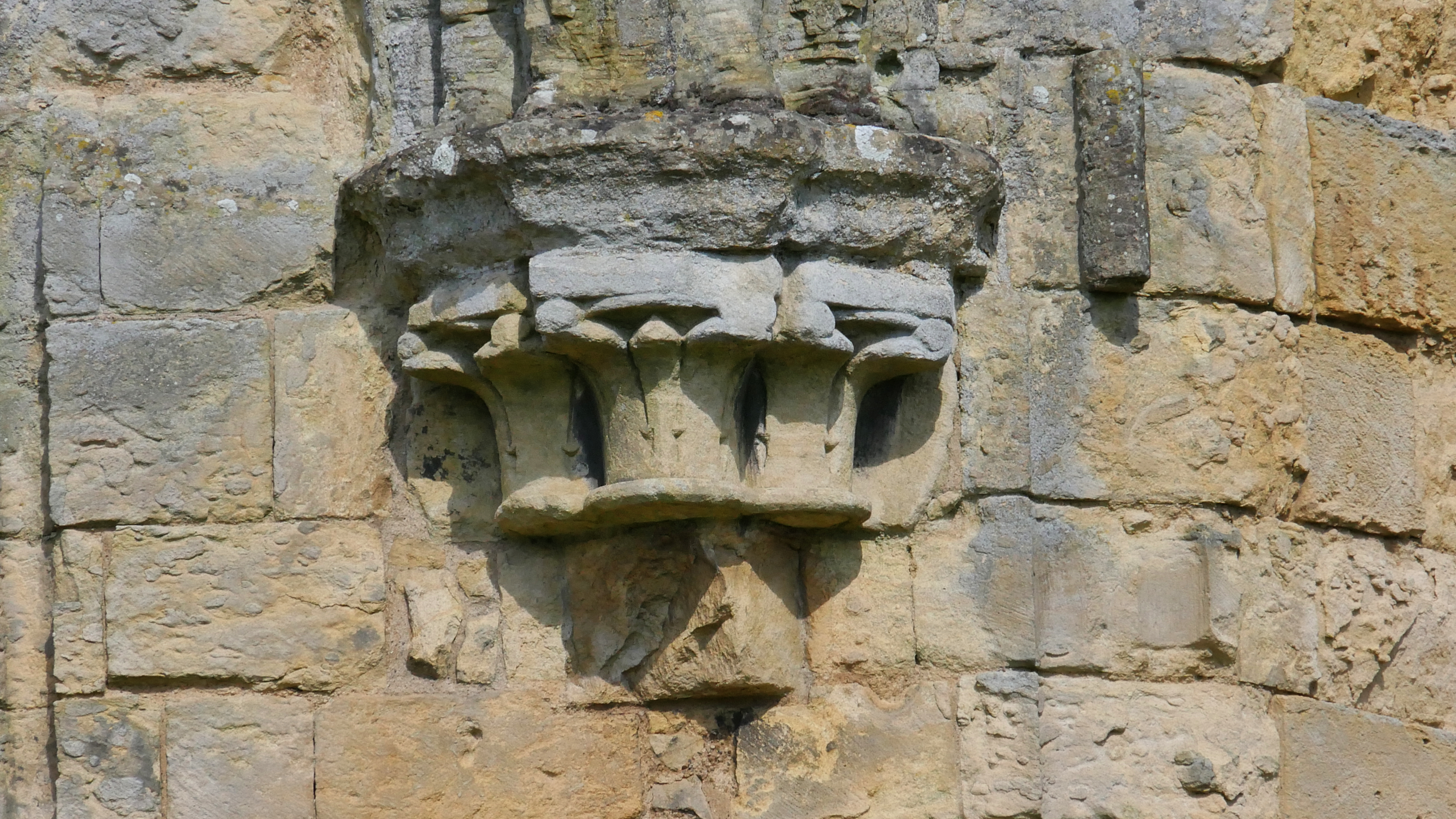
Byland Abbey
They were turned away five times. Thirteen monks left Furness Abbey in Lancashire in 1134, founded a new community at Calder in Cumberland, were driven out by a Scottish raid four years later, returned to Furness, and were refused re-entry. They quarreled with four different religious houses before finally, after decades of wandering, they settled in a valley beneath the western escarpment of the North York Moors. There, the monks who could not find a home built one of the finest churches in medieval Europe.
From Outcasts to One of Three Shining Lights
Byland Abbey was founded as a Savigniac house in January 1135 and was absorbed into the Cistercian order in 1147, when the Savigniac monasteries merged with the larger Cistercian network. The community's early decades were marked by disputes with Furness Abbey, Calder Abbey, Rievaulx Abbey, and Newburgh Priory. The reasons varied: contested territories, rivalries over authority, the stubbornness of an abbot named Gerald who refused to resign his rank. But once settled at its final site, the abbey flourished. By the late twelfth century, Byland had 36 monks and 100 lay brothers. Its sheep flocks generated substantial wool revenue for export to European buyers. By the late fourteenth century, it was described as one of the three shining lights of the north. The church the monks built was said to be among the finest twelfth-century churches in Europe, and its west front was crowned with a massive rose window that would later inspire the southern rose window at York Minster.
A King's Humiliation
In October 1322, King Edward II was staying at nearby Rievaulx Abbey when the Scots arrived; the Battle of Old Byland, fought on the hills near Byland, caught the king so completely by surprise that he abandoned the abbey and fled to York, leaving behind precious royal possessions. It was one of the more embarrassing episodes in a reign full of them. Edward, who had just executed the Earl of Lancaster after the Battle of Boroughbridge that same year, found himself running from the very enemy his barons had accused him of failing to confront. The abbey itself survived the raid, though the surrounding countryside was badly damaged. Scottish incursions, combined with the Black Death in the mid-fourteenth century, gradually eroded the monastery's wealth and population. By the time of the Dissolution in November 1538, only 25 monks and an abbot remained.
The Ghosts of Byland
Among the manuscripts produced and owned by Byland Abbey, one stands out: a collection of twelve ghost stories, written in Latin by an anonymous monk in the early fifteenth century. The stories were added on blank pages of an older manuscript, squeezed into margins and spare folios. They are set locally, in the villages and countryside around the abbey, and they reflect the oral folklore circulating in Yorkshire at the time. In one tale, a dead man named Robert rises from his grave at night and disturbs the villagers until two young men wrestle him at the cemetery gate and a priest is summoned to conjure him. The ghost speaks not with his tongue but from his guts, as if from a large empty jar, and confesses his crimes before the priest absolves him. The stories were likely intended for use in sermons, but they have become something more: scholars regard them as important evidence for popular beliefs about ghosts in medieval northern Europe, some of the earliest recorded ghost stories in the English tradition.
What Remains
Henry VIII's commissioners stripped the abbey of its lead, its valuables, and its purpose in 1538. The site passed to the Wombwell family, which still owns it. But the ruins refused to disappear entirely. Extensive remains of all the main buildings survive. The lower half of the great rose window still stands at the top of the west front, its tracery open to the sky. Most of the external walls rise to aisle height, and one corner of the south transept stands to its full original elevation. Mosaic floor tiles from the 1230s survive in large areas of the south transept and presbytery, their yellows and greens still vivid after nearly eight centuries. Dry hollows mark where three large millponds once provided water power. The arcaded stone screens that once divided the church into sections for monks and lay brothers have been recovered and reset. In 2017, the west frontage underwent extensive conservation work to repair water damage and repoint the stone walls. The abbey is now maintained by English Heritage in the North York Moors National Park. It is a peaceful place, far from the disputes and wanderings that brought the monks here, far from the king who ran and the ghosts who spoke from their stomachs. The rose window frames nothing but cloud.
From the Air
Located at 54.20N, 1.16W in the North York Moors National Park, near the village of Wass. The abbey ruins are set in a valley beneath the western escarpment of the moors. The distinctive west front with its partial rose window is identifiable from lower altitudes. Nearest airports: EGNM (Leeds Bradford) approximately 35 miles southwest; EGNV (Teesside International) approximately 25 miles north. The surrounding landscape is a mix of moorland and pastoral farmland.