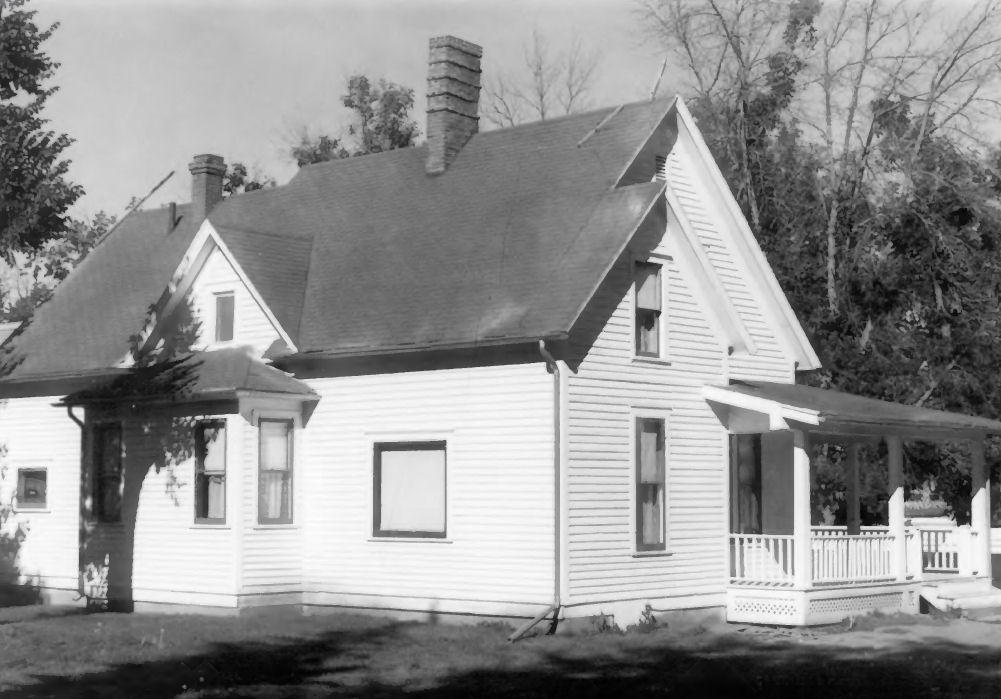
C. M. Russell Museum Complex
Charlie Russell paid for his drinks in paintings. At the Mint Saloon in Great Falls, proprietor Sid Willis accepted Russell's artwork in exchange for whiskey, and by the time the artist died in 1926, Willis had accumulated 90 oil paintings, watercolors, drawings, wax sculptures, and ephemera. That collection eventually sold for $200,000 and helped establish the Amon Carter Museum in Texas. But Russell's log cabin studio - built in 1903 on an empty lot between his house and his neighbor's - stayed in Great Falls. Today it anchors the C. M. Russell Museum Complex, which the Wall Street Journal has called "one of America's premier Western art museums." The house and studio became a National Historic Landmark in 1965, preserving not just Russell's artwork but the space where he created it.
The Neighbor Who Saved Everything
Josephine Trigg lived next door. The daughter of a saloon owner, she became an art teacher in Great Falls schools and later the children's librarian at the public library. She accompanied Russell and his wife Nancy on vacations and provided calligraphy for many of his illustrated letters and postcards. While major collectors scattered Russell's most valuable works across the country - the Amon Carter Museum acquiring the Mint Saloon collection, the Gilcrease Museum purchasing 46 paintings and 27 bronzes - Trigg quietly accumulated 153 pieces. Many depicted subjects beyond the Old West imagery that commanded premium prices. When she died, her will established the Trigg-C.M. Russell Foundation and donated the collection to Great Falls, provided the city built a museum within two years. The building cost $58,175 to construct.
The Studio Where Cowboys Lived
In 1900, after Russell's father gave the couple $500 and his mother's estate was finally probated, Charlie and Nancy Russell built a two-story clapboard house on the corner of 13th Street and 4th Avenue North. Good building logs were scarce in Great Falls, but telephone service had arrived in 1890, and discarded telephone poles provided the materials for Russell's one-room studio, constructed in 1903. A skylight in the gabled roof provided the north light essential for an artist. Inside, Russell surrounded himself with the artifacts of the West he painted: saddles, Native American items, animal skulls, and the props that appeared in canvas after canvas. The log cabin interior remains largely unchanged from Russell's working days, furnished with items from the first two decades of the 1900s.
Nearly Demolished
The city nearly tore down Russell's house. After Nancy Russell died in 1940 and the museum was built on the adjacent Trigg property in 1953, city officials and private parties advocated demolishing the aging structure. Only the threat of legal action from the Montana Federation of Garden Clubs saved it - they noted that a 1928 agreement required the city to maintain both structures Russell built. The Garden Clubs repainted and repapered the first floor interior and refurnished the house. In 1973, the museum moved the house east and north of its original location to accommodate expansion. The city eventually transferred management of both structures to the museum in 1979.
Western Art Week
In 1969, the Great Falls Ad Club and local television personality Norma Ashby organized the first C.M. Russell Art Auction to benefit the museum. Held the same week as Russell's March 19 birthday, the event evolved into Western Art Week - now the largest original Western art auction and exhibition in the United States. Between 1969 and 2003, the auction grossed $16 million and contributed nearly $4 million to the museum. The annual event brings together collectors, galleries, and artists in a week-long celebration that includes auctions, exhibitions, and public events. The museum itself has grown to approximately 2,000 pieces of art, personal items, and artifacts associated with Russell.
A Sculptor's Legacy
Russell worked in multiple media, and the museum's collection reflects this range. In 1979, Montana sculptor Robert Scriver's life-size bronze statue of Russell was placed before the south entrance. The museum displays not only Russell's finished paintings but his illustrated letters - correspondence adorned with sketches and watercolors that reveals his humor and personality. Models and molds from which bronze sculptures were cast remain in the collection, along with work materials that show his process. The museum expanded repeatedly: new galleries opened in 1970 and 1985, and a major "Trails to the Future" capital campaign raised $6.5 million by 2000 for additional space. Today visitors can see the original back bar of the Mint Saloon, where Russell's painting-for-whiskey arrangement began.
From the Air
C. M. Russell Museum Complex is located at coordinates 47.5097N, 111.2864W in Great Falls, Montana, several blocks south of the Missouri River in the city's historic residential district. The museum complex is not easily distinguished from the air as it blends with surrounding urban development, but it lies approximately one mile south of Black Eagle Dam and the Missouri River corridor. Great Falls International Airport (KGTF) is approximately 4 nautical miles southwest. The museum area is best identified by its proximity to the geometric street grid of central Great Falls. For visitors arriving by air, the museum provides context for the landscape visible from above - Russell devoted his career to capturing the terrain, wildlife, and human stories of Montana before it was transformed by settlement.