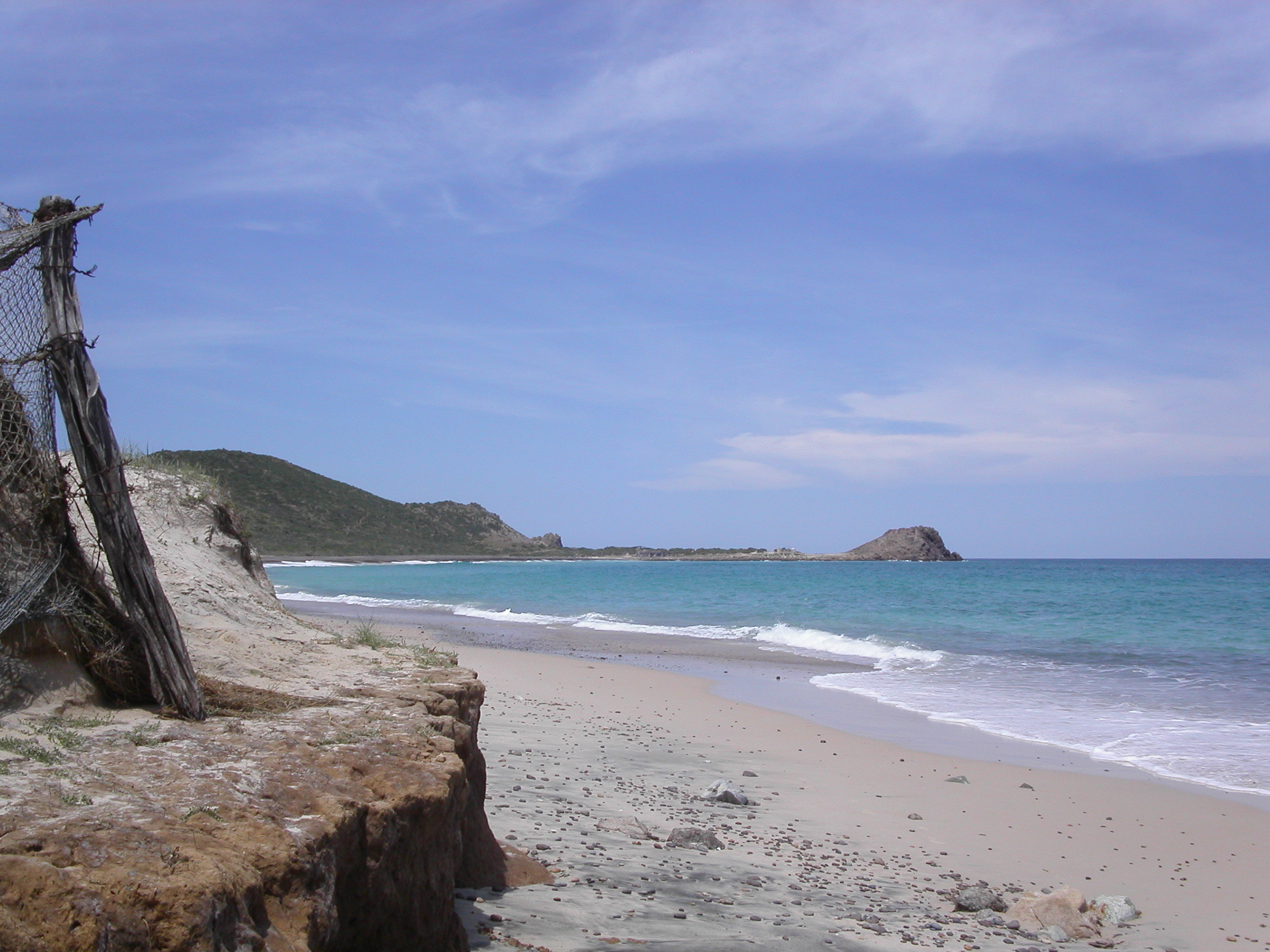
Cabo Pulmo National Park
The fishermen of Cabo Pulmo did something almost unheard of: they stopped fishing. For generations, the small community on Baja California's eastern coast had made its living from the Sea of Cortez, pulling fish from the waters above a coral reef estimated to be 20,000 years old. By the early 1990s, the catches were dwindling. The reef -- the oldest of only three coral systems on the entire west coast of North America, and the northernmost coral reef in the eastern Pacific -- was in serious trouble. What happened next became one of the most celebrated marine conservation stories in the world.
Ancient Coral in a Young Sea
Cabo Pulmo's reef sits between Pulmo Point and Los Frailes Cape on the Gulf of California coast, roughly 100 kilometers north of Cabo San Lucas. Eleven species of coral grow here, their colonies anchored atop rock outcroppings that run parallel to the shoreline, stepping into progressively deeper water offshore. At 20,000 years old, this reef predates human civilization. It survived ice ages, sea-level shifts, and millennia of natural change. What it could not survive was modern overfishing. The 71-square-kilometer area surrounding the reef had been fished without restriction, and by the time the community recognized the crisis, fish populations had dropped to a fraction of their historical levels. Big predators -- the whales, dolphins, and sea lions that once dove to the deeper coral at 40 to 50 feet -- were becoming scarce.
A Community Turns the Tide
On June 5, 1995, Mexican President Ernesto Zedillo declared the area a federally protected National Marine Park. But the legal designation was only the beginning. The real work was done by the people who lived there. Jose Luis Pepe Murrieta became the first volunteer park director in 1997, appointed by Mexico's National Ecological Institute. That same year, the nonprofit Patronato Cabo del Este was founded to support the park while the federal government built a budget for it. In 2002, community members formed Amigos para la Conservacion de Cabo Pulmo -- Friends for the Conservation of Cabo Pulmo -- to promote protection of the park's natural resources. Carlos Narro became the first official park director in 2004, appointed by the National Commission of Protected Natural Areas. These organizations eventually merged their efforts under the umbrella of Cabo Pulmo Vivo, a group dedicated to making the community a place its residents could be proud of.
The Reef Responds
The results stunned marine biologists. With fishing reduced and high-impact activities curtailed inside park boundaries, the reef began to recover at a pace few scientists had predicted. Fish populations rebounded. The health of the coral itself improved. The community that had given up fishing found new economic life in ecotourism, diving, and snorkeling. Fishermen who had once cast nets over the reef now guided visitors to see it. The economic sustainability of the community actually improved -- a counterintuitive outcome that became a case study for marine parks worldwide. Researchers from the Universidad Autonoma de Baja California, who had originally come to study local fishing patterns, ended up helping lobby the government to strengthen protections. The park's management plan was not finalized until 2009, but by then the trajectory was clear.
The Ongoing Balancing Act
Conservation victories are rarely simple, and Cabo Pulmo's story has its complications. While the park's legal protections are active, enforcement resources are not always sufficient. Tourism itself poses risks: the same foot traffic and boat traffic that sustains the local economy can damage the ecosystems the park was created to protect. Scientists studying the reef have found that depth plays a significant role in biodiversity -- the deeper coral formations, around 40 to 50 feet, harbor the greatest diversity of species and attract the largest predators. Balancing access with preservation remains the park's central challenge. Still, Cabo Pulmo stands as proof that a community can choose a different relationship with its environment. The fishermen who stopped fishing did not lose their livelihood. They transformed it -- and in the process, gave a 20,000-year-old reef the chance to keep growing.
From the Air
Located at 23.45N, 109.41W on the eastern coast of the Baja California Peninsula in the Gulf of California. Best viewed at 2,000-4,000 feet AGL, where the coral formations are visible as darker patches beneath the turquoise water. The park spans between Pulmo Point and Los Frailes Cape. Nearest major airport is San Jose del Cabo International (MMSD/SJD), approximately 100 km to the south. The arid desert coastline and Sierra de la Laguna foothills provide visual landmarks.