Cabo Wabo
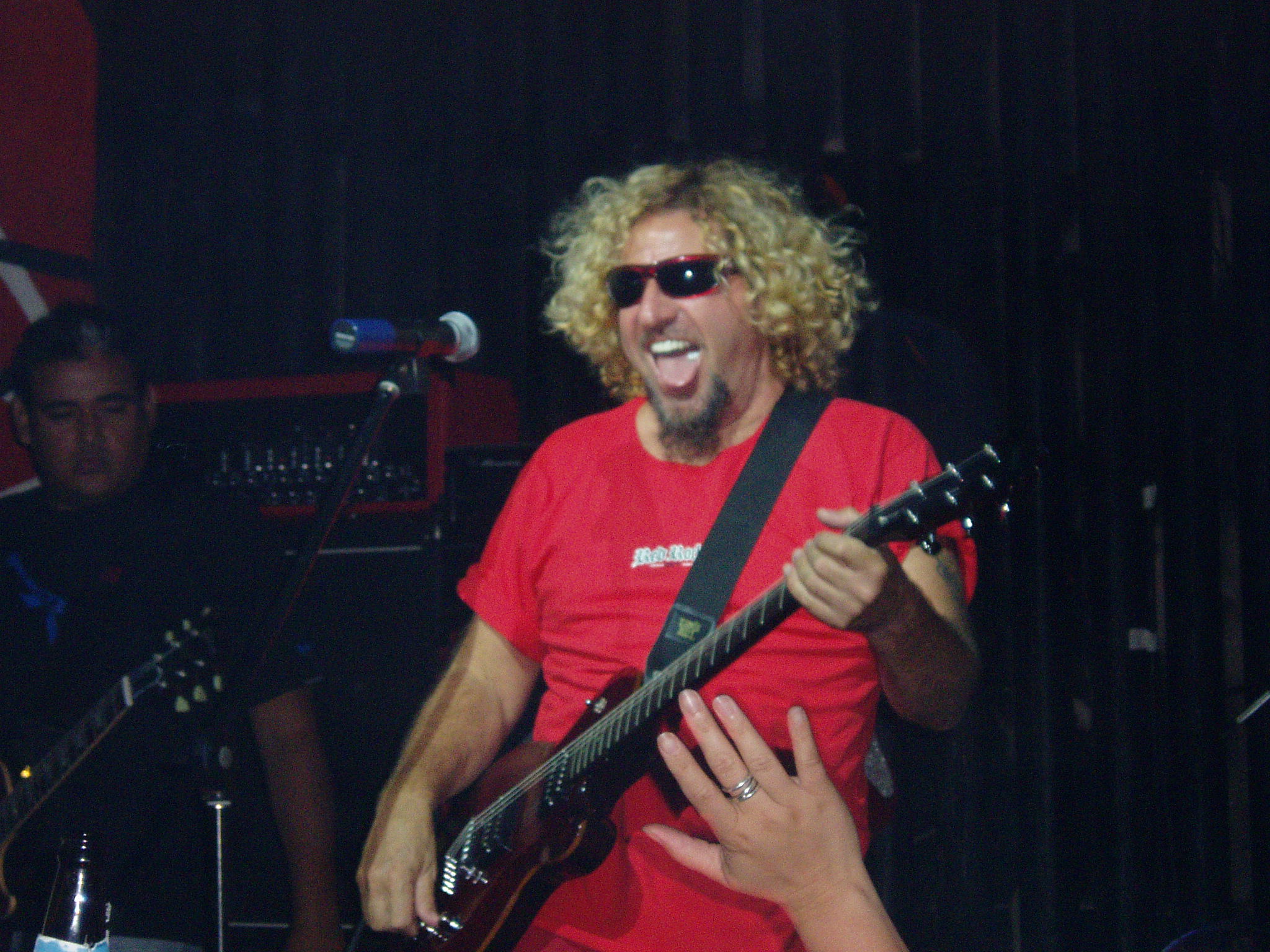
The story goes like this: Sammy Hagar watched a man stumble along a beach in Cabo San Lucas after a long night of partying, and a word was born. He mashed the town's nickname with a mangled version of "wobble" and got "Cabo Wabo" -- a phrase he turned into a Van Halen song in 1988, then a cantina in 1990, and eventually an $80 million tequila brand. What started as a place for a rock star and his friends to jam between tours became one of the most recognizable names in both nightlife and spirits on the Baja Peninsula.
The Wobble That Started It All
Hagar first fell for Cabo San Lucas in the early 1980s, years before he replaced David Lee Roth as Van Halen's frontman in 1985. The fishing village at the tip of the Baja Peninsula was still small then, rough-edged and unhurried, the kind of place where a rock musician could disappear for a few weeks. When Hagar and his long-time friend Marco Monroy decided to open a bar, they roped in his Van Halen bandmates -- Eddie Van Halen, Alex Van Halen, and Michael Anthony -- and business partner Jorge Viana. They named it after that 1988 song, itself named after that stumbling stranger on the beach. The cantina opened in April 1990 as a sprawling bar, restaurant, and live-music venue where Hagar could play whenever the mood struck.
From Financial Wreck to Beachside Institution
The cantina was, at first, a disaster. Cabo San Lucas had not yet become the mega-resort it is today, and the bar bled money. Hagar bought out his bandmates and took over management himself. The timing proved fortunate: as the town boomed through the 1990s, transforming from a sleepy fishing port into one of Mexico's premier vacation destinations, Cabo Wabo rode the wave. Locals and tourists packed the place, drawn by the live music, the tequila, and the chance that Hagar himself might wander onstage. The club attracted an older crowd with its rock-heavy playlist -- this was never a place for electronic dance music. Expansion attempts followed: a basement location at Harvey's casino in Lake Tahoe (opened 2004, later closed), a short-lived Fresno outpost (2008-2009, shuttered after Hagar pulled the license), and a Las Vegas location at Planet Hollywood's Miracle Mile in 2009.
The Tequila That Outgrew the Bar
In the late 1990s, Hagar began pouring a house-brand tequila for his regulars, commissioning it from a family-owned distillery in Jalisco. Guests kept asking where they could buy bottles to take home. In 1999, Winston Wilson of Wilson-Daniels, a Napa Valley wine and spirits importer, began distributing Cabo Wabo tequila in the United States. Sales exploded from 37,000 cases in the first year to 140,000 by 2006, making it the second-best-selling premium tequila in the country. The brand's anejo earned three silver medals, one gold, and one double gold at the San Francisco World Spirits Competition between 2008 and 2012. Its reposado scored 92 from the Beverage Testing Institute in 2008, and the blanco took gold at the 2020 New York International Spirits Competition.
An $80 Million Toast
In May 2007, Hagar sold 80 percent of Cabo Wabo Tequila to Gruppo Campari, the world's sixth-largest spirits company, for $80 million. The deal was handled through Skyy Spirits, Campari's San Francisco-based vodka subsidiary, with plans to push the brand into global markets including Great Britain, Spain, Australia, Japan, and Germany. Hagar stayed on as the face of the brand. For a venture that began as a vanity hangout for a rock band on a quiet Mexican beach, the numbers told a remarkable story. The cantina that nearly bankrupted its founders had spawned a tequila empire that dwarfed the bar business entirely. Hagar, who once described himself as just wanting a place to play guitar and drink with friends, had built one of the first celebrity spirits brands -- years before the trend became an industry standard.
From the Air
Located at 22.88N, 109.91W in Cabo San Lucas at the southern tip of the Baja California Peninsula. Best viewed at 3,000-5,000 feet AGL. The cantina sits in the downtown tourist district near the marina. Nearest airport is San Jose del Cabo International (MMSD/SJD), approximately 30 km northeast. The dramatic Land's End arch formation at the tip of the peninsula is the primary visual landmark.