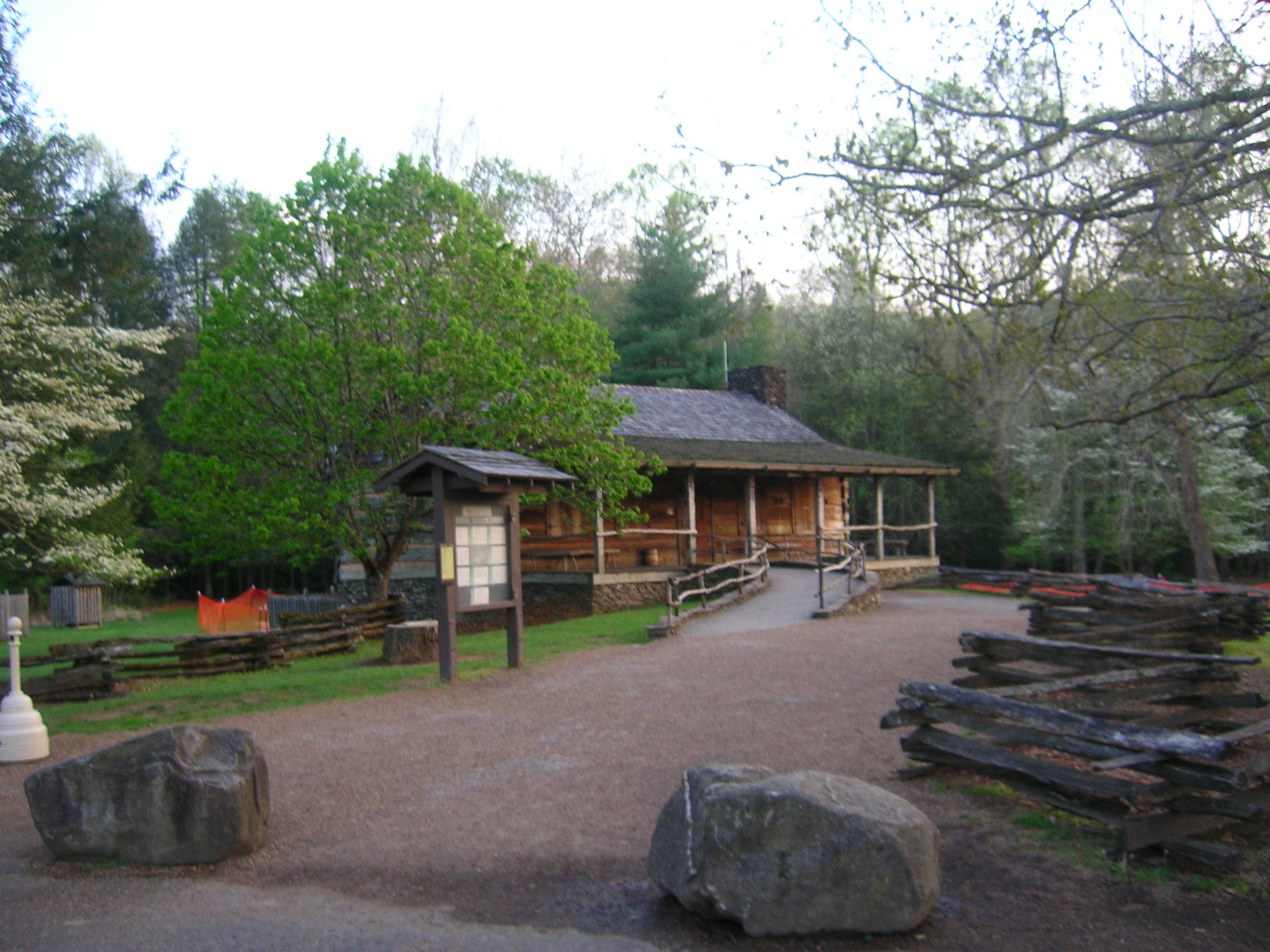
Cades Cove
The Cherokee called it Tsiya'hi -- Otter Place -- for the creatures that once filled its creeks. This isolated Tennessee valley sat inside a ring of billion-year-old sandstone ridges, at the end of a trail that crossed the Smokies through Ekaneetlee Gap. By 1818, when War of 1812 veteran John Oliver and his wife Lurena arrived as the first permanent white settlers, the otters were already gone. The couple survived their first winter on dried pumpkin given to them by Cherokee who still lingered in the surrounding forests. Today, Cades Cove draws roughly five million visitors a year to its eleven-mile loop road, making it the most popular destination in the Great Smoky Mountains National Park. But the meadows and weathered cabins conceal layers of drama -- religious schisms, Civil War ambushes, moonshine vendettas, and a community's furious last stand against the federal government.
A Window in Ancient Stone
Geologists call Cades Cove a "limestone window" -- a place where erosion stripped away older Precambrian sandstone to expose younger Paleozoic limestone beneath. The result is a broad valley of deep, fertile soil surrounded by weathering-resistant ridges: Rich Mountain to the north, the Great Smoky Mountains crest to the south. The rocks underfoot formed 340 to 570 million years ago, while the ridges are Ocoee Supergroup sandstone laid down roughly a billion years ago. The mountains rose during the Appalachian orogeny, when the North American and African plates collided, thrusting older formations over younger ones. Beneath the cove, fractured limestone created caves. Gregory's Cave, the only one in the park ever run as a commercial attraction, opened with electric lights and wooden walkways in 1925. During the Cold War, it was designated a fallout shelter for 1,000 people. Today, entrance requires a research permit.
Pumpkin, Cattle, and a Bloomery Forge
Settlement boomed after 1821, when Revolution veteran William "Fighting Billy" Tipton bought large tracts and resold them to family. Peter Cable engineered dykes and sluices to drain the swampy western lands. Daniel Foute opened a bloomery forge in 1827. Robert Shields built a tub mill on Forge Creek; his son Frederick raised the cove's first gristmill. By 1850, the population had reached 671 and a post office had been running since 1833. The famous isolation of Cades Cove is partly myth: a weekly mail route began in 1839, telephone service arrived in the 1890s, and roads connected the cove to neighboring settlements by the 1850s. Still, the Baptist congregations that anchored community life split bitterly in 1839 over whether missionary work was authorized by scripture. Thirteen members left to form the Missionary Baptist Church; the rest became the Primitive Baptists, who dominated cove politics for the next century.
Ambush at Forge Creek
Blount County was a hotbed of abolitionist activity, and Doctor Calvin Post reportedly ran an Underground Railroad stop in the cove. When war came, Russell Gregory -- the mountain settler who gave his name to Gregory Bald -- tried to stay neutral even after his own son defected to the Confederacy. But Confederate raids kept coming. In 1864, Gregory organized a militia of the cove's elderly men. They ambushed Confederate marauders near the junction of Forge Creek and Abrams Creek, routing them back across the Smokies into North Carolina. The raids largely stopped -- but two weeks later, Confederates slipped back into the cove and killed Gregory. The war's shadow lingered for decades. Population did not recover to pre-war levels until around 1900, and the cove's residents remained suspicious of outside change well into the Progressive Era.
Corn Liquor and Christmas Gunfire
Chestnut Flats, at the base of Gregory Bald, produced exceptional corn liquor. Josiah "Joe Banty" Gregory was the most prominent distiller; John W. Oliver, the Primitive Baptist mail carrier, would find stills along his route and report them to authorities. In 1921, the Blount County sheriff raided Gregory's still. The Gregorys blamed the Olivers. That night, both Oliver barns burned, destroying livestock and tools. When Josiah's son was later assaulted by Asa and John Sparks, Josiah and his brother Dana hunted the Sparks brothers down and shot them on Christmas night. Both Gregorys were convicted of barn burning and felonious assault -- then pardoned after six months and personally escorted home by Governor Austin Peay. Oliver dismissed the romantic moonshiner image: "All these men are public outlaws, and were never recognized as true, loyal mountaineers."
Get Out, Get Gone
Of all the Smoky Mountain communities, Cades Cove fought the national park the hardest. Residents had been assured their land would not be seized. Then the 1927 Tennessee General Assembly gave the Park Commission eminent domain authority. Colonel David Chapman received death threats and found a hand-lettered sign at the cove entrance: "COL. CHAPMAN: YOU AND HOAST ARE NOTFY, LET THE COVE PEOPL ALONE. GET OUT. GET GONE. 40 M. LIMIT." Chapman filed a condemnation suit against John W. Oliver in 1929. The court sided with Oliver -- until the Secretary of the Interior declared the cove essential and the case went to the Tennessee Supreme Court. Oliver claimed his tract was worth $30,000; the court awarded $17,000 plus interest. He abandoned his property on Christmas Day, 1937. The Primitive Baptists kept meeting in the cove until the 1960s, defying the Park Service. Today, the Park Service maintains the log cabins and meadows it once fought to acquire, having demolished the modern frame houses to preserve a pioneer image the cove's residents had long since outgrown.
From the Air
Cades Cove sits at approximately 35.594N, 83.842W in an isolated valley within the Great Smoky Mountains National Park, Tennessee. The valley floor is at roughly 1,700 feet elevation, ringed by ridges rising to 4,000-5,000 feet. From the air, look for a broad green meadow framed by forested ridges -- the contrast between open grassland and dense mountain forest is striking. Nearest airports include McGhee Tyson Airport (KTYS) in Knoxville, approximately 40 miles northeast. Mountain weather can produce low clouds and turbulence; ridgeline crossings require careful altitude planning. The 11-mile loop road through the valley is visible from moderate altitude.