Cadillac Ranch
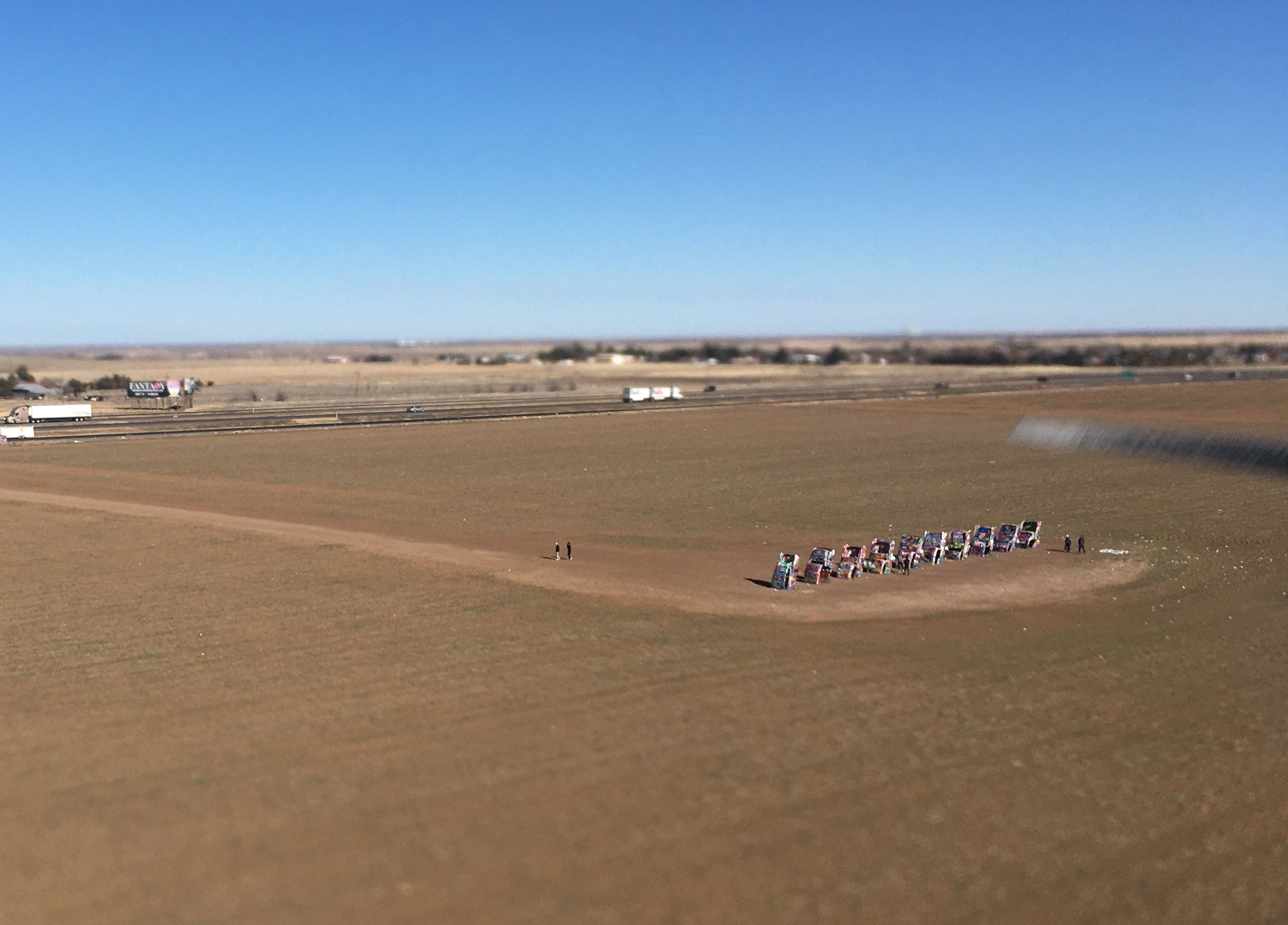
In a wheat field along old Route 66 west of Amarillo, Texas, ten Cadillacs are buried nose-first in the dirt. Cadillac Ranch has stood since 1974, when the art collective Ant Farm planted the cars at the same angle as the Great Pyramid of Giza. The cars span the era from 1949 to 1963 - the years when Cadillac's tailfins grew from modest bumps to outrageous wings, then shrank away. The installation was eccentric from the start; what makes it extraordinary is what happened after. Visitors were encouraged to bring spray paint, and they did. For 50 years, Cadillac Ranch has been continuously painted and repainted - a living artwork that changes daily, each layer of graffiti covering and being covered by the next. The original cars are invisible beneath inches of accumulated paint.
The Installation
Cadillac Ranch was created by Ant Farm, a San Francisco art collective founded by Chip Lord, Hudson Marquez, and Doug Michels. The idea came from a conversation about the evolution of Cadillac tailfins - how they expressed American optimism, excess, and decline. Stanley Marsh 3, an eccentric Amarillo millionaire, agreed to fund and host the installation. In 1974, the collective buried ten Cadillacs - a 1949 Club Coupe through a 1963 Sedan - at precisely 52 degrees, matching the angle of the Great Pyramid's sides. The cars were positioned west of Amarillo on Marsh's property, visible from Interstate 40, the modern incarnation of Route 66.
The Graffiti
From the beginning, visitors were encouraged to leave their mark. Stanley Marsh reportedly handed out spray paint. The tradition became self-perpetuating: people saw the painted cars and brought paint to add their own messages. Over decades, the accumulated paint has become inches thick - the original cars are completely obscured. Names, dates, declarations of love, memorial messages, political statements, and random tags cover every surface. The colors change constantly; occasionally someone paints an entire car a single color before the next visitors add their spray. The graffiti makes Cadillac Ranch a participatory artwork - millions of anonymous contributors have shaped what it is.
The Move
In 1997, Amarillo's growth approached the original Cadillac Ranch site. Stanley Marsh relocated the installation two miles west, to its current location in a wheat field. The cars were extracted - revealing that years of burial and paint had preserved them surprisingly well - and replanted at the new site. The graffiti tradition continued without pause. The new location is still visible from Interstate 40, still surrounded by open Texas prairie, still accessible to anyone willing to walk across the field. The move proved that Cadillac Ranch is less about specific cars than about the ongoing ritual of painting them.
The Legacy
Cadillac Ranch has become one of America's most recognizable artworks - reproduced endlessly in photographs, featured in songs (Bruce Springsteen's 'Cadillac Ranch' among them), and inspiring countless roadside tributes. The installation raises questions about authorship - who made this? Ant Farm created the concept; Stanley Marsh funded it; millions of visitors created the surface. The spray paint is the art now; the cars are just the canvas. Cadillac Ranch proved that public art could be interactive, evolving, and democratic. Anyone can contribute; no contribution is permanent. The piece belongs to everyone who has ever shaken a spray can there.
Visiting Cadillac Ranch
Cadillac Ranch is located on the south side of I-40 at exit 60 (Hope Road) west of Amarillo, Texas. The site is free to visit 24/7 and is accessible by walking across the field from a dirt pullout. Bring spray paint - participation is expected. Take photographs before and after adding your contribution. The field can be muddy after rain; wear appropriate shoes. There are no facilities, shade, or water. Summer temperatures exceed 100°F; bring water and sun protection. The site is best visited at sunrise or sunset for photography. Amarillo's Rick Husband International Airport is 15 miles east. Route 66 nostalgia continues throughout Amarillo, including the Big Texan Steak Ranch. Allow 30-60 minutes.
From the Air
Located at 35.19°N, 101.99°W west of Amarillo, Texas. From altitude, Cadillac Ranch appears as a line of colorful objects in an otherwise empty wheat field along Interstate 40. The installation is visible from commercial flight altitude on clear days - a distinctive line of tilted forms in the flat Texas Panhandle. Amarillo is 15 miles east; the city's skyline and the Amarillo Helium Monument are visible. The terrain is classic High Plains - flat, agricultural, enormous sky. Route 66 and I-40 parallel each other through this section. The Llano Estacado stretches in every direction - one of the flattest places on Earth, punctuated by buried Cadillacs.