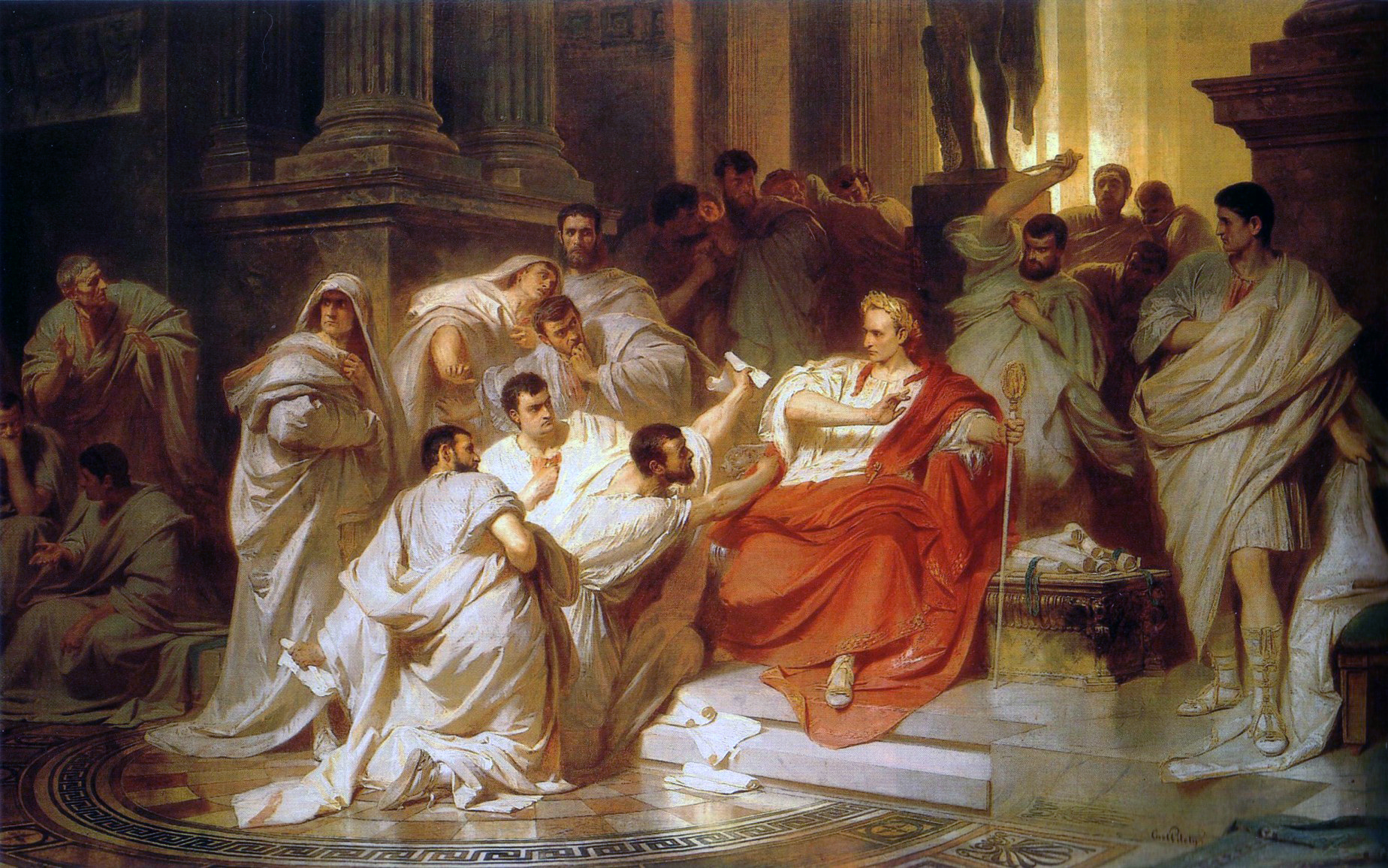
The Assassination of Julius Caesar: 'Et Tu, Brute?'
On March 15, 44 BC - the Ides of March - Julius Caesar entered the Theatre of Pompey in Rome to attend a meeting of the Senate. He never left. Sixty senators had conspired to kill him, and at least 23 struck blows. Caesar fell at the base of a statue of his former ally and enemy Pompey, pierced by 23 stab wounds. His dying words, if Shakespeare is to be believed, were 'Et tu, Brute?' - 'You too, Brutus?' - addressed to Marcus Brutus, whom Caesar had trusted and perhaps loved. The conspirators believed they were saving the Republic. Instead, they destroyed it, triggering civil wars that would transform Rome into an empire ruled by Caesar's heir.
The Dictator
By 44 BC, Julius Caesar had made himself master of Rome. He had conquered Gaul, crossed the Rubicon, won a civil war against Pompey, and been declared 'dictator perpetuo' - dictator in perpetuity. He was, in all but name, a king.
This was intolerable to the traditionalist senators who cherished Rome's republican institutions. Rome had expelled its kings some 465 years earlier. The Republic was sacred. But Caesar accepted divine honors, placed his image on coins, and showed every sign of planning to establish a monarchy. To his enemies, he had to die for Rome to live.
The Conspiracy
The conspiracy was organized by Gaius Cassius Longinus and Marcus Junius Brutus - both senators, both former opponents in the civil war whom Caesar had pardoned. They recruited about 60 senators, many of whom had personal grudges or ideological objections to Caesar's rule.
Brutus's involvement was crucial. He was respected, known for his integrity, and had a family history of opposing tyranny. His ancestor had supposedly helped overthrow the last king of Rome. If Brutus supported the assassination, it would look like patriotism rather than revenge. Caesar reportedly trusted Brutus deeply. That trust would prove fatal.
The Ides
March 15 - the Ides of March - was chosen because the Senate would meet that day. Caesar had been warned: a soothsayer had told him to 'beware the Ides of March.' His wife Calpurnia had dreamed of his death. That morning, she begged him not to go.
Caesar almost listened. But one of the conspirators convinced him that staying home would look cowardly. He walked to the Theatre of Pompey, passing the soothsayer on the way. 'The Ides of March have come,' Caesar reportedly said. 'Aye,' the soothsayer replied, 'but not gone.' Caesar walked on.
The Killing
The conspirators surrounded Caesar under pretense of presenting a petition. At a signal, they drew their daggers. Tillius Cimber grabbed Caesar's toga. Casca struck the first blow. Caesar fought back at first - he stabbed Casca with his stylus - but he was surrounded and overwhelmed.
Twenty-three senators stabbed him. Some accidentally wounded each other in the chaos. Caesar fell at the foot of Pompey's statue, wrapped his toga over his head, and died. Whether he spoke any last words - and if so, what they were - remains debated. Shakespeare's 'Et tu, Brute?' may be invention. But the image persists: betrayal by a friend, death among enemies.
The Aftermath
The assassins expected to be hailed as liberators. They were wrong. The Roman people mourned Caesar. Mark Antony turned public opinion against the conspirators. Civil war erupted. Within two years, Cassius and Brutus were dead by suicide. Within 13 years, Caesar's adopted heir Octavian had become Augustus, Rome's first emperor.
The assassination failed utterly. The conspirators had killed Caesar to save the Republic. Instead, they guaranteed its end. The empire they feared came anyway, built on Caesar's foundation. The Ides of March became a symbol of unintended consequences - the day good intentions created the very tyranny they sought to prevent.
From the Air
The assassination occurred at the Theatre of Pompey (41.90N, 12.47E) in Rome's Campus Martius, now buried under later construction. Rome Fiumicino Airport (LIRF) is 30km southwest. The Largo di Torre Argentina, where the theatre's foundations have been excavated, marks the approximate site. The area is near the Pantheon in Rome's historic center.