Café du Monde
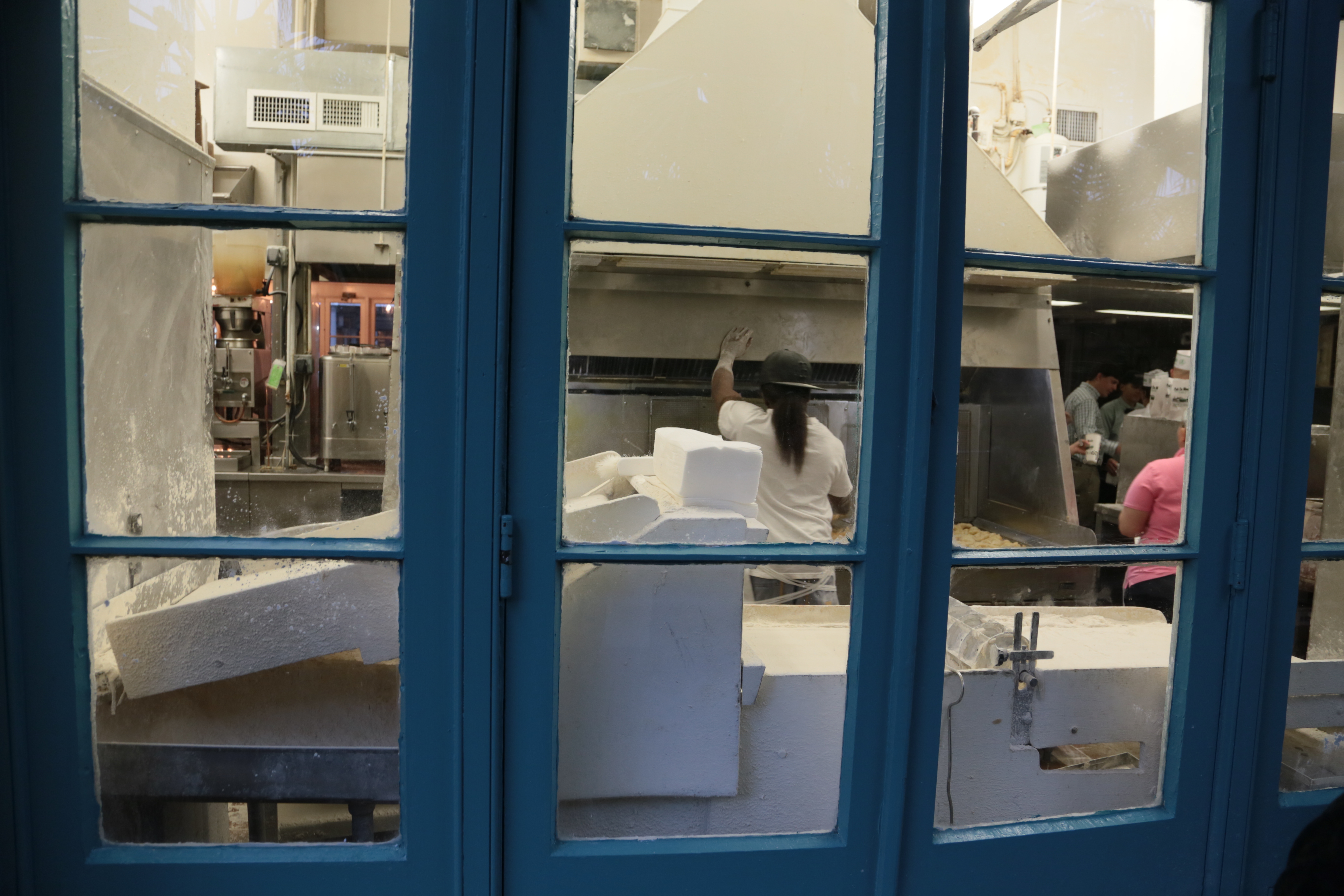
The powdered sugar never settles. It drifts from hot beignets in white clouds, dusting sleeves and tabletops and the green-and-white striped awning overhead, carried by the same river breeze that has swept through this open-air coffee stand since the second year of the Civil War. Café du Monde opened in 1862 as a simple coffee stand at the upriver end of the French Market on Decatur Street, and in the century and a half since, its menu has barely budged: dark-roasted coffee blended with chicory, served black or au lait, and square beignets buried under powdered sugar, sold three to an order. No croissants, no avocado toast, no seasonal specials. The stubbornness is the point.
A Wartime Brew
The French brought coffee to the Gulf Coast and Mississippi River settlements around 1700, but it was the Civil War that gave Café du Monde its signature flavor. When Union blockades created coffee shortages across New Orleans, resourceful Creole cooks began stretching their supply with roasted chicory root, which added a dark, chocolate-like depth to the brew. The improvisation stuck. Long after supply lines reopened, New Orleanians kept drinking their chicory-laced café au lait, and Café du Monde has never stopped serving it. The beignets came by way of the Acadians, French-speaking settlers who migrated from Nova Scotia to Louisiana in the 18th century, bringing with them the tradition of fried dough. Unlike American doughnuts, beignets are pillowy squares with no hole in the middle, designed to hold as much powdered sugar as physically possible.
The Butcher's Hall and the French Market
The building where Café du Monde sits has its own layered history. Known as the Butcher's Hall, it was originally built by the Spanish in 1791 as part of the French Market, one of the oldest public markets in the United States. A hurricane damaged the structure in 1812, and a replacement went up the following year. The coffee stand claimed its spot at the upriver end in 1862 and held it through decades of change. For over a century, Café du Monde shared the market with Morning Call, a rival coffee-and-beignet operation established in 1870. Morning Call departed the French Market in 1974 for suburban Metairie, eventually relocating to City Park, where Café du Monde later displaced it. Today, nine Café du Monde locations dot the New Orleans metropolitan area, from the original on Decatur Street to Louis Armstrong International Airport.
After the Storm
Hurricane Katrina forced Café du Monde to close at midnight on August 27, 2005. The shop itself suffered only minor physical damage, but the city around it was devastated. The owners used the low-traffic weeks that followed to refurbish the kitchens and eating areas. Six weeks after the storm, Café du Monde announced its reopening as a deliberate symbol that New Orleans was coming back to life. Over 100 news outlets covered the event, including ABC's Good Morning America. When the French Quarter location reopened on October 19, 2005, the lines of customers waiting for beignets carried a weight beyond hunger. The powdered sugar was falling again, and the city could begin to breathe.
From the Gulf Coast to the Pacific Rim
Café du Monde's reach extends far beyond Decatur Street, and one of its most unexpected connections runs through the Vietnamese-American community. After the Vietnam War, refugees who settled along the Gulf Coast recognized the chicory coffee as a cousin of the French-colonial coffee they had known back home. Vietnamese families in New Orleans began frequenting and working at Café du Monde, and they started shipping the distinctive orange-yellow tins of chicory coffee to relatives across the country. The tins became a staple in East Asian grocery stores nationwide. Meanwhile, after the 1984 Louisiana World Exposition, Japanese businesses approached Café du Monde about franchising. The Duskin Company opened the first Japanese location in 1990, eventually expanding to 32 outlets. The Japanese franchise kept the green-and-white color scheme and French Quarter architecture but added beignet varieties and seasonal desserts. All Japanese locations closed in March 2018.
The Menu That Holds the Line
What makes Café du Monde endure is not innovation but refusal. Sodas and iced coffee are among the only additions to a menu that has otherwise remained unchanged since the 19th century: chicory coffee, beignets, white and chocolate milk, hot chocolate, and fresh-squeezed orange juice. No entrees, no appetizers, no dessert menu. As vice-president Burton E. Benrud Jr. has put it, the beignets remain the only food item at the French Market location, and the commitment is to keep things the way they have always been. The cafe has woven itself into New Orleans' cultural fabric, appearing in novels by Anne Rice and James Lee Burke, sung about by Jimmy Buffett, and featured in films from Runaway Jury to Chef. But its real magic is simpler than fiction: three hot beignets, a cup of chicory coffee, and the Mississippi River breeze doing its ancient work.
From the Air
Located at 29.957°N, 90.062°W on Decatur Street in the French Quarter, right along the Mississippi River waterfront. From the air, look for the French Market complex adjacent to Jackson Square and the distinctive green awnings near the river bend. Best viewed below 3,000 ft AGL. Nearest airports: KMSY (Louis Armstrong New Orleans International, 15 nm west), KNEW (Lakefront Airport, 6 nm northeast). The French Quarter's grid street pattern and proximity to the river make it easy to spot.