Cagliari Cathedral
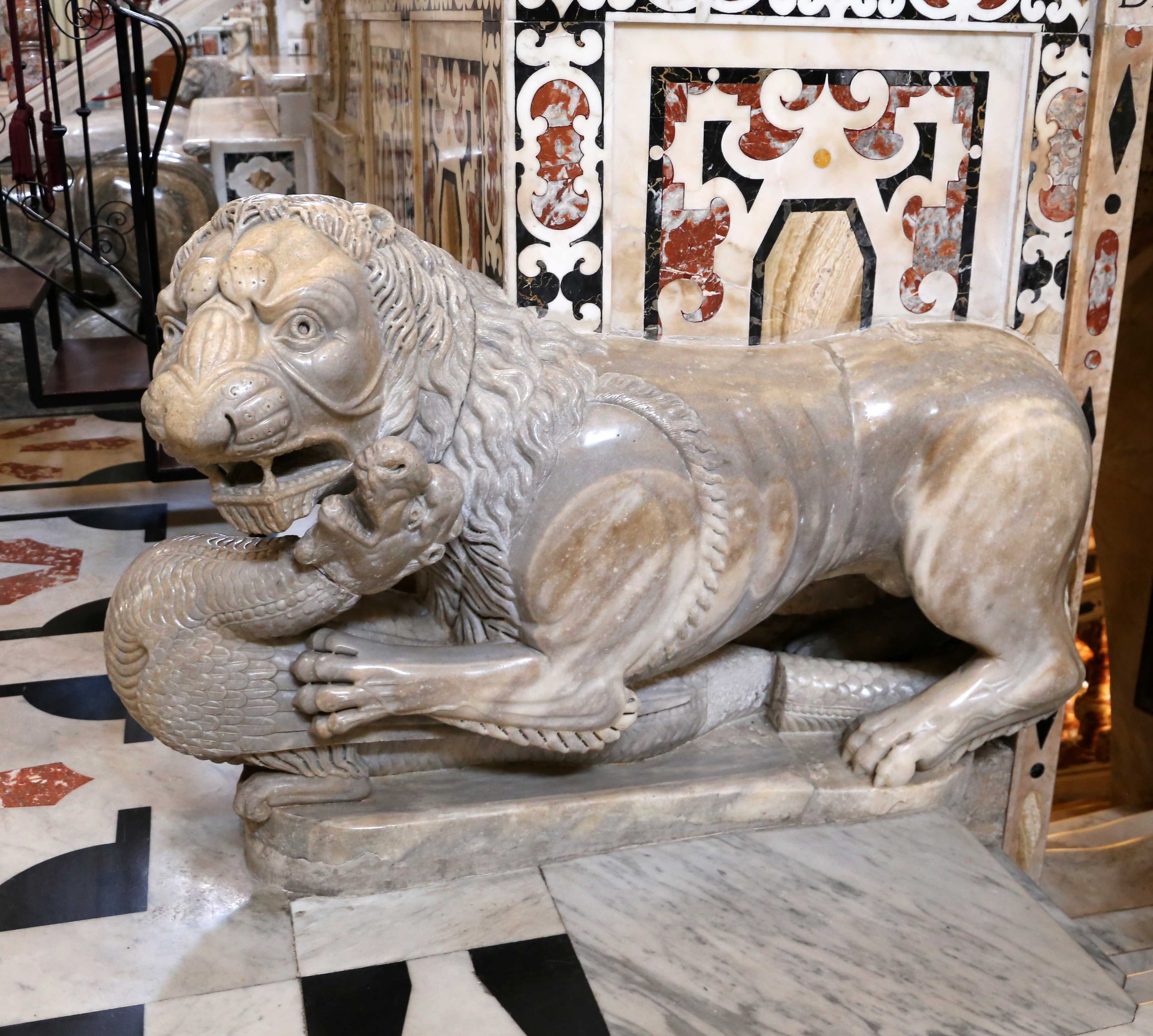
Four marble lions crouch at the base of the presbytery balustrade inside Cagliari Cathedral, supporting nothing. They once held aloft a magnificent 12th-century pulpit carved by Master Guglielmo for the Cathedral of Pisa -- a pulpit so prized that when Pisa commissioned a grander replacement, the original was shipped to Cagliari in 1312 rather than destroyed. In 1669, someone decided to split it in two, creating a pair of pulpits placed on opposite sides of the nave. The lions lost their purpose but kept their posts. It is a fitting introduction to a cathedral whose history is one long sequence of arrivals, adaptations, and reinventions.
The Pisan Stronghold
The Republic of Pisa built this cathedral in the 13th century at the heart of Castel di Castro, their fortified hilltop enclave overlooking the city below. It was a statement of power as much as faith -- a church planted in a military stronghold. The original plan was a square nave flanked by two aisles, the aisles covered in cross vaults, the nave roofed in wood. In 1258, after the Pisans destroyed the rival capital of Santa Igia and its cathedral, this church absorbed the diocese of Cagliari, becoming the seat of ecclesiastical authority for the entire region. The Pisans had built themselves not just a place of worship but a headquarters.
Gothic, Aragonese, Baroque
Each new ruling power left its mark on the stone. In the 14th century, a transept was added, transforming the floor plan into a Latin cross and opening new side entrances. The facade gained a Gothic mullioned window. When the Crown of Aragon conquered Cagliari, the right transept was completed and additional chapels built -- Aragonese ambition expressed in Italian Gothic style. Then came the baroque era. Between 1669 and 1704, the interior and facade were restructured entirely: a cupola rose above the transept crossing, and the Gothic chapels were removed to make way for the new aesthetic. In 1618, the presbytery had already been elevated to create an underground sanctuary for relics of martyrs. The cathedral was becoming a palimpsest, each layer of renovation obscuring the one before.
Treasures Behind Stone Walls
Beyond the repurposed Pisan pulpits, the cathedral holds art that spans centuries and continents. A 15th-century Flemish triptych, known as the Triptych of Clement VII and attributed to Rogier van der Weyden, hangs here -- a masterwork of Northern European painting in a Mediterranean church. In the left transept stands the mausoleum of King Martin I of Sicily, an Aragonese monarch who died during the conquest of Sardinia in the early 15th century. His monument, built between 1676 and 1680, is baroque grandeur applied to medieval memory. And below it all lies the Sanctuary of the Martyrs, a crypt containing 179 niches of relics discovered during 17th-century excavations near the Basilica of San Saturnino. Three chapels decorated in full baroque style guard these remnants of Cagliari's early Christian dead.
A Facade Borrowed from Pisa
The cathedral's most visible feature -- its Neo-Romanesque facade -- is its newest layer. In the early 20th century, the baroque front was demolished and replaced during the 1930s with a design that deliberately echoed the original Pisan-Romanesque style, drawing inspiration from the Cathedral of Pisa itself. It was an act of architectural nostalgia, a 20th-century building reaching back across seven hundred years to claim kinship with its founders. The result is a church that looks medieval from the outside and baroque on the inside, with Gothic bones and Renaissance art on the walls -- a building that belongs to no single era because it belongs to all of them. Dedicated to the Virgin Mary and Saint Cecilia, it remains the seat of the Archbishop of Cagliari, still performing the role the Pisans assigned it when they planted their flag on this hilltop nearly eight centuries ago.
From the Air
Located at 39.22N, 9.12E in the Castello quarter of Cagliari, the elevated medieval district visible from the air as the highest point of the old city. Best viewed at 2,000-3,000 feet. The cathedral's Neo-Romanesque facade faces southeast. Nearest airport: Cagliari-Elmas (LIEE), approximately 7 km west. The Castello quarter's walls and towers provide clear visual landmarks.