Cahaba: Alabama's Capital That Drowned and Disappeared
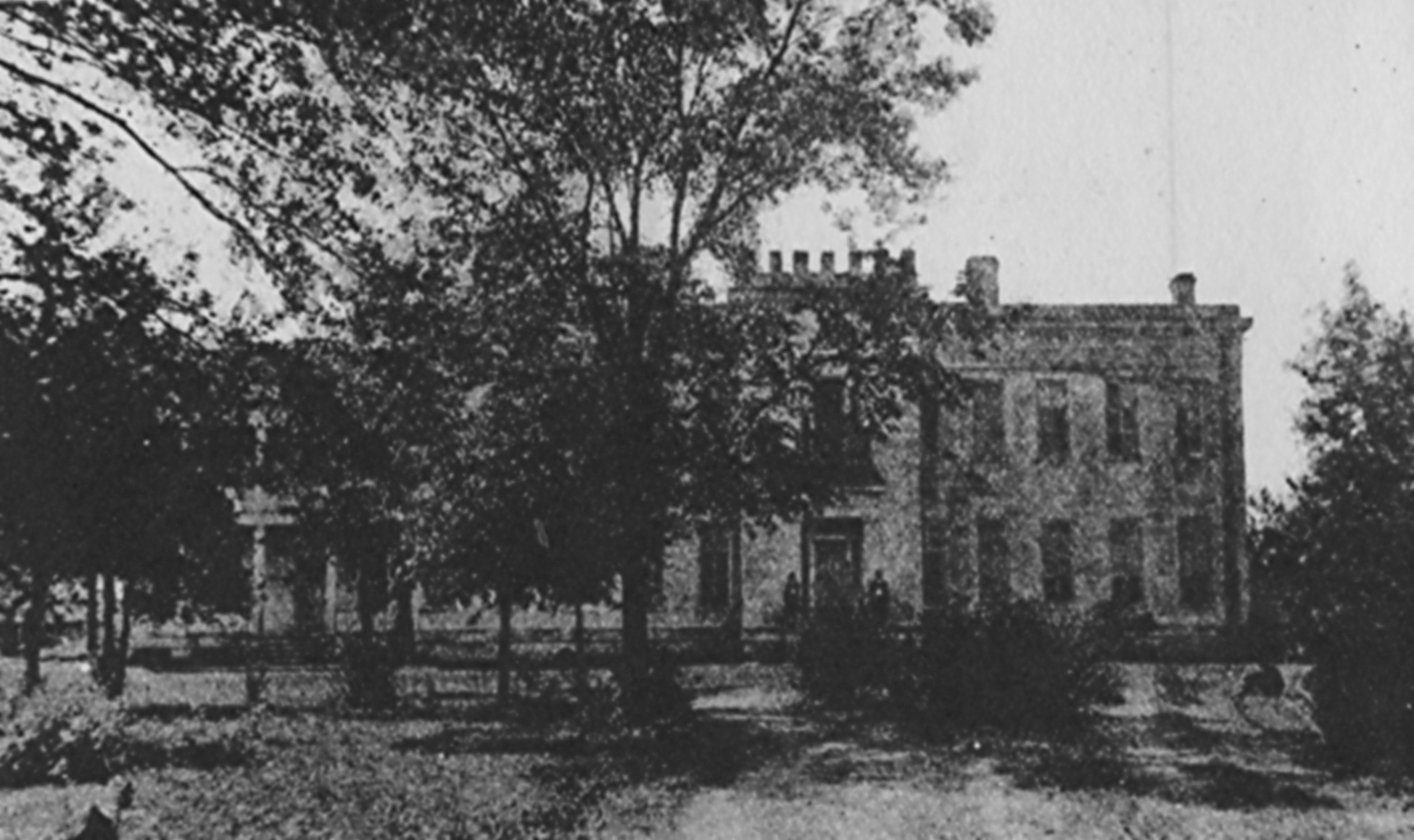
Two rivers meet at a spot in Dallas County, Alabama, where a state capital once stood. There is almost nothing left. No downtown, no courthouse, no houses -- just overgrown streets, crumbling foundations, and a scattering of columns rising from the undergrowth like bones. Cahaba was Alabama's first permanent capital from 1820 to 1825, a cotton-rich boomtown of two-story mansions and 2,000 residents, and later the site of a Confederate prison camp. Today it is a ghost town, one of the most complete disappearing acts in American history. The rivers that made Cahaba prosperous also destroyed it, flooding the town so repeatedly that everyone eventually gave up and left.
Built Where Rivers Collide
A commission formed at the old territorial capital of St. Stephens selected the confluence of the Alabama and Cahaba Rivers as the site for Alabama's new capital on November 21, 1818. The name itself came from the Choctaw language. The location made geographic sense: two navigable rivers meeting at a single point, a natural hub for commerce in a state that moved its goods by water. But geography is a double-edged sword. The rivers that made Cahaba accessible also made it flood-prone. Seasonal inundations plagued the settlement from the start. Opponents of the capital's location seized on every flood as evidence that the legislature had made a terrible mistake. By January 1826, they had won: the capital moved to Tuscaloosa. It would move once more, in 1846, to Montgomery, where it remains today.
Cotton Kingdom on the Black Belt
Losing the capital might have killed Cahaba, but cotton saved it -- for a while. Centered in Alabama's fertile Black Belt, the town reinvented itself as a major distribution point for cotton bales shipped down the Alabama River to the Gulf port of Mobile. Planters and merchants grew wealthy. They built twenty-six-room mansions, elegant churches, and a Female Academy. St. Luke's Episcopal Church, completed in 1854, was built following published designs by Richard Upjohn, the nationally renowned architect behind Trinity Church on Wall Street. A railroad connection in 1859 sparked a building boom. By 1860, the census counted 2,000 residents, about 64 percent of whom were African American. Free people of color in the town dominated the poultry business. Cahaba was prosperous, cultured, and deeply entangled in the plantation economy that would soon bring war.
Castle Morgan and the Prisoners
During the Civil War, the Confederate Army converted a large brick cotton warehouse on Arch Street into a prisoner-of-war stockade. Known as Castle Morgan, Cahaba Prison held Union soldiers beginning in June 1863. The commanding officer, Captain H. A. M. Henderson, was a Methodist minister whose relatively humane administration gave the prison one of the lowest death rates of any Civil War camp. But conditions were still grim. The prison surgeon reported unsanitary water, overcrowding, and inadequate rations. Prisoners attempted escapes; one organizer, Captain Hanchette, was shot dead on the road to Selma under murky circumstances. When the war ended, the surviving prisoners were marched to Vicksburg, Mississippi, for exchange -- and many of them boarded the steamboat Sultana, whose boilers exploded on the Mississippi River on April 27, 1865, killing over 1,100 people in the deadliest maritime disaster in American history.
The Long Vanishing
After another devastating flood in 1865, the state legislature moved the county seat from Cahaba northeast to Selma in 1866. This time, there was no cotton boom to save the town. Without the courthouse, the government offices, and the commerce they attracted, Cahaba emptied. Residents packed up and moved to Selma. Buildings were dismantled for their bricks and lumber, or simply left to collapse. Fires took the Crocheron mansion in the early twentieth century, the Kirkpatrick mansion in 1935, and the Methodist church. The twenty-six-room Perine mansion was demolished. By the mid-twentieth century, Cahaba was a ghost town in the fullest sense: abandoned streets, overgrown lots, and the occasional ruin jutting from the trees. Remarkably, the town remained technically incorporated until 1989.
What the Ruins Remember
The Alabama Historical Commission now maintains the site as Old Cahawba Archaeological Park, added to the National Register of Historic Places in 1973. Walking the old street grid, visitors find ruins, cemeteries, interpretive markers, and the slow reclamation of a town by nature. St. Luke's Episcopal Church was eventually returned to the site, and a fundraising campaign continues for its restoration. The Arthur-Fambro House still stands -- built by a judge and purchased in 1894 by D. Ezekiel Arthur, a formerly enslaved man whose family lived there until 1995. That single house spans Cahaba's entire arc: from plantation wealth to emancipation, from boomtown to ghost town, from forgotten ruin to a place worth preserving.
From the Air
Located at 32.32°N, 87.10°W in Dallas County, Alabama, at the confluence of the Alabama and Cahaba Rivers. Craig Field Airport (KSEM) in Selma lies approximately 10 nm to the northeast. From altitude, the site appears as a wooded bend where two rivers meet -- the old street grid is largely invisible under vegetation, but the river confluence is unmistakable. The Alabama River curves broadly here through the Black Belt lowlands. Birmingham-Shuttlesworth International Airport (KBHM) is roughly 80 nm to the north. The area is flat, agricultural, and prone to river fog in cooler months.