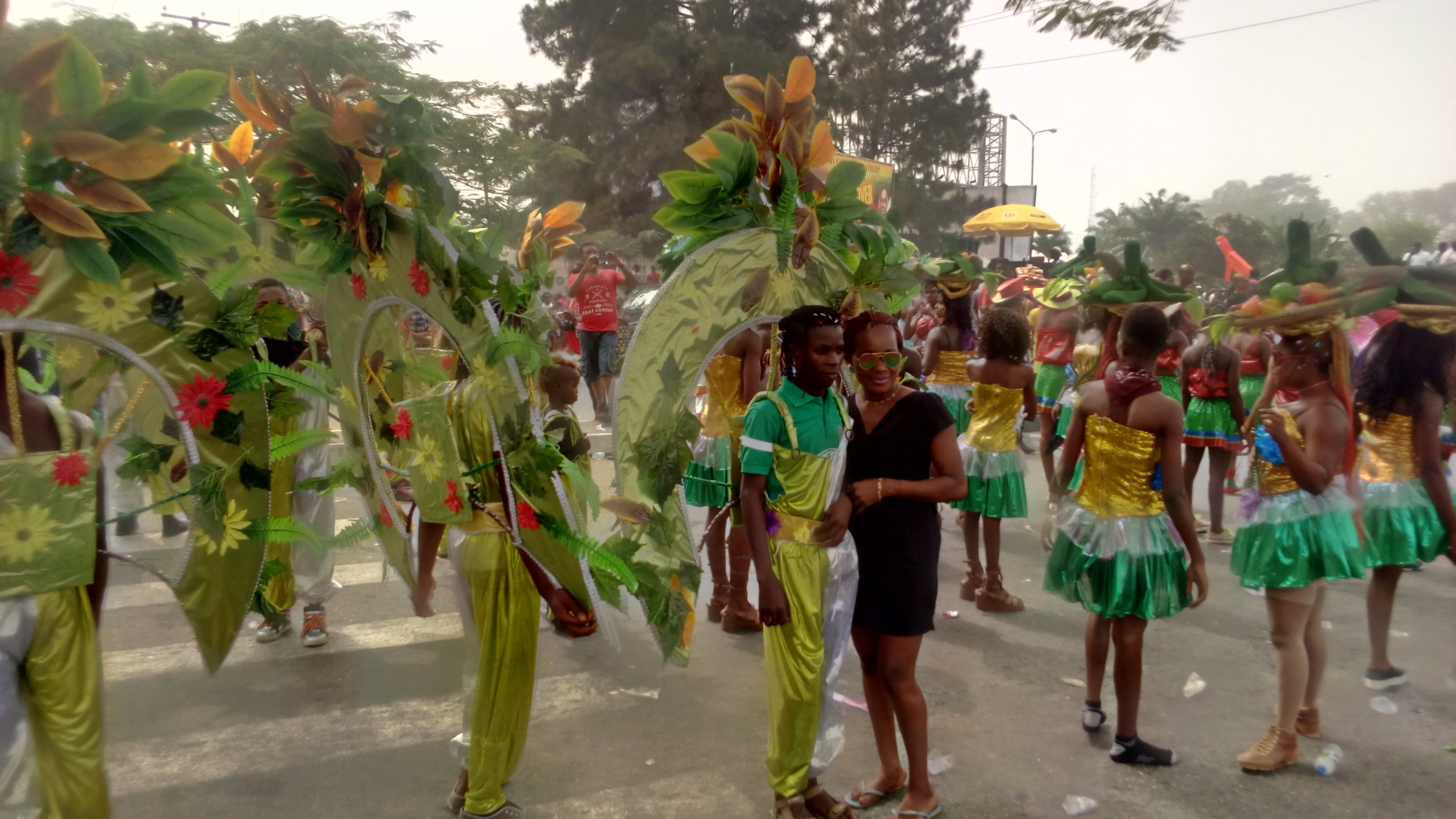
Calabar Carnival
Every December, five competing bands flood the streets of Calabar in a rivalry so intense it has its own color code. Passion 4 wears green and has dominated for years. Masta Blasta, in orange, brings the largest crowds. Seagull, the red band, prides itself on choreography. Bayside is blue, Freedom is yellow, and the competition between them -- judged on costumes, coordination, and sheer spectacle -- has driven the Calabar Carnival from a local Christmas celebration into what organizers call Africa's biggest street party. The claim is not modest. Neither is the event.
From Colonial Pageant to Continental Spectacle
The roots of the Calabar Carnival predate Nigerian independence, when seasonal festivities marked the December holidays in this port city at the confluence of the Calabar and Great Kwa Rivers. The Nigerian Civil War halted celebrations between 1966 and 1970, but the carnival resumed in 1971 under Brigadier General U. J. Esuene, governor of the South Eastern State. Political crises in the 1990s -- particularly the turmoil following the annulment of M.K.O. Abiola's 1993 election and the ensuing Commonwealth sanctions -- slowed the festival again. The modern incarnation dates to 2004, when Governor Donald Duke reimagined the carnival as a tourism engine, inviting international participants, African diaspora communities, and foreign investors to what had been a largely local affair. His vision was to make Cross River State a destination, and the carnival became his vehicle.
The Battle of the Bands
The heart of the carnival is the band competition. Five original bands -- Seagull, Passion 4, Masta Blasta, Bayside, and Freedom -- compete annually, each identified by color and reputation. The rivalry is genuine. In 2009, the carnival committee organized a football tournament among the bands to channel some of the competitive energy. Passion 4, the green band, has been the most dominant force, winning in 2015, 2017, and 2018, and sharing the title with Freedom in 2019 -- the first tie in carnival history. By 2022, the competition expanded to seven bands with the addition of Diamond and Kalasvegas. Each year brings a new theme: "Climate Change" in 2015, "Africanism" in 2018, "Humanity" in 2019, "Agro-Industrialization" in 2022. The bands must interpret these themes through costume design, choreography, and float construction, turning abstract concepts into street-level spectacle.
A Stage for Stars and Statesmen
The carnival draws performers and dignitaries from well beyond Cross River State. International musicians including South African reggae legend Lucky Dube, Senegalese-American star Akon, and American hip-hop artists Fat Joe, Young Jeezy, and Nelly have all performed. Gospel artist Kirk Franklin has appeared as well. Beyond the main parade, the calendar includes the Ekpe Festival -- a traditional masquerade rooted in Efik culture that predates the modern carnival by centuries -- boat regattas on the Cross River, fashion shows, and the Paradise Music Festival and Awards, added in 2017. The month-long schedule was trimmed to two weeks under Governor Benedict Ayade, but the density of events only intensified.
Resilience and Reckoning
The carnival has weathered repeated disruptions. COVID-19 forced cancellations in 2020 and 2021, breaking its uninterrupted run for the first time since the 2004 revival. The 2022 return was overshadowed by tragedy: on December 28, a drunk driver plowed into the crowd during the Biker's Parade, killing fourteen people and injuring twenty-four more. Governor Ayade immediately discontinued the Biker's Parade. The incident cast a shadow over what was meant to be a triumphant comeback after the pandemic hiatus. Yet the carnival persisted. Governor Bassey Otu, who took office in 2023, has continued the tradition, declaring the festival a national asset. The 2025 edition, themed "Traces of Time," marks the carnival's twentieth anniversary since its modern revival -- two decades of a city defining itself through celebration, even when celebration comes at a cost.
From the Air
Located at approximately 4.97N, 8.34E in Calabar, capital of Cross River State, in southeastern Nigeria. The city sits at the confluence of the Calabar River and the Great Kwa River, visible from altitude as a waterway junction near the coast. Margaret Ekpo International Airport (DNCA) serves the city. The carnival route runs through central Calabar's main boulevards. From the air, the city's position on a natural hill overlooking the river is distinctive. The tropical climate means frequent cloud cover, especially during the December carnival season at the edge of the dry period.