California Historical Society
In 2012, the California Historical Society painted its Pacific Heights headquarters international orange -- the color of the Golden Gate Bridge -- to celebrate the span's 75th anniversary. It was a characteristically Californian gesture: bold, slightly eccentric, and deeply rooted in the state's love affair with its own story. Thirteen years later, the Society closed permanently, transferring its vast collections to Stanford University. The arc from festive orange facade to institutional dissolution captures something essential about the challenge of preserving history in a state that has always been more interested in what comes next.
Founded in the Gilded Age
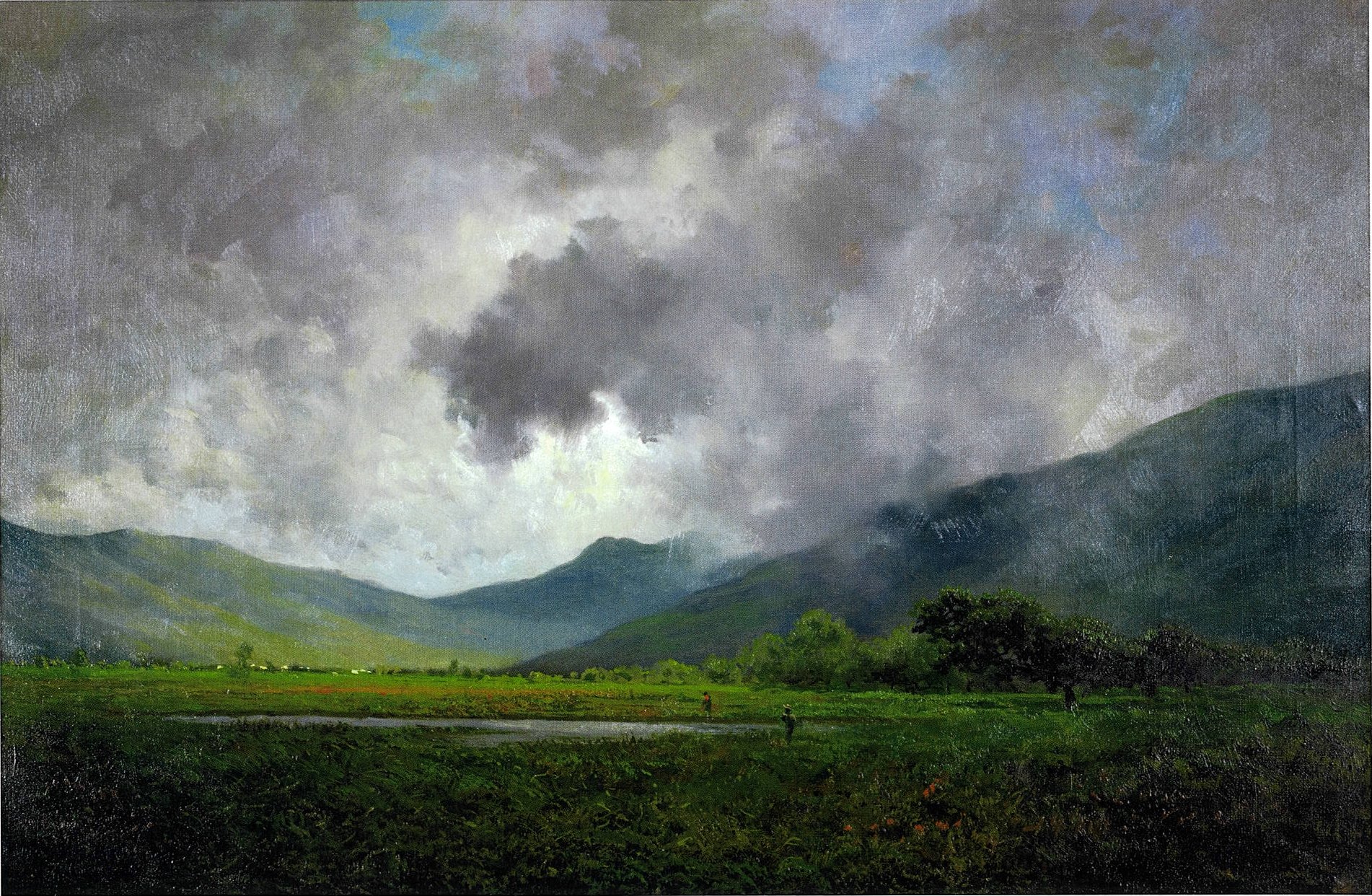
The California Historical Society was born in June 1871 at Santa Clara University, where a group of politicians and professors led by Assemblyman John W. Dwinelle -- an influential founder of the University of California -- gathered to create a repository for the young state's rapidly accumulating past. California was barely two decades old, and already its Gold Rush origins were fading from living memory. The society spent its first century building one of the most significant collections of Californiana in existence: 50,000 books and pamphlets, 4,000 manuscript collections, 500,000 photographs, and 5,000 works of art by painters including Albert Bierstadt, Maynard Dixon, and Carleton Watkins.
A Mansion, a Mission, and the Old Mint
The Society moved through San Francisco like a tenant looking for a permanent home. It occupied the Flood Building temporarily in 1955, then purchased the Whittier Mansion in Pacific Heights in 1956, where it operated for decades. Eventually it relocated to a Mission Street headquarters near SoMa, closer to the city's cultural institutions. The collection grew to include the papers of the ACLU of Northern California, the League of Women Voters, and -- remarkably -- the Peoples Temple, Jim Jones's organization. Photographers Arnold Genthe, Eadweard Muybridge, and Carleton Watkins were represented in the photography holdings. In 1979, Governor Jerry Brown signed a bill naming the CHS the official state historical society.
The Long Decline
Financial trouble arrived slowly and then all at once. The Society sold its San Francisco headquarters in 2024, reducing staff from thirty employees to seven, then three. The organization that had celebrated the centenary of the Panama-Pacific International Exposition in 2015 and sponsored the 50th anniversary of the Summer of Love in 2017 found itself unable to sustain even a skeleton operation. In January 2025, the CHS announced it was closing permanently. Stanford University would acquire the collections, which would become the California History Collection, administered through the Bill Lane Center for the American West.
What Survives
The Society's dissolution scattered its physical presence but preserved its intellectual legacy. The Kemble Collection on Western Printing and Publishing, founded in 1964 and named for pioneer publisher Edward Cleveland Kemble, joined Stanford's libraries alongside the fine art, manuscripts, and ephemera dating to 1841. The photography collection -- Arnold Genthe's San Francisco Chinatown portraits, Muybridge's motion studies, Watkins's Yosemite landscapes -- found a secure institutional home. What the CHS could not bequeath was its role as a gathering point, a place where California paused to examine itself. That function, like the international orange paint on its former facade, proved harder to preserve than the archives themselves.
From the Air
Located at 37.7868°N, 122.401°W in San Francisco's SoMa/Mission district area. The Society's former headquarters was near the intersection of Mission and 7th Streets. Best viewed at 2,000-3,000 feet AGL. Nearest airports: KSFO (11 nm south), KOAK (10 nm east). The building is in the dense urban grid south of Market Street.