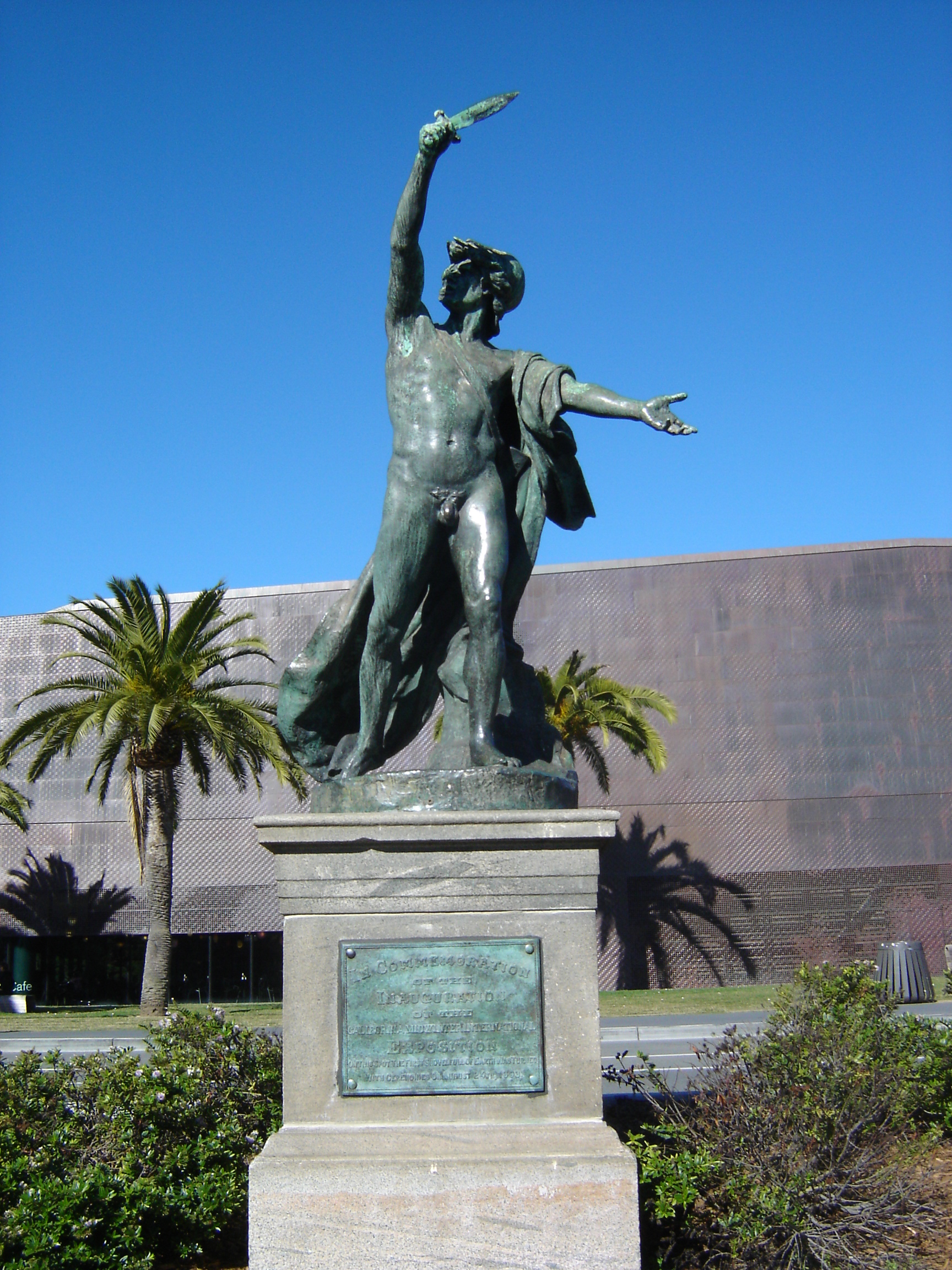
California Midwinter International Exposition of 1894
While the rest of America shivered through the winter of 1894, San Francisco threw a party in the park. The California Midwinter International Exposition ran from January 27 to July 5 in Golden Gate Park, and its pitch was devastatingly simple: Why endure another frozen February when you could be strolling through exhibit halls in sixty-degree sunshine? Michael H. de Young, the San Francisco newspaper publisher who had represented California at Chicago's 1893 World's Columbian Exposition, saw an opportunity to boost the state's depression-era economy and seized it with the flamboyance that only a Gilded Age press baron could muster.
A Fair Born from a Fair
De Young attended the World's Columbian Exposition in Chicago as a national commissioner appointed by President Benjamin Harrison and came home with a plan. California was deep in an economic depression, and de Young recognized that a world's fair -- staged in winter, when California's climate advantage was most dramatic -- could attract visitors, investment, and national attention. He moved fast, organizing the exposition in Golden Gate Park and opening it just months after the Chicago fair closed. The timing was the message: while Chicagoans froze, San Franciscans could demonstrate that their city operated year-round, unbothered by the seasons that paralyzed the rest of the country.
Spectacle in the Fog Belt
The Midwinter Fair filled Golden Gate Park with temporary exhibition buildings, international pavilions, and attractions designed to astonish. The Santa Barbara Amphibia featured a 40,000-gallon seawater tank showcasing marine life from the Santa Barbara Channel. International exhibits brought visitors face-to-face with cultures from around the Pacific Rim. The fair was smaller and less ambitious than its Chicago predecessor, but it had one advantage no other American exposition could match: the weather. Visitors who had never been west of the Rockies arrived to find green lawns in January and shirtsleeve temperatures in February, exactly as de Young had promised.
What the Fair Left Behind
When the exposition closed on July 5, 1894, most of its structures were dismantled, as was the custom with world's fairs. But the Midwinter Fair's most lasting contribution was not a building -- it was the proof of concept that Golden Gate Park could serve as a major cultural venue. The fair demonstrated that the park's western sand dunes, laboriously planted and irrigated by superintendent John McLaren, could host hundreds of thousands of visitors without collapsing into mud. It established the precedent for the park's future role as San Francisco's cultural commons, the space where the city would hold its largest public gatherings for the next century and beyond.
De Young's Other Legacy
Michael de Young's ambitions for the fair extended past the closing ceremonies. The Midwinter Exposition helped establish the de Young Memorial Museum, which grew from the fair's Fine Arts Building and today anchors the western end of Golden Gate Park as part of the Fine Arts Museums of San Francisco. De Young understood that fairs are temporary but institutions endure. The museum he helped found has survived two earthquakes, a Depression, and a complete architectural replacement -- the original Egyptian Revival structure gave way to a copper-clad modernist building by Herzog & de Meuron in 2005. Through it all, the de Young Museum has remained what the Midwinter Fair first envisioned: a place where San Francisco displays its collection of the world.
From the Air
Located at 37.7706°N, 122.4675°W in San Francisco's Golden Gate Park. The exposition grounds occupied the eastern portion of the park, near what is now the de Young Museum and the California Academy of Sciences. Best viewed at 2,000-4,000 feet AGL. Nearest airports: KSFO (13 nm south), KOAK (12 nm east). Golden Gate Park is the large rectangular green space running east-west through the city's western half.